Coffee heat rising

Stir-fry That Broccoli

Okay, okay, broccoli-lovers take exception to my having cast asparagus at their favorite veggie. Several people remarked that the idea of stir-frying the stuff (my strategy for making it palatable) sounds pretty good. IMHO, it’s even better when converted into soup, a plan for which follows.

Here’s the thing: you can stir-fry a pile of bargain or garden-fresh veggies, let them cool, and then bag them in meal-sized Ziplock bags to use as the basis of future stir-fry meals, with or without  meat. Or you can just stir-fry enough for a single meal, either as a fully vegetarian dinner or as a side dish.

Here’s how to make broccoli more or less edible to go with a larger meal:

Get your hands on…

a head of fresh, crisp broccoli
an onion
one or two large cloves (or three or four small cloves) garlic
a lemon
vegetable oil (olive oil is nice)
optionally, a bottle of soy or Worcestershire sauce

Cut off the broccoli florets. Reserve the stems to make broccoli soup (below). Be sure the florets are fairly small; if necessary, cut the larger chunks in half.

Coarsely chop the onion. Mince the garlic. Slice the lemon in half.

I like to precook the onion a little because sautéeing it until it’s soft and even beginning to brown brings out its sweetness. But it’s not necessary. If you choose to do this, skim the bottom of the pan with some oil, toss the chopped onion around in it to coat, and let it cook gently, over medium-low heat, until the onion is translucent and sweet. Then turn up the heat to medium high, add the broccoli florets and garlic, and stir the veggies around until the broccoli is heated through and turns an even brighter green than it already is. If you decide not to precook the onion, just toss the whole mess into the oil in the pan and cook together over medium heat (this will give you crisper onion pieces with a sharper onion flavor).

As the veggies are verging on being done, squeeze half a lemon over them. If you like your veggies salty and Asian-flavored, add some soy sauce. Worcestershire sauce is a good substitute if you have no soy sauce in the pantry.

Serve quickly, piping hot.

To prepare a mountain of veggies for future stir-fries:

a collection of fresh veggies, whatever strikes your fancy
garnish-like additions such as bean sprouts and canned water chestnuts
grated ginger
an onion or two
plenty of garlic
vegetable oil
optional: sesame oil

Clean the vegetables and cut them into one- or two-inch pieces. Gather them into mounds according to the amount of time they’ll take to cook. Onion, broccoli, carrots, and celery like take the longest, so they will go into the pan first. Bell peppers, summer squash, asparagus, Napa cabbage, and mushrooms take less time to cook; put them into the after the first round of veggies have been there for a few minutes. Finally, garlic, ginger, and leafy vegetables such as spinach, chard, or baby bok choy go in last.

So, skim the bottom of the pan with your vegetable oil. If you have sesame oil, add a few drops—a little goes a long way. Preheat the pan long enough to get the oil hot but not smoking.

Then start adding veggies in order, from the longest-cooking to the fastest cooking. The last things to add should be your leafy veggies; stir-fry these just until they’re wilted.

Since you’re going to store these in the freezer for future use, hold the soy sauce and tofu. These can be added when you bring out the veggies to complete the final meal.

To do this, you’ll need…

the frozen veggies (defrost if they’ve clumped together; if not, you probably can toss them into the pan frozen)
skinless chicken breast, reasonably tender beef or pork, shrimp, or scallops
tofu
minced or grated ginger
soy sauce (or Worcestershire, in a pinch)
hoisin sauce, if desired
lemon juice, if desired
little green onions, if desired
bean sprouts, if desired
cooked rice

Slice chicken, beef, or pork into thin pieces (about 1/4-inch thick).  Shrimp should be peeled; otherwise shrimp or scallops can be used whole. Dry the tofu on a paper towel or clean kitchen towel and cut into 1/2- to 1-inch pices.

Cook a pot of rice. When the rice is done, proceed with the stir-fry:

Again, skim a pan with vegetable oil; if desired, add a few drops of sesame oil. Preheat over medium-high heat. Working quickly, place the meat or shellfish into the hot oil. Stir as it cooks. Add the tofu. Add some soy sauce. Squeeze some lemon juice over the top. Add the frozen vegetables, stirring and tossing in the pan. While they cook, add the ginger. Add more soy sauce and lemon juice to keep the pan from going dry. As soon as the veggies are hot, add sprouts, and scallions, as desired.

And voilà! Dinner is served! Mound some rice in the middle of a plate and top with a serving of stir-fried meat and veggies.

What about all those woody stems from the broccoli?

These are the makings of a killer broccoli soup. You’ll need this stuff:

broccoli stems
another onion
maybe a little garlic, if you please
chicken broth or water
maybe a little sherry, if you like
milk or cream
butter, if desired
olive oil or vegetable oil
salt and pepper to taste
a blender or immersion blender

Cut the stems into manageable chunks. Coarsely chop the onion and the optional garlic. In a stock pot or large, deep frying pan, sauté the onion in oil, very slowly, until it’s well cooked and soft, even beginning to caramelize. Add the cut-up broccoli stems. Stir these around in the oil until they’re beginning to cook. Add garlic if desired.

Then add enough chicken broth, water, or both to cover the vegetables. Turn up the heat to DayGlo blast and stand there (do not leave the stove!) until the soup just starts to come to a boil. As bubbles start to roil, immediately turn the heat down. If you’re using an electric stove, you’ll need two burners for this trick: bring the soup to a boil on one burner. Meanwhile, have another burner turned on to “low.” Move the pan to the burner with the lower heat as soon as the stock comes to a boil. Adjust the heat to keep the broth at a steady, slow simmer.

Now let the veggies cook until the broccoli stems are soft all the way through when poked with a knife or fork. When they reach this state, turn off the heat and allow the food to cool a bit.

Run everything through your blender, a cup or two at a time, and collect the purée in a big bowl or large pan, or use your immersion blender to purée the soup in the cooking pan.

Finish the soup by adding milk or cream to taste, and, if desired, melt some butter into it. A dash of sherry gives the soup some panâche. Season with salt and pepper. It’s very nice when served with a dollop of yogurt over the top.

Image: Broccoli and Cross-sections. By Fir0002, flagstaffotos.com.au. GNU Free Documentation License.

Ad Lib Whole-grain Oat Bread

Lately I’ve taken to buying bread at Costco, because it’s as good as what I can make and a lot more convenient than baking bread. But the other day the whole-grain loaves ran out. Not about to make a special trip to that zoo for two loaves of bread, I decided to try to make my own whole-grain bread.

Except…oh yes. I was out of whole-wheat flour. Come to think if it, I was out of most goodies. So I improvised, using whatever was in the house. And the result was surprisingly delicious. Check this out:

You need

2 cups water
About 3½ or 4 cups unbleached white flour
About 1 or 1½ cups rolled oats
1 tablespoon yeast
1 tablespoon salt
a fistful or two of chopped walnuts or pecans
cornmeal (optional)
butter for the pan

This loaf is based on a recipe that calls for two cups water to 5 cups flour, so the proportion of water to the flour/oats combo should be about 2:5. Obviously, you can add other stuff if you have it around—sunflower seeds would probably be good, wheat bran, whatever. Raisins or other bits of dried fruit could be nice. If you have whole-wheat flour, by all means use it.

I use a bread machine to knead my dough. Simply put in all the ingredients except the nuts and turn the machine to “dough” (which is usually setting 9); let the machine mix and knead the flour, and leave the dough in it for the first rising. A bread machine will pulverize the nuts, so to mix those into the dough, try this:

Sprinkle some flour on a cutting board. Spread a handful of nuts on top of the flour. Turn the risen dough out of the bread machine on top of the nuts. With floured hands, spread out the dough to flatten it a bit, and then sprinkle a few more nuts across the top of the dough. Knead to distribute the nuts through the dough. Add more nuts as you’re going, as desired.

If you’re  not using a bread machine, then you can add the nuts when you knead the dough before the first rise, or, if you prefer, take a little extra time to knead them in before the second rising.

To make free-form loaves, divide the dough in half. Then just flatten each piece into a rectangular shape and then fold the edges over envelope-style to form a long artisan-style loaf. Butter a flat cookie sheet and sprinkle some cornmeal over the buttered surface. Set the loaves on top of the cornmeal; cover with a clean kitchen towel and allow to rise a second time, about 30 minutes.

Meanwhile, preheat the oven to 400 degrees. Bake about 40 or 45 minutes, until the loaves sound kind of hollow when you pick one up and rap it with your knuckles.

Few things are more economical than home-made bread, and none are more gratifying. I used walnuts, and it made an awesome loaf of bread. It’s especially delicious when toasted.

Hoppin’ John and Cornbread: The Good Luck New Year’s Dish

My father, being a Texas boy (he used to say the best thing about being from Texas is being as far from it as you can get), loved black-eyed peas. I was never nuts about them, because Southern recipes overcook them to an unappetizing state of sogginess. But in my grown-up incarnation, I learned that they lend themselves to butter-braising very nicely. If you buy them fresh or frozen and cook them to just the far side of al dente, they can make a nice side dish. But first…in honor of New Year’s Eve, when black-eyed peas are said to bring luck to the celebrants, below is an authentic Hoppin’ John recipe, along with the best corn bread I know how to make.

Hoppin’ John

You need:

2 cups dried cow peas or black-eyed peas
1/4 pound salt pork or one meaty hamhock
2 cups cooked rice
salt and pepper to taste
2 Tbsp butter

Ideally, you should soak the peas overnight. But if you’re getting a late start, cover the peas with water in a large pot; bring the water to a rolling boil and hold it there for one minute. Then turn off the heat and allow the beans to soak for one hour. (Skip this step if you’re starting with fresh or frozen black-eyed peas.)

Drain the soaking water and cover the softened peas with fresh water. Cook with the pork until the peas are tender, but be careful to keep them whole. Only a small amount of liquid should be left. When the beans are done, add the cooked rice and season to taste with salt, pepper, and butter; simmer another 15 minutes to combine flavors.

Serve with cornbread and butter. Add a nice green salad and you’ll have a full, healthful meal.

Cornbread

You need:

1/2 cup white flour
1 1/2 cups yellow or white corn meal
1 tsp salt
1 tsp sugar
1 Tbsp baking powder
3 eggs
1 up milk
1/4 cup cream
1/3 cup melted butter
more butter to oil the pan

Butter a 9 x 9-inch or 8 1/2 x 11-inch baking pan generously. Preheat the oven to 400 degrees. Place the pan into the oven to warm it while you’re combining the cornbread ingredients.

In a mixing bowl, stir all the dry ingredients together to combine well.

In another bowl, beat the eggs well with a wire whip or hand mixer. Mix in the milk and butter. Using a wooden spoon or the wire whip, mix these liquids into the dry ingredients; stir to combine thoroughly. Add the melted butter and combine well.

Pour the batter into the hot buttered baking pan. Bake 15 to 20 minutes, until the cornbread pulls away from the surface of the pan. Serve with lots of butter and honey. Yum!

Yuppified Black-Eyed Peas

Here’s how I like them…

You need

1 bag of frozen black-eyed peas
a tablespoon or two of butter
herbs (fresh or dry) such as marjoram, oregano, or thyme: to taste
a little green onion
fresh parsley, if you have some around
salt and pepper, to taste
cayenne pepper or Tabasco sauce, to taste
water

Bring a pan of water to the boil. Dump the frozen peas into the water and allow to cook a minute or two. Drain the peas in a colander. Toss the butter into the hot pan. When the butter’s melted, return the peas to the pan. Add some herbs, as desired; stir to combine. Cover the pan and allow the peas to simmer gently over low heat until they’re cooked to your taste. I like mine softened but not soggy. At the end of cooking, stir in a chopped green onion and, if you happen to have it, some chopped fresh parsley.

To serve, season with salt, pepper, and (if desired) cayenne or Tabasco sauce.

This post  is a rerun of one published a year ago. Hoppin’ John is a perennial favorite, and the recipe is a handy one.

Christmas Bread Pudding

Looking for a traditional-sounding dessert for Christmas? Try SDXB’s latest bread pudding. Don’t know where he got this, but he says it’s the best he’s ever had—and he’s a bread pudding aficionado.

New Orleans Bread Pudding with Two Sauces

3 large eggs
1 ¼ cups sugar
1 ½ tsp vanilla extract
1 ¼ tsp ground nutmeg
1 ¼ tsp ground cinnamon
¼ cup unsalted butter, melted
2 cups milk
½ cup raisins
½ cup coarsely chopped pecans, dry roasted
5 cups very stale French or Italian bread cubes, with crusts on

Lemon Sauce [recipe follows]
Butterscotch Sauce [recipe follows]

In large bowl, beat eggs on high speed until extremely frothy and bubbles are the size of pinheads, about 3 minutes. Add the sugar, vanilla, nutmeg, cinnamon and butter and beat on high until well blended. Beat in the milk, then stir in the raisins and pecans.

Place the bread cubes in a greased loaf pan. Pour the egg mixture over them and toss until the bread is soaked.

Let sit until you see only a narrow bead of liquid around the pan’s edges, about 45 minutes, patting the bread down into the liquid occasionally. Place in a preheated 350 oven. Immediately lower the heat to 300 and bake 40 minutes. Increase oven temperature to 425 and bake until pudding is well browned and puffy, about 15-20 minutes more.

To serve, put 1 ½ Tbs warm lemon sauce in each dessert dish, then spoon in ½ cup hot bread pudding and top with ¼ cup butterscotch sauce.

Lemon Sauce

1 lemon, halved
½ cup water
¼ cup sugar
2 Tbs cornstarch dissolved in ¼ cup water
1 tsp vanilla extract

Squeeze 2 Tbs juiced from the lemon halves and place juice in a 1-quart saucepan ; add the lemon halves, water and sugar and bring to a boil.  Stir in the dissolved cornstarch and vanilla.  Cook 1 minute over high heat, stirring constantly.  Strain, squeezing the sauce from the lemon rinds.  Makes about 3/4 cup.  Serve warm.

Butterscotch Sauce [makes about 2 cups]

1/2 cup pecan  halves
1 cup dark corn syrup
1/2 pound [2 sticks] unsalted butter
½ tsp imitation butterscotch flavoring (I’d substitute brandy or whiskey, myself!)

In a large skillet combine the pecan halves and corn syrup.  Over high heat, stir constantly until mixture reaches a boil.  Remove from heat.  Add the butter and stir until melted, then stir in the butterscotch flavoring (or booze!).

A Holiday Feast that’s Easy and Good and NOT Turkey

Where is it written that holiday dinners have to feature turkey? Right here it’s about to be written that they should not feature turkey!

Yesterday I cooked a turkey that I’d found at Safeway for a good price. As you know, I feed Cassie the Corgi real food, a mix of about half starch & veggies and half meat. For this purpose I look for meat that’s under $2 a pound—as far under as possible. The turkey was only $1.29/pound. True, the package said it was “up to” 6 percent water, and true, it was a product of one of those hideous mass farming operations. But the poor critter was dead already, so why waste the meat, eh?

Well, after roasting in the oven, so much water leached out of it that I was moved to wonder exactly how much water my money had bought. So I poured it into a big measuring cup and skimmed off the fat. It filled a quart measuring cup. Set on the kitchen scale, it weighed over two pounds.

2 pounds/14 pounds = .14 = 14 percent!
14% of $24 = $3.88

That’s right…I paid almost $4.00 for water. Bad-tasting water, we might add. The whole bird had a funny off-taste, kind of chemically or dirty-tasting.

Folks, I’ve been around the block a few times and I know what turkey is supposed to taste like. This is not nostalgia for a fantasy “good ole days.” American turkeys have tasted terrible for decades. When we were in England, a friend invited us for Christmas dinner and insisted on serving turkey. We really didn’t want to take the train down to Kent from London and stay overnight for what we expected would be a mediocre meal, but we enjoyed our friends as so of course we accepted their invitation. The turkey was incredible: it actually tasted like turkey used to taste, the way it’s supposed to taste. So it’s not my subjective opinion that American turkey doesn’t taste like turkey.

Thank goodness I didn’t serve this thing up to guests yesterday. It’s barely adequate for dog food.

In addition to poor flavor and questionable provenance, turkey is a nuisance to prepare. The bloated giants coming out of factory farms are too large to handle easily or safely, they often come frozen and take days to defrost, and few people know what to do with the carcass or have time to do anything with it, so the leftovers go to waste.

Do yourself a favor and serve up something other than turkey. Let’s consider three options: pork, beef, lamb, and some other variety of fowl.

If you’re not Jewish or Muslim, pork is relatively inexpensive and it tastes ten times better than turkey. Some cuts can even be stuffed, if your friends and family just can’t live without stuffing. Pork loin is tender, delicious, and easy to cook. Personally, I prefer a good pork loin to ham, which is oversalted and overprocessed. Here’s how to fix it:

Buy a pork loin roast large enough to serve all your guests. It’s OK to buy two or three, if one won’t suffice. While you’re at the store, get some fennel seed, dry sage, garlic, onion, a can or box of low-salt chicken broth, and a bottle of inexpensive dry white wine. If you don’t have any olive oil around the house, buy a small bottle of that, too. You’ll need some flour; if you don’t keep flour in the house, buy the smallest bag you can find on the grocer’s shelves.

For each decently sized roast, pour out enough fennel seed to fill the palm of your hand. Toss that into a blender. Add about 1/4 that much sage. Cover the blender cup and whirl the spices long enough to pulverize the fennel seeds. Peel one or two cloves of garlic and toss those into the blender. Add about two teaspoons salt. Pulse the blender briefly–just long enough to chop (not liquefy!) the garlic and mix in the salt.

Next, pour a little olive oil over the roast and rub it around. Wipe your hands on a paper towel. Then pat and rub the spice mix all over the surface of your roast. Stick a meat thermometer into the roast and set the meat in an oven-proof pan that is not made of glass.

Cut up a couple of nice sweet onions. Arrange these around the base of the roast. If you’ve got some carrots, toss those in there, too. Preheat the oven; for tenderloin, set the oven at about 400 degrees; for a loin roast, at about 325 to 350 degrees. Cook a boneless loin or tenderloin about 25 to 30 minutes a pound; a bone-in loin about 20 to 25 minutes per pound. The thermometer should say 160 to 170 degrees.

Now, what if people just must have stuffing? For heaven’s sake. Get yourself some decent bread—a French or Italian-style baguette will work. You’ll need a bunch of parsley, a couple cloves of garlic, and some bottled herbs. Break the bread into pieces and whirl them in the blender or food processor to turn the stuff into crumbs. Add a peeled clove of garlic, roughly chopped garlic, a little salt, and a teaspoon or so of whatever greenish bottled herbs you like. Tarragon is always nice. It’s hard to go wrong with thyme or sage, too, but remember a little sage goes a long way. Whack this stuff around in the blender with the bread crumbs until it’s nicely chopped and blended together. Divide the pork into two, three, or four smaller roasts, depending on how much you have. Coat as above with a flavorful rub. Set the pieces of roast in the pan and pack this stuffing between them. Secure the package with string, or use those metal turkey-stuffing skewers to hold them together. Pour a little olive over the stuffing, and cook as above.

If you don’t eat pork, or if you’ve noticed that factory-farmed meat of the pig also doesn’t taste like real pork, substitute a good standing rib roast for the above, dispensing with the stuffing (35 to 40 minutes a pound at 325 degrees). Use the same rub, or simply season to taste with salt and lots of fresh-ground pepper.

Lamb makes superb feasting food. Try to get imported New Zealand lamb, which is far superior to the muttony American lamb. It should be cooked rare to medium; if you like your meat well-done, opt for something else. Cook a bone-in leg of lamb 15 to 20 minutes/pound for rare and 20 to 25 minutes/pound for medium; boneless leg, 20 minutes/pound for rare or 25 minutes/pound for medium. Over the rub described above, spread a layer of Dijon-style mustard before roasting.

Or cook a passle of Cornish game hens, one for each guest. These also will roast in about 45 minutes or an hour in a 325- to 350-degree oven. These can be stuffed, if you feel compelled to work that hard, but I wouldn’t be bothered. Instead put some stuffing (see above; add a few pecans or walnuts if so moved) in a baking dish, moisten it very slightly with chicken broth and olive oil, cover, and bake in the oven with the other food. Duck is good, as is goose, but it is not hassle-free; avoid if you’re looking for ease of preparation.

While the meat roasts, put things into the oven to cook with it. Baked potatoes should be first on the list. Wash these; dig out any damaged spots with the tip of your paring knife. Punch each potato all over with the tip of your knife (otherwise it can explode inside your oven). Stick these on a rack in the oven at the time you put in the roast.

It’s hard to miss with butternut squash. Slice the squash in half lengthwise, scrape out and discard the seeds (yes, I know, you can roast them for a snack; do this only if hassle-free is not your main goal). Line a cookie sheet or other pan with tinfoil; rub olive oil over the surface of the tinfoil. About an hour before the meat is done, set the squash cut-side down on the tinfoil and stick it in the oven. Melt some butter in a small pan with a liberal squirt of honey. After a half hour, turn the squash over so the cut side is up. Pour the honey butter in the hole and brush some of on the rest of the squash. If possible, reserve some of the butter for serving. Cook another half-hour, until perfectly tender.

Once all these things are in the oven (or, if you’re ambitious, earlier in the day), make a green salad. For ultimate ease, buy some packaged precut salad greens. For maximal laziness, do nothing more—just serve it up with some bottle salad dressing. With minimal extra effort, you can cut up one or two little green onions, chop a carrot, add some canned marinated artichoke, and, at the last minute, cut up some tomato and toss that in. Use your favorite bottled dressing or make a real dressing with one part sour stuff (lemon juice, wine vinegar, balsamic vinegar, or even plain cider vinegar) to three parts olive oil, seasoned to taste with salt & pepper and some bottled herbs.

Now the meat and veggies are cooked and you have those baked potatoes. You can serve them with Greek-style yogurt or sour cream for those who like their potatoes that way. But if you’ve made a good pork roast, you have killer pan drippings to make the gravy from heaven. Ditto a beef roast. The potatoes cry out for the stuff.

This is the only thing you’re going to cook on the stovetop, and if you’ve played your cards right, it’s the only thing you’re going to do any visible work on while your guests are present.

Remove the meat from the pan. Get someone else to slice it. Open the bottle of cheap wine; use red for beef, white for pork. Open the can or box of chicken broth (you can use beef broth for roast beef, or just wine). Remove any vegetables from the drippings and discard (or, if they’re not blackened and too greasy, consider serving them on the side).

If the drippings are very fatty, pour off all but about two tablespoons of melted fat, reserving the delicious brown drippings in the pan. Place the pan over a burner and turn on the heat to medium-high. Sprinkle two or three tablespoons of flour over the drippings. Stir this around to get the flour toasting a bit. Carefully pour in some broth, stirring around to mix. Add wine. I like about 50-50 wine and broth, but it’s very forgiving. You can use all wine or all broth, whatever works for you. Stir this around some more over the heat. Observe the thickness. Add more liquid to thin, if desired. If the gravy seems too thin, get a coffee mug and mix about two tablespoons of flour with about a half- or three-quarters  mug of wine or broth, stirring well to eliminate any lumps. Mix this in a little at a time with the gravy to achieve the desired thickness.

If your pan drippings are not mostly grease but instead contain a lot of liquid, mix flour with wine from the git-go, rather than starting by toasting the flour in the oily drippings.

And that’s it. Slice the butternut squash into serving-size pieces, pour the rest of the honey butter over them, serve everything up with some wine or beer, and enjoy.

Dessert? Grocery store or baker. It’s hard to ruin pumpkin pie and some bakers can make a decent apple pie. Pick up a good pie at the bakery and, if you crave whipping cream, get the canned variety. Most people can’t tell the difference. You’re into healthy eating ? Well, that’s easy: serve a bowl of fresh fruit for dessert, accompanied by a plate of two or three excellent, sharply flavored cheeses and a sweet dessert wine or a pot of coffee.

Images:

Roast Pig, by Elias Tomaras. Public domain.
Red Onions, by Stephen Ausmus. Public domain.
Butternut Squash, Wikipedia, GNU Free Documentation License.
Apple Pie: USDA. Public domain.

Happy Thanksgiving!

One of my students wrote a paper in which she ruminated, in passing, on the menu at the Pilgrims’ first Thanksgiving. By way of checking her facts, I discovered that she was right in saying they had no beef (and why would they? what room would they have had for a bull and a cow on the Mayflower?), and of course, turkeys having been domesticated by the Aztecs, some distance away from the Plymouth colony, they had to make do with the scrawny wild version.

Ever think about what the Founding Parents must have had for dinner that first year? Wouldn’t it be interesting to try to create an authentic, original Thanksgiving meal! A wild turkey, if you can catch one, is a great deal tastier than a modern-day bloated, chemical-filled, brine-saturated, fake-butter-injected domestic variety. On the other hand, the Pilgrims’ kitchen would have been, shall we say, bare-bones.

Modern-day recipes on the web tend to look like this one from a site for wild game recipes. But, alas, the half-starved survivors of a transatlantic crossing wouldn’t have had celery, garlic, parsley, salt, or pepper. Chances are, too, they wouldn’t have roasted the turkey. More likely, they would have boiled it, following something like this recipe from Lorna Sass’s To the King’s Taste , a cookbook describing medieval cuisine.

Fowl in Hotchpot
(Hotchpot was simply a “hodgepodge” of various ingredients)

1 wild turkey, feathered, gutted, and cleaned, including feet, neck, and giblets (the Pilgrims also had duck, geese, and swan)
water to cover
1 teaspoon salt
8 tablespoons minced parsley
1/8 teaspoon dried sage
12 cloves garlic, peeled
3/4 pound grapes, preferably seedless
garnish of nutmeg, crushed anise, or fennel seeds

For New-World authenticity, hold the garlic, hold the salt, hold the garnish, and hold the sage.

Scald the bird with boiling water. Remove any fat from the cavity opening. In a large pot, bring water and salt to a boil. Stuff the bird with garlic, herbs, and grapes, and place it in the boiling water. Return to a boil, cover, and lower heat. Allow to simmer until the meat is tender. Shortly before it’s finished, add the remaining parsley to the broth. Cut the cooked bird into portions, and serve together with the stuffing and liquid in soup bowls. Sprinkle each serving with with nutmeg, crushed anise, or fennel seeds.

They probably would have snared a few rabbits. These critters were popular in Europe as well as in America, an abundant source of protein:

Coney in Gravy

Take blanched Almondes, grinde hem with wyn And gode broth of befe and Mutton, and draw hit thorgh a Streynour, and cast hit into a potte, and lete boile; and cast there-to pouder of ginger, clowes, Maces, and sugur. And then take a Conyng, and seth him ynogh in goode fressh broth, and choppe him, And take of the skyn clene, and pike hem clene And cast hit to the Sirippe, And lete boyle ones, And serue forth.

Translation: Simmer some blanched almonds with a good beef or mutton broth. Grind the almonds with the broth and run through a strainer. In a pot, bring this to a boil, adding some powdered ginger, clove, mace, and sugar. Gut, skin, and clean a rabbit; cut it into serving-sized pieces. In a pot, cover the rabbit with the broth and boil it until tender. Serve it forth.

Authenticity check: Hold the almonds, hold the ginger, hold the clove, hold the mace, hold the sugar. Substitute venison broth for the beef or mutton broth.

We’re told the Indians brought some venison for the feast. A sixteenth-century cook would have prepared it along these lines:

Boiled Venison

Take Rybbys of Venysoun, and wasshe hem clene in fayre water, an strayne the same water thorw a straynoure in-to a potte, an caste ther-to Venysoun, also Percely, Sawge, powder Pepyr, Clowys, Maces, Vynegre, and a lytyl Red wyne caste there-to; an thanne latte it boyle tyl it be y-now, & serue forth.

Translation: Wash and soak some venison ribs in clean water. Strain the water into a pot and place into it the meat, some parsley, sage, powdered pepper, cloves, mace, vinegar, and a little red wine. Boil until tender and serve it up.

In the good old days, they would save the blood and add it, at the last minute, to thicken the broth. Remove the pot from the flame so that it’s not boiling. Mix in the reserved blood to thicken, flavor, and darken the broth.

Authenticity check: Hold the wine, hold the vinegar, hold the parsley, hold the sage, hold the pepper, hold the cloves, hold the mace. Let’s hope the natives urged the Europeans to spit and roast a deer over an open fire.

The original Thanksgiving feast was heavy on fish and shellfish, something strangely omitted from the modern tradition.

Eel in Broth

Take almondes, and grinde hom, and drawe hom up with swete wyn, and put hit into a pot; and do therto hole culpons of eles, and clowes, and maces, and raisynges of corance, and pynes, and ginger mynced, and let hit boyle, and colour hit with saunders; and in the settynge doun do therto a lytel vynegur, medelet with pouder of canelle, and serve hit forthe.

Translation: Grind and mix some almonds in sweet wine (probably sherry).  Pour the mixture into a pot and add fileted fish, cloves, mace, currants, and ginger. Bring to a boil and cook until done, coloring it with sandalwood. Serve up on plate garnished with a little vinegar and cinnamon.

Authenticity check: hold the cloves, mace, ginger, vinegar, and cinnamon.

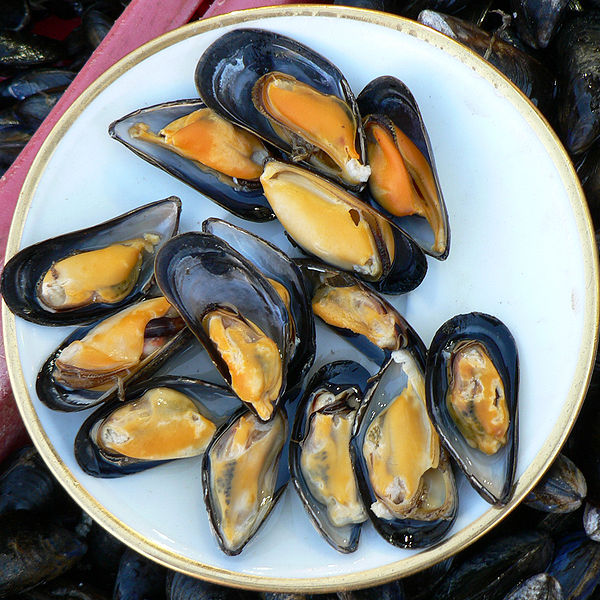
Mussels in broth

3 pounds mussels, scrubbed and bearded
3 cups boiling water
3 cloves garlic
2 tablespoons butter
3 tablespoons finely ground bread crusts
salt to taste
1/2 teaspooon saffron
1/8 teaspoon freshly ground pepper
minced fresh parsley

Plunge the mussels into the boiling water. Cover and cook over high heat just until the shells open (less than a minute). Removed the mussels with a slotted spoon; strain the broth through a fine strainer. Meanwhile, saute onion and garlic in butter in a heavy skillet; return the broth to a pan and add the onion and garlic, bread crusts, vinegar, salt, saffron, and pepper. Simmer, stirring until smooth and well blended. Remove the mussels from their shells and add them to the broth. Cover and simmer about 15 seconds. Serve up in soup bowls, garnished with parsley.

If they had cured venison, they might have made this rather special side dish:

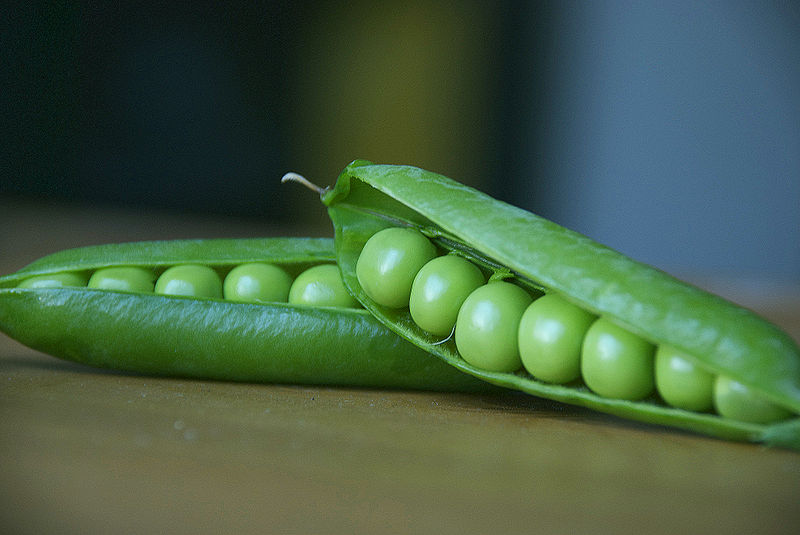
Pescodde

In new peas cooked to be eaten in the pod, you must add bacon on a meat day: and on a fish day, when they are cooked, you separate the liquid and add underneath melted salt butter, and then shake it.

Translation: To new peas cooked in the pods, add bacon (on a meat day) or fish (on a fish day). When the peas are cooked, pour off the liquid and add salted butter; mix well.

Authenticity check: hold the butter; use cured venison or salt fish.

Of course they had pumpkin and other squash, dried maize, and beets. The squash and root vegetable they probably would have boiled. Chances are they made something like Johnny cake with the corn:

Johnny Cakes

Make a dough of cornmeal, salt, and water. Set on a wooden slab or barrel stave at an angle in front of the fire to bake.

Authenticity check: Hold the cardboard box.

Yum. Here’s something for which we can all give thanks: we were born in the 20th or 21st century!

Have a wonderful (and tasty!) Thanksgiving holiday!

Images:

Wild Turkey with Eight Chicks, Kevin Cole, Creative Commons Attribution 2.0 Generic license.
Eastern Cottontail. Hardyplants. Public Domain.
White-tail Deer in Toronto, Canada. Public Domain.
American Eel. Wikipedia Commons. GNU Free Documentation License.

Mussels at Trouville Fish Market. Claude Covo-Farchi. Creative Commons Attribution-Share Alike 2.0 Generic
license.
Peas in Pods. Gaetan Lee. Creative Commons Attribution-Share Alike 2.0 Generic license.Johnny Cakes. Wikipedia. Creative Commons Attribution-ShareAlike 3.0 License.
Traditional U.S. Thanksgiving Day Dinner. Ben Franske. GNU Free Documentation License.