
 Yesh, so...the three restaurant meals I’ve consumed over the past two days have put almost two pounds back on the decrepit frame.
Why?
Three words:
salt
sugar
starch
Folks, we Americans don’t live in a food desert. No. We live on the freaking PLAINS OF MARS where food is concerned!
When you can go into a typical restaurant and find almost nothing on the menu that is not gonna be bad for you because of the way it’s been prepared and what was in the ingredients the cooks had to work with, you have virtually no chance of arriving at my age in good health. Not unless you prepare all your food at home, and most Americans wouldn’t think of any such thing because it just isn’t practical.
When you work eight or ten hours a day (or more, as many of us do), you still have to eat. Dragging a brown bag to the office every day isn’t much fun. But more to the point, if you’re a professional or a business executive, you are expected to make some rain. And you’re not making any rain when you’re parked in the lunchroom munching an egg salad sandwich.
You’re expected to take the clients to lunch. And if no client is handy, you’d still better show up at a restaurant or at the club and make yourself seen, and once a week you’d better be at a Chamber luncheon eating some bad Italian food served off a steam table while you glad-hand and schmooze. Your boss knows where you’re eating lunch…
And so you get in the habit of eating out. It’s so much easier than cooking, isn’t it? So you think, anyway. For a mere 25% over the inflated cost of the food, you get someone to wait on you and pick up after you. How convenient!
So you eat out whether or not you have to entertain clients and shake hands with your competition colleagues and potential customers. You eat out because you’re too tired to cook. Because the kids want a Burger King and won’t eat whatever you put on the table. Because one of you got home late and the other one is about to expire from hunger. Because there’s nothing in the house to eat.
This morning I’m meeting two of my favorite friends for a shopping junket in old town Glendale, a venue graced with charming boutiques in fun antique buildings. They want to start at a restaurant where we can get a muffin (or some such) for breakfast and end at another restaurant where we’ll have lunch.
I am not eating any goddamn muffins. Let’s take a look at the ingredients of such an object, made from a mix, as most restaurant bakery goods are:
White flour
Sugar
Blueberries Canned In Light Syrup (Blueberries, Water, High Fructose Corn Syrup)
Partially Hydrogenated Soybean and/or Cottonseed Oil
Modified Corn Starch
Vital Wheat Gluten
Baking Soda
Sodium Aluminum Phosphate
Salt
Propylene Glycol Monoesters of Fatty Acids
Mono and Diglycerides
Corn Starch
Maltodextrin
Sodium Stearoyl Lactylate
Citric Acid
Cellulose Gum
Xanthan Gum
Artificial Flavor
Modified Cream
Yummy!
When you’re avoiding salt, what you’re really trying to avoid is sodium, because it drives up your blood pressure. “Salt” is the word we use in conversation for a compound called sodium chloride; the sodium part is the part we’d like to do without — whether some doctor told us to or not. You do need some sodium for good health. However, most unadulterated food has as much naturally occurring sodium as you need.
Take a look at that list:
Baking Soda
Sodium Aluminum Phosphate
Salt
Sodium Stearoyl Lactylate
Baking soda is high in sodium. In other words, what you’ve got there is sodium, sodium, sodium, and sodium. Probably about four times as much as you would need to bake your own blueberry muffins and have them come out tasting one helluva lot better than a concoction that needs artificial flavoring to make it convincing.
But this product is sweet, not salty! How does it get that way, with all that salty stuff in it? Well, it contains
Sugar
High Fructose Corn Syrup
Maltodextrin
Modified Corn Starch
Corn Starch
That would be sugar, sugar, sugar, and sugar.
The undisguised sugar may be the best of a bad lot here. We’re told by the august authors of Wikipedia that “heated corn starch raises the blood glucose levels even faster than sugar, and like pure sugar, white bread and potatoes, it easily leads to excessive weight gain.” Which is to say that you don’t have to go far to learn what this stuff is gonna do to you.
If you were to make a batch of blueberry muffins from scratch — a project that would take maybe five minutes longer than pouring some water into a boxed mix would take — the result still wouldn’t be very good for you, but it would be a helluva lot better for you than the baked witch’s brew you’d be eating in a restaurant.
To start with, you’d use fresh or frozen blueberries, which come without benefit of high-fructose corn syrup.
Your only sweetener would be sugar, plus the fruit. At least you would then know what’s in the batter: you would know exactly how much sugar you were serving up.
You would use two sources of sodium: 1/2 teaspoon salt and 2 teaspoons baking soda. Here, too, you would know exactly how much of the stuff you were getting.
You would use 1/4 cup of butter, not hydrogenated oils, whose baleful effects are well known. You would add 1/3 cup of milk, not (yuck!) “modified” cream.
Ninety-nine percent of restaurants — especially the ubiquitous chain restaurants — serve up packaged, processed foods. Treats that wouldn’t be great for you to start with are downright toxic when they’re mixed up this way. Food that you imagine is healthy actually comes to you swimming in sugar, salt, and chemicals with unpronounceable names.
So…what to do?
It’s hard to say. When I go into a restaurant these days, I order a bowl of fruit. This noon I plan to ask for a salad — hold the dressing, hold the croutons — and then pull a recycled spice jar containing a mix of wine vinegar, olive oil, and fines herbes out of my purse. Otherwise? Try to get baked fish, broiled meat (not fried, which too often is what “grilled” means), and plain vegetables. Ask for salad with a cruet of vinegar and oil or a slice of lemon and a cruet of oil.
It takes the joy out of restaurant-going. But trust me: some doctor telling you that you need to swallow blood pressure pills until you topple over into the grave will take the joy out of life. So will a heart attack or a stroke.
This is the specific reason Americans are fat. It has nothing to do with people being lazy or slovenly or worthless or any other insult that the self-righteous sling at the overweight. It has everything to do with the kind of food that is being marketed to us — and what’s in it, largely without our understanding.
Image: U.S. National Institutes of Health. Public Domain.


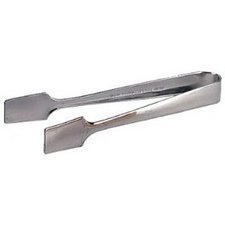 It’s beginning to look a lot like they don’t make plain boring scissors-style stainless tongs anymore. They all have some degree of coating on them, though to what extent its nature may be poisonous is unknown — at least, so it goes at Amazon. That means eventually I’ll be reduced to having to get used to the now ubiquitous tweezer-type tongs, which I hate but which at least can still be had sans stupid coatings. Aggravating.