
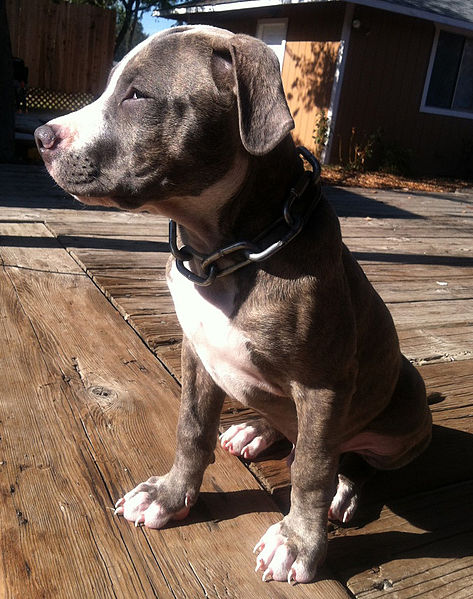
 Okay, folks. I’m about to make some of you very, very angry. Sorry about that. But what’s happened here — and what happens hundreds of times a year — makes me mad and it should make you mad.
Let me start by saying I love my dogs just as much as you love your dogs.
However. We need to be realistic about what dogs are and about what a dog can do. Any dog, even a little one, can inflict serious damage on a human, especially if that human is a child. Big dogs can kill. And they do. With surprising frequency.
This week yet another little child here in Arizona was killed by pit bulls. The mother had left her kids with a long-time, trusted babysitter, a woman who usually came to the family’s home. For reasons unexplained in the media, this particular day she decided to leave the kids at the sitter’s home. At some point the sitter went outside to tend to the dogs, carrying the two-year-old in her arms. After she released them from their backyard kennel, in a routine way that she had done all their lives, the animals unexpectedly turned on her. They grabbed the baby away from her and attacked both the child and the woman. She tried to protect the child by covering him with her body, to no avail. He was killed and she was gravely injured.
Folks. A dog is not your child. A dog is not your benign little pal. No, not even if nothing could seem sweeter than your canine sidekick. Not even if it’s true that the more people you get to know, the better you like your dog. If you’re going to have dogs around you, you need to understand and be realistic about what they are — for your safety and for the safety of everyone you and they meet.
A dog is a mutated wolf. Over about 20,000 years, it has evolved to live with humans, and during that time its biology and psychology have changed. It breeds more often than a wolf does. It no longer has that big scent gland at the base of its tail. It can thrive on a more omnivorous diet than a wolf needs. It can follow the direction that your hand is pointing in. To a degree, it can understand many of the words you utter, and it can grasp your intentions by the tone of your voice, the expression on your face, the body language of your stance and your gestures. It may even think you’re part of its pack. Most of these are things an undomesticated wolf cannot or will not do.
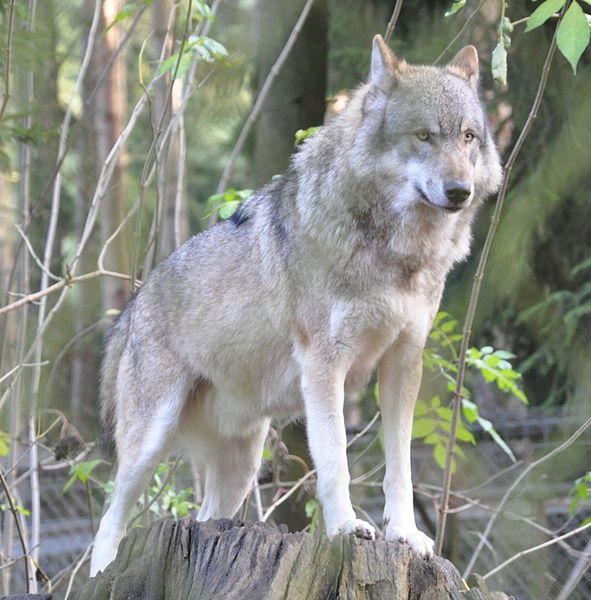 But it is still a wolf. Many of its lupine characteristics persist in beneficial ways — the dog’s pack instinct, for example, makes it a useful companion for pods of humans, and its instinct to work together with other pack members lends it to hunting, herding, guarding…and those are good things. But that instinct is double-edged.
Wolves are predators. They are evolved to kill, and they kill by biting. That is the underlying nature of a dog. It’s something you forget at your peril.
Dogs have not evolved by accident and merry serendipity. They have become what they are today because humans deliberately manipulate their genes by breeding, giving us a wide variety of dog types with a wide variety of dog mentalities. All dogs can and, under certain conditions, will bite. But some dogs are significantly more dangerous than others. These include pit bulls — yes! And German shepherds, Rottweilers, doberman pinschers, St. Bernards, malamutes, chows, huskies, all of the Molosser breeds, and mixed-breed offspring of these varieties.
All dogs are capable of biting, but these breeds can be exceptionally dangerous. If you don’t believe me, take a look at this site. Read this stuff. Look at the photos. Watch the videos. Every day a thousand Americans are bitten seriously enough to need emergency care. That’s 4.7 million bites a year, of which 800,000 require medical care. The most dangerous dogs are pit bulls and other breeds developed specifically for fighting (and I’m sorry to have to say this, but “Pitties don’t bite unless they’re abused” is a myth). Between 1982 and 2006, pit bulls, Rotweillers, Presa Canarios and mixes thereof were responsible for 65 percent of the fatal attacks on humans.
And now let me tell you a little story about what happened to my son.
At the time M’hijito was born, I had a German shepherd. Her name was Greta.
Greta was the single most extraordinary dog I have ever known. She would allow small children to crawl all over her and even poke her in the eyes; when she grew tired of this, she would simply stand up, shake them off, and walk away. She could recognize the difference between a stranger who meant no harm and one who bore watching. When roused — as she was the time a burglar entered the house in the middle of the night — she could be utterly, unthinkably terrifying. But where her own humans and their friends were concerned, she was mellow.
Every day Greta and I would walk around the neighborhood.
By the time my son was a toddler, she was getting on in years. She always would heel off the leash, and in my youthful callowness I rarely put her on a lead when we took our strolls through the yuppified historic district where we lived.
Our neighbors across the street had a dog about Greta’s size, a German shepherd mix named Colonel. This dog was allowed to lay around the front yard. Often when my son, Greta, and I would go for a walk, Colonel would amble along with us.
My little boy thought Colonel was about the funniest thing that ever came along, and Colonel loved little children. Colonel would allow the kids to hold onto his tail as he led them around.
So it was this particular afternoon. Colonel led the way up the sidewalk, with my son hanging onto his long, pennant-like red tail. I followed about ten or fifteen feet behind them, and Greta brought up the rear, pausing now and again to pee on the neighbor’s lawns and smell the flowers. Or whatever it is that dogs like to smell. She was a good twenty feet behind me.
As we approached Third Avenue, we came to a house on the corner that had a large wall around the side yard. This wall blocked the view of the street to the left of us.
Third Avenue had a bicycle path that was popular with the Yuppie residents, who, like today’s young upwardly mobile types, cherished physical fitness and would use the road for jogging and running.
When Colonel and my son, well ahead of me, came to this corner, all of a sudden up from behind the wall came a willowy young woman at a full run, with a great Dane on a leash about a body’s length ahead of her.
My son was a very small boy, the sort who doesn’t yet fully know language. He expressed delight and joy with a high-pitched squeal and a flapping of his little arms.
The instant he saw this huge dog, he shrieked QUEEEEKIEE QUEEEEKIEEEE QUEEEEEEEEE! and he dropped Colonel’s tail and ran ecstatically toward the woman and the dog, waving his hands in the air.
The dog, not surprisingly, saw this as an attack. It responded accordingly.
Dragging the woman, it lunged at my child. I jumped after him, snatched at him, just barely caught his jacket — and he pulled away from me. The dog grabbed and connected.
My little boy’s entire head fit inside this animal’s mouth.
Colonel ran away.
At this point things started to move in slow motion. Everything went silent. The dog had the child. The woman managed to keep her footing. She hauled on the leash with exactly no effect. I swam toward the child and the dog as through molasses.
From my right side, something came flying through the air.
It was Greta. She had come up beside me and leaped airborne before she reached me. She shot past me at chest height and barreled full force into the Dane.
I plunged into the melee, caught the boy, and yanked him out from beneath the two dogs. They fell into an explosive ball right where he’d been a fraction of an instant before. Greta had knocked the Dane off my son, disconnecting its jaws from his head, so I was able to pull him away, miraculously uninjured.
Things didn’t look so good for Greta, though. She fell beneath the great Dane and it went after her.
As it set to tearing her apart, all of a sudden it collapsed. It had passed out.
Pulling on the leash, the young woman had squeezed its windpipe enough to cut off so much air the Dane lost consciousness.
Stunned stupid, I said to her, “Oh, I’m so sorry!”
“That’s OK,” she said coolly. The dog quickly regained consciousness and just as quickly returned to her control. “This happens all the time.”
Holy sh!t.
* * *
Well. There was a lot of stupidity going on there. First off, I was roaming around in public with my son and two large dogs, none of whom were directly in my control. That was very, very stupid.
But “This happens all the time“? What was that about? If you have a dog that weighs more than you do — as this animal certainly did, in the woman’s case — and you know it can go so far out of control that you have to haul on its collar until it freaking PASSES OUT, what on earth are you doing running up and down the streets with it?
Both of us had lost track of just what a dog is and how dangerous it can be. I was extremely lucky — no, make that my son was extremely lucky — that one of the animals involved happened to be on our side. My son came within a fraction of an instant of being permanently maimed, if not killed.
So, am I saying you shouldn’t have a dog? Obviously not. I’ve had four German shepherds and a doberman pinscher over the years, to say nothing of the beagle, the schnauzer, the Labrador retriever, the golden retriever, the greyhound, and the corgi. I wouldn’t be without a dog — they add a great deal of pleasure to life.
However, I am saying that you should keep your common sense about you when you have a dog and when you’re around other people’s dogs.
• First and foremost, please: Remember that it is a DOG, not your furry little child!
• Avoid breeds that have been developed as guard dogs, attack dogs, and fighting dogs.
• Socialize pups from a very early age — around other dogs and around humans, including children.
• Obedience-train your dog thoroughly. If you don’t know how to do so, refrain from imagining that you can figure it out from YouTube videos. Take classes. Hire a trainer. Be sure your dog will heel, sit, stop on command, and come to call. Keep practicing these skills throughout the animal’s life.
• Establish yourself as the head of the pack. If your personality does not allow you to pull this off, get a cat instead. Or maybe a goldfish?
• Never let your dog off the leash in public, even in your own front yard. This is for your protection and your dog’s protection as much as for others’ safety.
• Do not take your dog to dog parks. That is asking for trouble.
• Don’t run your dog beside your bicycle — on or off leash. For the reasons why not, ask a) your orthopedist and b) your veterinarian.
• Don’t let a dog into a room where an infant or small child is sleeping unattended. In fact, never leave a child unattended with a dog, even if you do buy the story that pit bulls were bred to be children’s nannies.
• Don’t be an idiot about other people’s dogs. “He doesn’t bite,” “he’s friendly,” and “he loves children” are statements that should be regarded as sentimental errors if not downright lies. When you have your own dog or a child with you, proceed with caution.
• Teach your children to ask if it’s OK before trying to pet any dog. And teach them how to pet a dog without alarming it.
• Do not leave your child at the home of a babysitter who owns one or more pit bulls. Or any of the other dogs regarded by experts as potentially aggressive, over-protective, or unpredictable. Let’s go over those again:
Pit bulls, German shepherds, Rottweilers, doberman pinschers, St. Bernards, malamutes, chows, huskies, all of the Molosser breeds, and mixed-breed offspring of these varieties.
• If your next-door neighbor owns pit bulls or any of the above-mentioned potentially dangerous breeds, do not let your kids play in the backyard unattended. Several of the tragedies in our parts have happened when neighbors’ vicious dogs have scaled or broken through a fence and gone after kids or elderly adults.
• If you imagine that you simply must have one of these breeds, be sure you have the skills and personality characteristics to train and handle it effectively. Videlicet:
♦ You need a calm and assertive nature.
♦ You cannot be violent or abusive — if this is your style, take in a convicted murderer as a roommate instead. It’ll be safer.
♦ You must have time and patience to work with the dog every day, several times a day.
♦ Your lifestyle must accommodate a “job” for the dog, and that does not include sitting in the backyard and barking. Agility training, advanced obedience training, herding, tracking, rescue, and the like are appropriate work for these breeds.
♦ If you can’t establish yourself as the head dog calmly and as a matter of course, do not get one of these breeds.
♦ You must be smarter than the dog…which may not be as easy as some of us think. 😉
About half of dogs in Phoenix’s shelters are pit bulls or pit mixes. They’re favored by criminal gangs, which are growing robustly in these parts as poverty spreads and drug use continues. Sometimes these people use them in dog-fighting; sometimes as guard dogs; sometimes just to show how macho they are. The result is that we have way, way too many of this type of dog. Do not breed pit bulls and pit bull mixes. Do not buy them as puppies, thereby encouraging backyard breeding of still more unwanted, potentially aggressive dogs. If you must have one, adopt it from a shelter.
And remember: it’s a dog!
Images:
Blue-nose pit bull puppy. Tattooedwaitress. GNU Free Documentation License.
Eurasian wolf. Quartl. Creative Commons Attribution-Share Alike 3.0 Unported license.
Well said…everyday just about , in this neck of the woods there is a reporting of a dog attack by pit bulls…sometimes resulting in a death. And always the refrain from the owner is they were a “good dog” and that they were provoked. WHICH is why we have a “no agressive breed dog rule” in our rental properties. Because of our rule many a prospect has used different names to describe their dog and it’s origin. When I tell them that I need to “meet” the dog…it gets very quiet..and the stuttering begins….For the life of me I just don’t understand why someone would want these type animals around….
It might be a good idea to add a weight rule to the breed rule, giving yourself a little more leeway in decision-making.
The pit bull is far from the only dangerously aggressive dog; many people aren’t aware that a great Dane is a Molosser, as is a St. Bernard and a chow-chow. Most people think of a Dane as extremely laid-back. Remember the lady who got the first face transplant? It was her pet German shepherd that ripped her face off as she slept on the sofa. People have started fancying the dogo corso and the dogo Canario (or presa Canario), both of which are dangerous. And who would expect to find the basenji on a list of aggressive dogs (http://bit.ly/1eepUV7)?
Any dog can be aggressive. Chihuahuas and dachshunds can be nasty little critters. My neighbor was badly bitten by her two tiny Yorkshire terriers — required surgery on her hands. The difference is, a swift kick to a small dog will get it off your child or allow you to escape life-threatening injury. Large, powerful dogs present risk because of their size and strength. Aggression and size make for a dangerous combination.
By and large hunting dogs are relatively safe (which is not to say they won’t bite — only that they’re not bred to do so). Most hounds and retrievers are pretty benign.
But all dogs require responsible care by competent owners.
It’s the last statement of your comment that hits the nail on the head: …all dogs require responsible care by competent owners.
For many people, dogs have become like accessories. Many others don’t understand why dogs aren’t processing complex verbal directions or reading their minds. The intelligence of dogs and their ability to read human body language works against them in some ways; because they are so good at interpreting the simple things being communicated to them, some people assume they are being stubborn or ignoring the more complex things.
Also there is a lack of understanding that a dog is a free agent with its own personal agenda. Training is about teaching them the negotiated rules for living with us humans. “Do this, don’t do that.” “When I use this verbal/physical cue, that means you must…” However, there will be times that the dog wants something or tries to do something that you haven’t anticipated, so you have to have a back up plan for how to deal with it.
I’ve read *a lot* about dog behavior and general animal communication and behavior because of the behavioral issues my dog has. I also want to know how to communicate with my dog and how to read her cues, too. One of my favorite behaviorists (Patricia McConnell) wrote something memorable in one of her books that comes to mind after reading this post. I can’t recall her exact phrasing, but it was something to the effect that once when working with a challenging client she wondered to herself why she worked with creatures who had the equivalent of carpet knives in their mouths with which they could severely injure her in the blink of an eye. Even the pros know that dogs have been well-equipped by nature to maim or kill and one must be always vigilant.
Yes. I think pros probably know that better than the rest of us. To be very good at training dogs, you have to be empathetic enough to be able to get inside the mind (so to speak) of another species. If you do that effectively, you get a whole different view of Fido than most garden-variety dog lovers have.
Some dogs can in fact follow fairly complex commands, but they have to work up to it. Think about a small child: if you say “brush your teeth, make your bed, and come to breakfast” to a four-year-old, you’re likely to get a tantrum. It’s more than the child’s brain is ready to process. You have to go
“Brush your teeth.”
“Very gooooood! Now please make your bed.”
“Gooood job!! Now come have breakfast.”
Over time, some dogs can learn, say, “FIND (hidden object) and BRING (it back to me)” or “SIT (right here) and STAY (don’t move off this spot).”
I’ve found the more you talk to a dog, the more words it seems to pick up. Since Cassie and I are here alone, she’s the most interesting conversationalist around, so I’m always speaking to her. It’s amazing how much she does seem to understand — even strings of words. But it’s something that’s developed over several years.
Oh, yes, if the complex is broken down into steps then a lot is possible. People don’t seem to understand with children, much less dogs, though!
I don’t think I’d be a very good dog trainer because I have a hard time breaking processes down to small training chunks for dogs. Everything my dog responds to that is more complex is a testament to her intelligence and not my skill as a trainer! 😉
Well said. I’m a dog lover, too, but we have to be responsible. On my street, I often see a young man walking with 2 large dogs — one a german shepherd and the other a boxer. I worry when it gets close to my mom or kids. I’m on guard but probably still close enough for them to attack if they chose to.
I once had a pitbull mix. He attacked a person and my other dog. As much as I loved him, I realized he was too dangerous and very unpredictable and we put him to sleep. I love dogs but dogs aren’t harmless..
{sigh} I had a spectacularly beautiful German shepherd that had to be put down, too, after she tried to kill, first, my mother-in-law (gooood doggie!); then me (oh well…); and finally — the last straw — the veterinarian, whom she tried to take out the instant he turned his back on her.
She had just turned three years old. The vet said that because of the wacko breeding practices affecting “guard” dogs that achieve wide popularity, some GerSheps develop what could best be thought of as a mental illness — often right about at that age. He said it was genetic and there was nothing that could be done to train the dog out of it, largely because, he said, it appears in these cases that when something triggers an attack the dog literally can not hear its human’s voice. He likened it to a human form of madness and said the dog would become extremely dangerous and unpredictable, and that sooner or later it would hurt someone.
Other than her propensity for pouncing humans with exactly zero warning, she was a lovely dog. I felt terrible having to put her down. But on the other hand, I would felt a lot more terrible if a friend, relative, or passerby had been attacked.
The biggest issue that will allow these attacks to continue is that there are so many owners who think that it’s others peoples dogs who are capable of these attacks…but not their own.
We humans are not a creature that can brag too loudly about our common-sense IQ…
I have a couple of friends with pits. Both have thought about calling them service animals in order to bring the dogs with them. Neither friend is anywhere near disabled. Unfortunately (in the context of service animals), you cannot ask someone to prove they are disabled nor ask for certification of the dog. Nor, apparently, do you need to really train your dog to get a certification (I just looked at one site and you can just pay someone…although, if you don’t need to prove it’s a service animal, why have a certification?).
Really, why is it so important to have your dog with you?
Amazing.
At the church, there’s a lady who brings a tiny little lap dog to services, claiming it’s a “service dog.”
Didn’t realize you could pay for fake certification. But on Amazon you can buy service dog vests and harnesses, ID cards, and collar tags. Who’s going to ask you, really, if you show up with a dog decked out in one of those?
Hm. That would solve the problem of having to leave Cassie in the car when I need to go to Home Depot, wouldn’t it….
We have a very mello lab mix. Of course we don’t know what exactly she is mixed with. I trust her completely. Having said that, I won’t get another dog. Sticking with cats, it’s safer.
We had a Shepard mix in the past who was my soul mate. But one day my young son (several years back) had a friend over. They were horsing around downstairs. The dog bit the friend (most likely defending my son) and drew blood (his leg). Husband said and we did put the dog down. I was heartbroken but could not have trusted that dog around kids ever again.
Aggressive behavior can develop in stages. It may start with a nip that doesn’t even draw blood, then move to a bruise, and the next thing you know the dog has learned it can get serious — and does.
As heartbreaking as it can be, it’s just not safe to keep an animal that will bite. I’m sorry you lost your dog…but better the dog, I guess, than a child.