

Sooo… After extracting some success from Adsense by lacing a post with a high-ranking keyword, I thought I’d try again, this time with the term “lemon law.” That, apparently, is hot just now.
As I was wondering how to decoct a few not-too-eyeglazing words on the subject, it occurred to me that I actually have a real lemon-law story, one that casts some light on why legislators came up with lemon rules in the first place.
Back in the Dark Ages, something over four decades ago, my then young husband and I were wedded by gaslight. We took up residence in an apartment that we furnished with the bribe my father gave the groom for eloping with me, thereby cutting short my mother’s grand plans for an elaborate wedding ceremony and reception. We each brought various items to the marriage, and one of them was a 1967 Ford Fairlane. It had been my parents’ graduation gift to me.
It was a very pretty car, with a custom two-tone paint job—a white top and turquoise body—and a swell tan fake leather interior. This being the first car I’d ever owned, and brand-new, I was very proud of it.
Well.
It was a good thing my husband found the apartment that he did: directly behind a Ford dealership. Why? Because this fine vehicle soon proved the old adage that FORD stands for “Fix or Repair Daily.”
That was almost literally true. The damn thing spent more time in Ford’s repair shop than it did in our carport. Fortunately, I could walk back and forth from our apartment to the dealership, because I made that trek about every second or third day for the year and a half we lived there.
Whatever could go wrong with that piece of junk did go wrong. I eventually came to suspect the mechanics were deliberately breaking things—jimmying parts so they would crap out within a day or so after I drove the car home from its latest repair. “Piece of junk” is far too kind a word to describe the clunk.
The car was only a year or so old—we were married in December 1967—but by the time we moved out of the apartment, the paint was chalking and wearing away. One day when I waxed it with a mild liquid polish, it actually rubbed the paint off down to the metal!
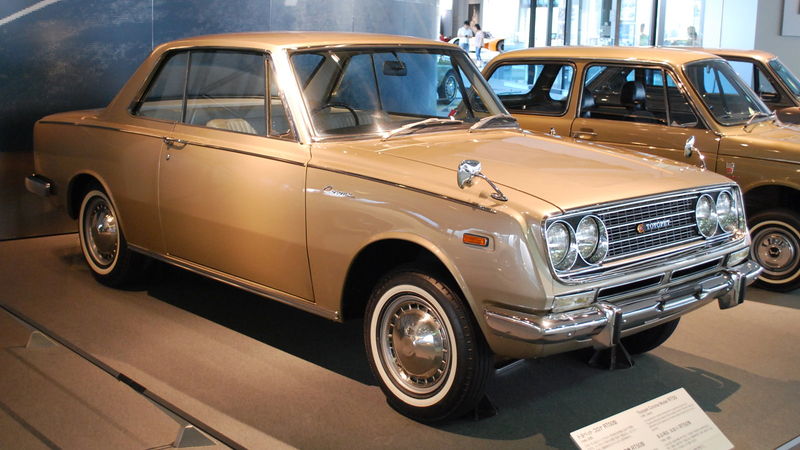
Once we no longer lived within walking distance of the auto lot, we traded the junk in on a cute little Toyota Corona, which ran and ran and ran. The Toyota never gave us a moment’s trouble; never needed any care beyond the routine maintenance. And that, my friend, is the specific reason I haven’t bought an American car in years. Even though we’re told Ford and Chevrolet have cleaned up their acts, I still don’t trust them, almost half a century later: that’s how badly we were burned by Ford’s unsafe-at-any-speed lemon.
There were no lemon laws in those days. If you got a piece of junk…well, you just had a piece of junk. The car manufacturer and its dealer had your money, and they were under no obligation to do anything to fix or replace the junk. It wasn’t until 1975 that the U.S. Congress enacted the Magnuson-Moss Warranty Act, whose purpose was to force auto manufacturers to abide by their warranties and to explain warranty terms in plain English.
Over time, states enacted their own lemon laws. These vary from state to state. The Wisconsin lemon law, for example, doesn’t cover mopeds, semitrailers, or trailers designed for use in combination with a truck or truck tractor, nor does it cover previously owned vehicles. The Michigan lemon law and the Colorado lemon law do not cover motor homes, although Colorado apparently does cover leased vehicles. But California’s lemon law covers new motor vehicles including such items as the chassis cab of a motor home, or a demonstrator, a dealer-owned vehicle, or other rolling stock sold with a warranty, including some vehicles bought primarily for business purposes.
Georgia’s lemon law, like most, excludes used cars. However, laws in Connecticut, Massachusetts, Minnesota, New Jersey, New Mexico and New York do provide statutory used-car warranties.
The Better Business Bureau has a page listing all the state lemon laws, with links to detailed summaries of each, plus a link that allows you to file a complaint with the BBB about your junker. Edmunds describes the recourse you have (in some states) if you buy a defective used car.
Wish we’d had a lemon law when we owned that shiny new Fairlane—I’m sure we could have collected.
Images:
1967 Ford Fairlane. Bill Wrigley. Creative Commons Attribution-Share Alike 2.5 Generic, 2.0 Generic and 1.0 Generic license.
Toyota Corona. Mytho88. GNU Free Documentation License.
My mother had the Corvair that turned Ralph Nader into a household name…
My first car was a 1980’s Ford and I went through what you describe plus being stranded, having the gas line rupture and the heads on the engine blow…
Today, I live happily sans vehicle and use the bus, which isn’t easy in a state that has lousy public transport and turned down money aimed at developing high speed rail.
Better public transportation would enable people to live more frugally, but the various lobbies and powers that be don’t want that…
I was told by an old school auto mechanic never to buy American cars. He preferred Nissans, Hondas or Toyotas. I now understand why.
Best of luck with your home repairs.
Gosh…”lousy public transport and turned down money aimed at developing high speed rail”? Sounds like you live in Arizona, too! 😀
I’m awed by people who choose to get by without a car in cities like mine, which are deliberately engineered to be pedestrian- and bike-unfriendly. Having lived in two cities where cars were not necessary, I sure wish our city parents would wise up and develop a functional public transit system. But like you say…it ain’t a-gunna happen soon!
My first car was a Ford Pinto. (1975) Piece of junk. But what I really wanted to share … after reading e’s comment above … last weekend husband and I were out and about and saw a mint green convertible Corvair on the road! We both yelled out “Unsafe at any speed!” At the same time. But that car sure looked cute!
@ Deedee: LOL! That is hilarious!!
The one thing a person could justifiably miss is the fun body styling of American and European cars. Every car on the road looks the same today, except for a few that look…well, kinda dopey. It’s hard to be streamlined and unique at once.
You know, the Mustang also was given to exploding in flames when tapped on the rear bumper. Most of the publicity went to the Corvair, but as a matter of fact a number of other cool-looking passenger cars were menaces to navigation. Creepily, because the Mustang was SO cool, there still are quite a few vintage models still on the road. They’re hideously dangerous. Check it out: http://www.cbsnews.com/stories/1999/05/17/60II/main47539.shtml