
So here we are in the garage, recalling a youth misspent scouring dishes in the kitchen sink and reflecting that there must be a lot of Americans who’ve never had the privilege, thanks to the almost universal distribution of the dishwasher. Come the Apocalypse (which as we know is bearing down on us at all times), they might like to know. So it goes like this:
Scrape food off the dishes into a garbage can. Pour any grease from pans into an old can or disposable container; failing that, soak it up with paper towels and put in the trash. Do not ever pour grease down the drain. Otherwise you’ll end up in the same predicament I’m in: calling the plumber in the middle of a holiday weekend. It’s inevitable.
Place a dish rack on a dish drainer (a plastic or rubber mat designed to let water drain off into a sink) on the countertop, or lay out some towels on which to arrange the dishes to dry.
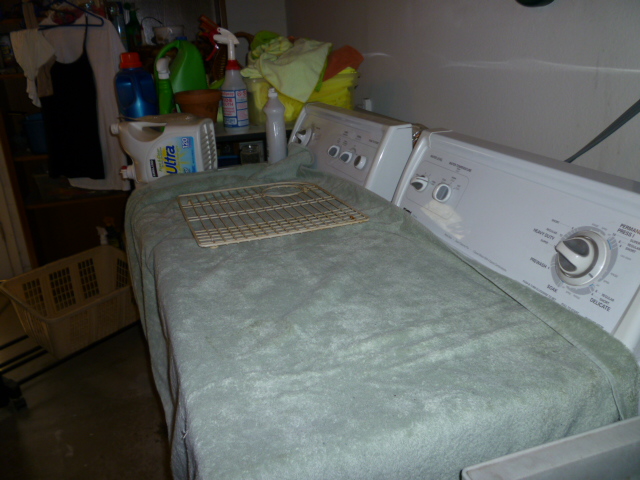
Assuming you have a functional kitchen with a double sink, fill one sink with hot soapy water and one with cold, clear water.
If you have only one sink, as in, say, a dingy garage, get a pail or plastic dishpan. Fill it with hot soapy water.
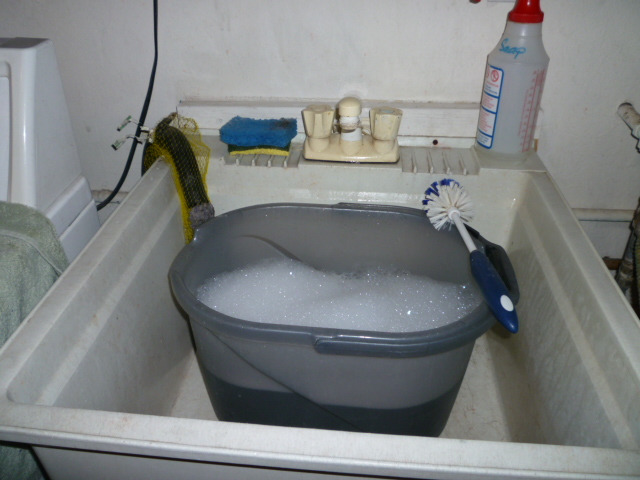 If you have an actual kitchen sink, wash in the soapy water and then set the clean dishes into the cold water to rinse. Lift them out, one by one, and set them in dishrack to drain. If you have a sidekick, that person can make him- or herself useful by lifting the dishes out of the cold water, setting them in the dishrack, and drying them with a towel. But the truth is, that step isn’t necessary. It’s probably better—more sanitary—to air-dry the dishes.
Always start with the glassware. You’ll want to wash clear glass items first, while the water’s still clean.
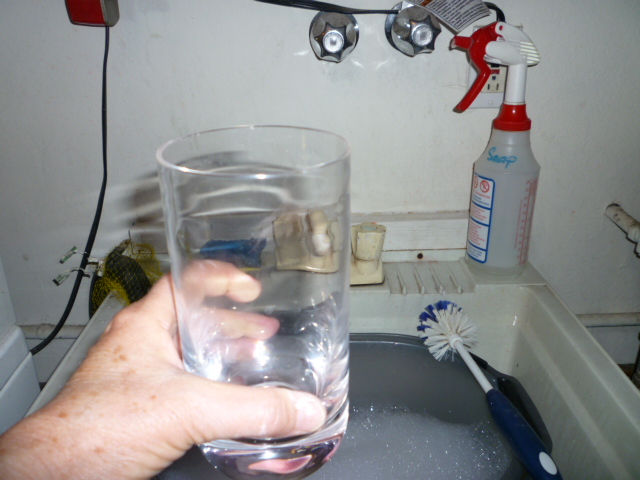
If you have only one sink or washtub, rinse each item one-by-one in running water. Turn the water off between items; this is a wasteful technique that should be avoided if possible. Oh well. We’re in the garage, after all.
Next, wash the silverware. The water’s still clean, so they’ll come out shiny if you get to them next.
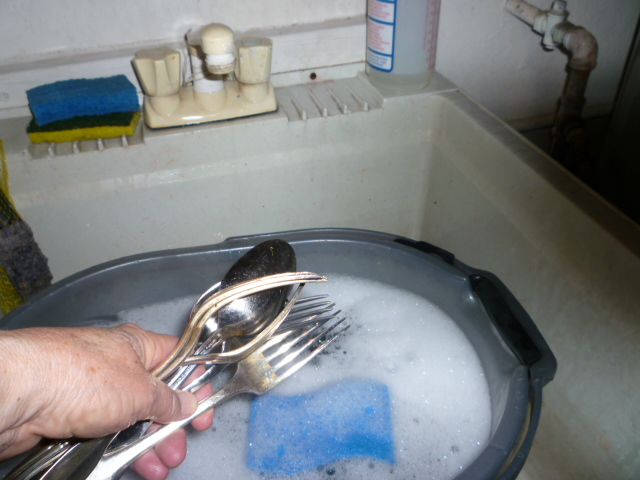 See this little guy?
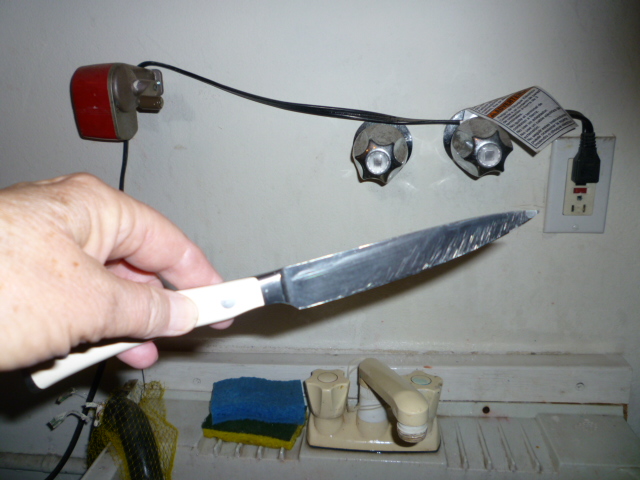 Do not drop a thing like this into a sinkful of soapy water! You won’t enjoy the nasty cut it’ll give you while you’re groping around trying to find it. Silverware can be dropped in the water to soak. Cutlery…not so much.
Next move on to the stoneware or china. This stuff will be greasier and will start to get the dishwasher dirty. You’ll notice that the suds get progressively less sudsy as you proceed. There’s a reason for that.
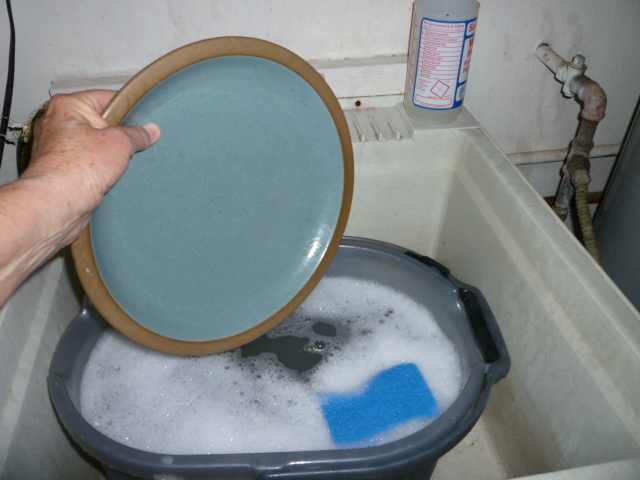 Wash all the cups, saucers, salad dishes, bowls and plates. Arrange them in the dish drainer or across a towel.
Finally, it’s time to tackle the pots and pans.
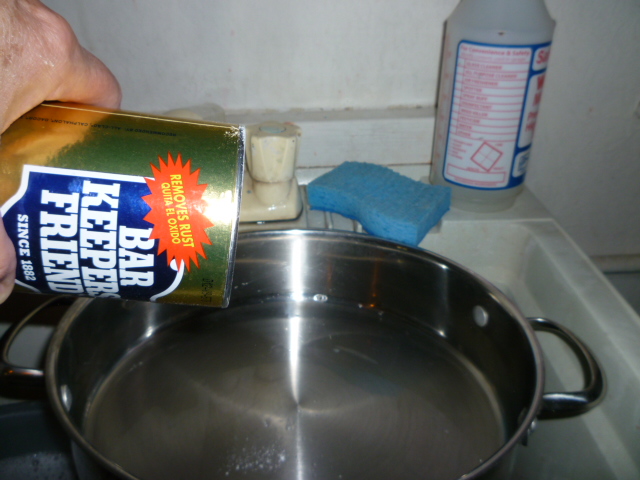
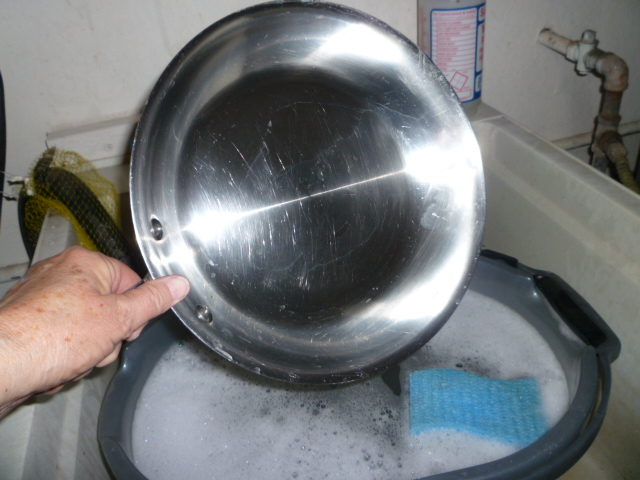 Save the dirtiest cookware for last. Chances are you’ll need to scour a pan or two. Barkeeper’s Friend is great for stainless pans. Comet and other chlorine-bleach powder knockoffs are almost as good.
 Et voilà! The whole mound of dishes is clean!
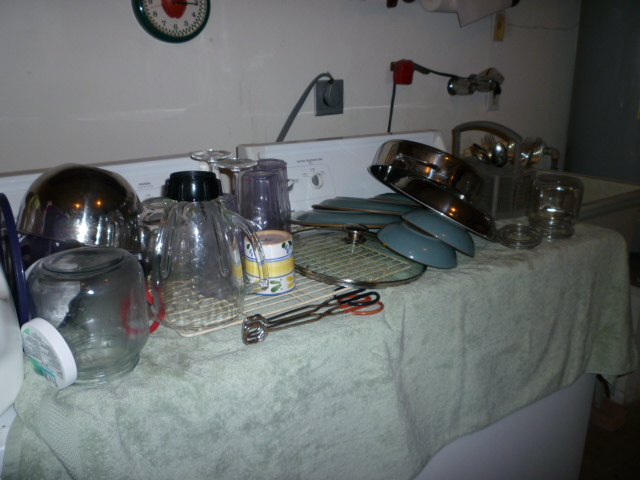 Now you can get on with, God help you, the rest of your day. ↓↓↓↓↓↓