
Lenten Day thanks, Day 27
Thanks to God for the lovely gentle rain She blessed us with last night. The air is cool and clean, and this morning all the flowers are shivering with plant joy.
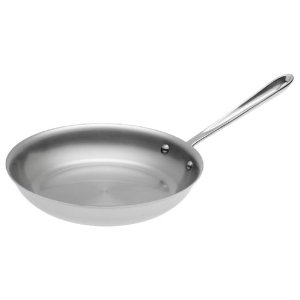
So I was mulling over the All-Clad Frying pan issue, Frugal Scholar having triggered a certain amount of coveting with her discussion of the treasured gourmet cookware and its worthy alternatives. Way in the back of the vast cabinet under the stovetop, I had stashed a pan I’d picked up at an estate sale. A ten-inch stainless pan, just the size of the nonstick Cuisinart that’s about seen its duty and done it.
After I’d bought this thing, I’d thought how can I put my old friend down? Sentimental about a frying pan…think of that! And then instead of putting the new-to-me stainless pan to immediate use, I stashed it and kept on using the tired Cuisinart.
Well, yesterday I pulled that stainless pan out of the back of the cupboard, and what should I discover? Lo! It is an All-Clad!
It looks practically brand-new, but apparently its former owner was one of the ninnies who posts rants at Amazon to the effect that food sticks on the stainless because they don’t know how to cook in a real pan. It has some scratches on the inside as though somebody had scoured it with steel wool, and the bottom looks bunged-up a bit, as though it had been scraped back and forth on a metal burner. But it’s not badly damaged…I think it’s more than serviceable.
We’ll find out soon, ’cause I’m going to try it at the next opportunity. Not just this minute though: I’m still too sick to eat much more than a piece of toast and a cup of tea for breakfast.
Amazon’s price on the 10-inch All-Clad
What do you suppose would possess a person to take steel wool to a hundred-dollar frying pan?
It’s pretty easy to clean a high-quality stainless pan. You need one or all of these:
• Barkeeper’s Friend (find it with the scouring powders in the household cleaner aisle)
• Ordinary dishwashing liquid
• Powdered or gel dishwasher detergent
• Baking soda and water
• Blue (not green) sponge with nonscratch scouring surface
So. First, if the pan is just ordinarily dirty with a little stuck-on stuff, pour water and a few drops of liquid dish detergent in it and let it soak while you’re eating your meal. Then wash it in hot water with more dishwashing liquid; often after a soak it will wash right up with no scouring. Alternatively, simply run it through the dishwasher.
If this doesn’t work, scour it with Barkeeper’s Friend. Apply BKF to the interior surface; add enough water to form a thick paste. With the soft side of your sponge, rub firmly in circles, moving from the inside to the outside. This will usually clean most dirt and stains off a good pan.
If this doesn’t work but you haven’t seared grease on in enamel-like black spots, rinse the pan well and sprinkle in about a tablespoon of dishwasher detergent. Add enough hot water to cover the soiled areas, stir to dissolve, and leave the pan to soak at least overnight. Use the hottest tap water you can get, because dishwasher detergent is activated by hot water. Next day, discard the soaking solution (do not put your hands in it!), rinse the pan well, and scrub it with Barkeeper’s Friend.
If this still doesn’t work or if you have enameled grease onto it, place a handful of baking soda into the pan and fill with water. Put the pan on the stove and heat the liquid to a boil. Turn it down to a simmer and let it cook in there for about 20 minutes. Keep an eye on it—you don’t want the liquid to boil dry! It will ruin your pan if it does. Also, this stuff sometimes wants to boil over, so you’ll need to be close at hand to regulate the heat. After about 20 minutes of simmering, turn off the heat and let the pan sit until the baking soda solution cools down completely. Then, at your convenience, scrub well with Barkeeper’s Friend.
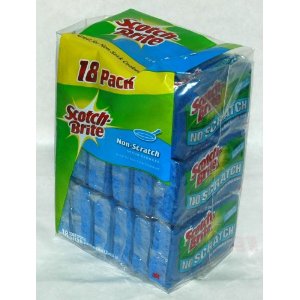
You can use the type of sponge that has a nonscratch scrubbing pad. These are made by Scotch Brite and are commonly available. Just be sure the packaging actually says it’s a no-scratch scrubber. These are usually colored blue. The green heavy-duty scrubbers will scratch the toughest stainless steel, so do not use these on your cookware. Never use steel wool on a good stainless pan.
It’s pretty easy. Soaking is always better than scouring. Gentle abrasives are always better than fierce ones (try substituting baking soda for the Bartender’s Friend, BTW—it doesn’t work quite as well but sometimes it does the job).
When you’re using a really high-quality pan, you don’t have to and you should not turn your burner to its blow-torch setting. To fry or sauté in a stainless pan, place a small amount of oil or butter in the pan and put the pan over medium heat. When the butter is melted or the oil is hot, add your food. Let meat sear fully before trying to turn it over—if you try to flip it too soon, it will stick. To cook bacon in such a pan, always cook it over low heat. Although this takes longer, you’re less likely to burn the bacon, and when cooked over a low flame bacon does not splatter all over the kitchen.
I do not sear beef on salt over blast-oven heat when using a stainless pan, the way you can do with a cast-iron surface. I suppose you could, but it seems old-fashioned, and besides, it’s a pretty brutal way to cook a steak. If I’m not grilling it over propane or charcoal or broiling it in the oven, I’ll fry it over medium-high heat in butter.
Have a little respect for a good pan, and it’ll treat you well. 😉