Coffee heat rising

Trading by Smartphone Is on the Rise

MakeItCheaper

It seems that more people than ever are making important financial transactions with smartphones and tablets. This certainly applies to trading on the stock market, spread betting and similar products, but how is this growth possible? This infographic hints at the creation of a dedicated Trading Platform.

Mobile trading makes perfect sense for any traders with a busy lifestyle. They can go to City Index Forex Trading on the move and it doesn’t take too long to do. Some of the most successful traders have made significant profits in excess of £1m to date using dedicated apps for iPhones and iPads.

Products like Forex are leveraged and, as with normal websites for computers and laptops, mobile trading involves the same level of skill and timing that is essential for any trader to make a significant profit at a level acceptable to them.

At the moment, iPhones are among the most popular devices for mobile trading, although BlackBerry and Android smartphones are being used more often by traders. Forex, CFD trading and spread betting are all possible with the right device.

What Makes Word Crash???

I knew it! I just knew it: the job was going to make me grind my teeth. Good thing I stuck the mouth guard in before I started typing mind-numbing data. Boring. I hate boredom. Boredom frustrates me, and frustration makes me clench my teeth. Without that mouth guard I would’ve broken all the teeth in my mouth when Word “closed unexpectedly” just as I hit “Table > Sort > Sort by paragraphs • Ascending” on 29 single-spaced pages.

“We are sorry; Word had to close unexpectedly” means “You are screwed! Any data you haven’t manually saved is gone, and NO, there is no auto-recovery file backing up the work you were doing. And yes, we did calculate this so it would happen just as you were coming to the end of an hours-long slab of brain-banging labor.”

Word does that all the time. We figured out that it’s not a function of Wyrd for Mac, because Tina reported that her Wyrd for Windows does the same thing, and she runs it on a high-powered PC. I have Wyrd set to auto-save about every three minutes, plus I’ve learned to hit “Command > Save” after just about every sentence, phrase, and word. I’ve also set Wyrd to make back-up files as it goes, creating mounds of annoying clutter.

So no data was lost, but I didn’t know that until the system came back online. Frustrating, time-wasting, and annoying.

It seems to have something to do with tables. Apparently a lengthy or complicated table — one with bulleted points in it, for example — causes Word to crash.

First time this occurred, a client had constructed tables and stuck more tables inside some of the cells. He even put an image in one of the cells! The damn thing crashed if you just looked at it.

More recently, we edited a corporate book compiled of entries by a whole slew of authors. To enforce some sort of conformity, the PR director had come up with a tabular form, whose purpose was to regularize the content and format across the board. Great idea…but as soon as someone decided to enter a bulleted list in a cell, it would cause the whole elegant construct to crash.

Always just as the august editor was about to close out, having spent two hours laboring over the edits. I lost track of the number of hours we had to write off for that project because of Wyrd crashes. Six or eight, as I recall.

Then there was the author who inserted Japanese characters inside Word tables. Complicated, elaborate tables. CRASH!

What makes Word crash? Tables make Word crash!

Nothing was lost yesterday but some time that wouldn’t have been paid, anyway. It was my own project. But those recurring Word crashes sure are annoying.

Frugality, the Child of Necessity

Drat! They no longer make this handy over-the-sink dish rack, something I’ve used every day since I bought it six or eight years ago.

P1010967

This has been one of the most convenient and frequently used gadgets in the kitchen. It holds any number of little pieces of junk, keeps them out of the way and out of the left-hand sink, and often serves as de facto storage.

Over time, though, it’s begun to wear out. The rubbery plastic coating has eroded away along a series of small joints:

P1010972

The wire underneath it is rusting and eventually will break. {sob!} That’s because I do this to it:

P1010969

Every time I use one of my good kitchen knives, I wash it and drop it to dry into one of those handy-dandy slots along the side of the thing. Evidently, this has not been good for it! Not very good for my knives anymore, either.

dis drainer31ronroWeELThanks to the cleanliness & tidiness kick, I thought the mini-drainer should be replaced. Lo these many years ago, I bought it either at Albertson’s or Linens ‘n’ Things. The Albertson’s no longer carries its old array of products like this, and Linens ‘n’ Things went out of business years ago (actually, its spirit haunts the ether in the form of an online store). Bed, Bath, & Beyond, now the only game in town in the freestanding brick-and-mortar household miscellany department, doesn’t carry this object. Neither does Target. Neither does Home Depot. Neither does Lowe’s. Neither does Amazon. The latter has a flimsier thing that’s wider and will take up too much space out of the rest of the sink, which I use to drain larger items, and one that’s allegedly stainless but, as we know, “stainless steel” made in China means “rusty steel.” Neither the size nor the cheesiness will meet my needs.

What to do about this conundrum?

Well, I remembered having heard, some years ago, about a product people can paint on dishwasher racks when the rubbery stuff wears off of those. My dishwasher has solid nylon racks, so that annoyance is a thing of the past. But what’s happening to the little over-the-sink dish drainer is comparable, eh? So when I passed a Home Depot yesterday, I darted in and found this:

P1010974

It was in the dishwasher department, not in Hardware, interestingly enough. We’ll see if it works.

Probably will take all day to apply the stuff. You have to paint on “multiple” coats. Damn, but I wish people would quit using that irritating bit of jargon! “Multiple”: many? a few? a couple? Say what you mean!!!!

What? Oh.

Anyway, you paint it on, wait a half hour, and then apply another coat. Unless it’s radically goopy, I think I’d like to apply three, four, maybe even five coats — try to fill it in the worn-off spots to where the surface comes back up and blends into the undamaged white coating. At a half-hour per coat, it could take two or three hours to accomplish that. Then you have to wait 24 hours before you can use the repaired rack.

I was going to title this post, cutely, “Necessity, the Child of Frugality.” But that’s not really the case. It’s not that I’m too cheap to replace the rack with a new one. If an adequate rack were still being manufactured, I’d buy it in an instant. I do have better things to do with my time than play with goop that emanates toxic fumes. But the truth is, as formerly quality products are being replaced with flimsy, second-rate junk produced overseas factories with minimal quality control, consumers have to try to extract as much life from their old, better-quality products as possible. Amid all this illusory plenty, we have to make it do and make it last.

Once this thing wears out, I guess, the only option will be to buy a Rubbermaid drainboard-sized drainer and drop it in the bottom of that big sink. Which is going to be a nuisance…if I wanted one of those, I’d have one of those.

Sure would help if stuff were made in America.

P.S.: Hold the phone! Just found the thing on Amazon, about six pages in to the search. They want THIRTY DOLLARS for it!!!! I’m dead sure I didn’t pay that much for mine, because I wouldn’t have…too cheap. But there it is. “Eligible for free super save shipping.” Yeah. Well, it sure should be, at that price.

Spend Our Way Out of Recession

Throughout the election cycle and the holiday season, the growing concern over whether Congress would reach a fiscal cliff agreement by the New Year bombarded Americans every time they turned on the news. Without the agreement, tax hikes on 98% of Americans would have been imminent—something which could have pushed back economic recovery and possibly sent the U.S. into another recession. The deal did pass in the Senate and the House of Representatives on New Year’s Day, allowing many Americans to breathe a sigh of relief. But what exactly are the terms of the deal—and what does the agreement mean for the future of America? Read on to find out.

Terms of the Deal

While the agreement was good news for most Americans, it did resolve to raise taxes on wealthy Americans in an effort to back away from the fiscal cliff. Taxes will increase from 35% to 39.6% for top tier earners, meaning that married couples who make over $450,000 and single filers who earn over $400,000 will be affected by the agreement. This group will also face and increase from 15% to 20% on taxes paid on dividends and capital gains. Estate values over $5 million will also see a hike in taxes, from 35% to 40%. Unaffected by the new fiscal cliff agreements are unemployment benefits, tax credits on college tuition, Medicare providers, and renewable energy tax credits (at least for now), all of which are designed to lift up the middle and lower classes and push the U.S. economy toward full recovery. Government spending cuts have also been delayed for two months, a point that was hotly contested in the GOP House.

How Markets Responded To The Deal

The new resolution was signed just in time for global markets to reopen for the New Year, and when they did, they rallied in support of the agreement. London’s FTSE 100 broke through 6,000 for the first time since July of 2011, and Germany’s Dax index reached 7,779.22. Hong Kong’s Seng index also showed strong support, opening at 2.1% on January 2. The U.S. Dow Jones industrial average also showed modest gains on the first trading day of the New Year, registering at 13,107.14 (up 1.28%).

Consumer confidence has continued to remain strong in the first few weeks of 2013. As of January 14, Britain’s FTSE 100 is up to 6,129, Germany’s Dax is holding strong at 7,759. Hong Kong’s Hang Seng rose 0.6% on Monday, and the U.S. Dow Jones closed at 13,507.32 on Monday, continuing to show strong support for the fiscal cliff agreement in the New Year.

Do Your Part

For most Americans, the fiscal cliff agreement means that tax hikes have been averted for the time being. Even if holiday spending has left you strapped for cash, you can still show a vote of confidence in the U.S. economy by selling your unwanted or outdated electronics on musicMagpie to get some extra spending cash. Once your check arrives, go out and spend it—it’s the surest way to help give the economy the kick start it needs in 2013 after years of sluggish activity.

This post is contributed by writer Matt Morgan. Matt is a recent graduate from Southampton University, an aspiring writer who blogs at www.thebookofmatter.com.

Let Your House Work for You

Housing costs can often accumulate and lead to you could be spending more than you should. Instead of throwing that extra money into the black hole that is your mortgage, ensure you take advantage of the various ways that you can save on your mortgage and have money you had previously written off to invest in making your house more energy efficient, so you’ll save on utilities too. Read on to learn all about how to save on your mortgage and invest it so you save on utilities.

Shop around to get the best rate

Since lending agencies are interested in getting your business, they will often offer lower rates as a means of attracting customers. You may be able to negotiate a better rate with your lending agency. However, you will need to research the latest news on mortgage rates and be familiar with the current climate of the housing market. Then you’ll be able to tell if the rate you are getting is fair and perhaps do a bit of negotiating.

Take an existing mortgage

If you’re looking at buying a house, you can also assume an existing mortgage instead of getting a new one all together. This is a particularly attractive option if the rates on that mortgage are lower than what you would currently get. For this option to be available, the mortgage must be transferable and you must be able to pay the difference between the purchase price and the outstanding debt.

Make an extra payment each year

Making an extra payment at the end of each year will help you pay off your mortgage faster because the extra money is applied to your principal, so your balance will decrease. You’ll also save because a portion of this payment won’t be going toward interest. Several free mortgage calculators available on the Web, such as this one from Bankrate.com, will give you a feel for how this might work in your favor.

How to save on utilities by going green

Once you have gotten your returns from saving, invest them in green alternatives to help you save on heating and electricity. With fossil fuels becoming ever more expensive, you’ll want to start building the infrastructure to liberate yourself from these finite resources. Here are some ways to go green and save money on home energy costs.

To save on lighting, replace your incandescent light bulbs with compact fluorescent bulbs. While they may cost more initially, these bulbs use electricity more efficiently and also don’t wear out as quickly, so you won’t have to replace them as often. They use about a quarter of the electricity an incandescent bulb uses and can last up to ten times as long.

You can also trade your car in for a hybrid that uses less gasoline by running on electricity. Popular models like the Toyota Prius may help consumers reduce their fuel bills while also reducing their dependence on fossil fuels.

Finally, for a long-term project, you can consider converting your home heating system to a geothermal system. Geothermal heating relies on the temperature of soil underground to distribute heat through your home through a geothermal heat pump. While the upfront costs are significant, a geothermal system can save you thousands in the long run.

They say, “a penny saved is a penny earned.” When applied to your mortgage and home improvement investments, this saying takes on gigantic terms. You can save thousands of dollars if you play your cards right on your mortgage and then make the right investment choices in your home.

This post is contributed by writer Matt Morgan. Matt is a recent graduate from Southampton University, an aspiring writer who blogs at www.thebookofmatter.com.

The Changes We Make

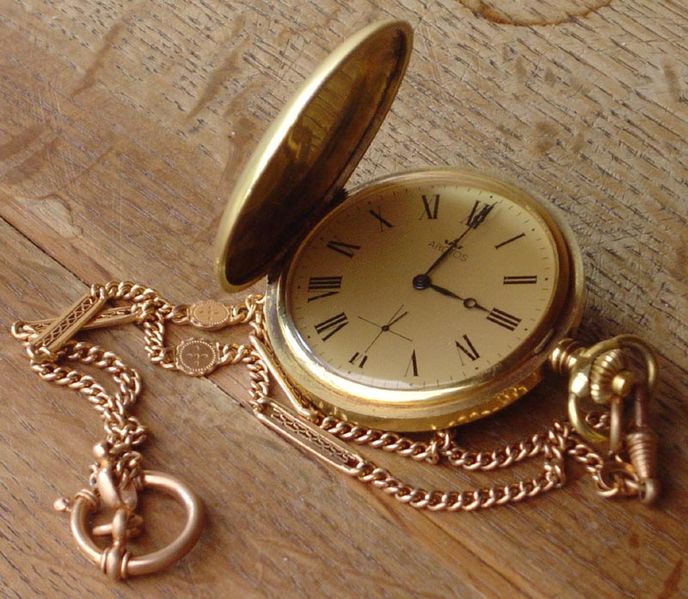
pocketwatchMontreGousset001Earlier this month Donna Freedman published a winsomely rueful meditation on the way she’s changed over time. Case in point: in her reaction to small mistakes that cost her money.

That each of us is a different person at 40 from the one we were at 18 is a commonplace. It’s a given that we’re going to change. The question is, how much and in what direction?

Recently The New York Times published a report on a study showing that most of us are aware of how much we’ve changed from a “younger me,” but that we tend not to recognize that the “future me” will change just as  much or more from our present incarnation. Researchers dubbed this the “end of history illusion.”

It’s an  interesting idea — that we think the wonderfulness that is us right now represents the height of our personal evolution and so think we’re unlikely to change much more.

I wonder if that’s so. Or if it is true, by knowing this quirk exists, can we overcome it and anticipate or control the changes coming to us?

Recently I’ve become aware of a number of fairly abrupt changes in my own thinking and attitudes.

Number one change:

Yes, I’m afraid it’s true:
I’m no longer “funny” about money.

Not only have I lost the obsession about money, I hardly even give a damn.

Whence this bizarre new attitude? No idea.

It may have something to do with the decision to quit teaching and the realization that even if The Copyeditor’s Desk never earns another penny, there’s enough in savings to support me and pay my share of the Downtown House. It wouldn’t be ideal, but it wouldn’t do much harm, either.

Or it may reflect the fact that the business actually is meeting its revenue goal, at least for the moment: this month I billed twice the 2013 monthly goal.

The January AMEX billing cycle ended yesterday. Because I put all my discretionary spending on the card, that means the December/January discretionary budget cycle just closed, too. I figured I was going to have to borrow from savings to pay the bill, because I spent myself stupid this month: a pair of hiking boots, a new All-Clad stockpot, a couple hundred bucks on gardening supplies and plants, a dentist’s bill, three lunches out, even a dinner out (!), a new pair of Costco jeans, a prescription not covered by the Medicare Part D rip-off…holy mackerel! Expected to be about $300 to $400 in the hole.

But no! At the end of the day, I’d run the AMEX budget just $91 into the red. Because the checking account has $300 left over from last month, I won’t even have to take money out of Diddle-It-Away Savings to cover these indulgences.

That’s nice, but it doesn’t explain why I wasn’t worried. Other way around, actually: because I’ve quit worrying about money, I spent money on things that the Old Me probably wouldn’t have.

Another big change that’s occurred recently is that I am sick and tired of sitting in front of computers all day. Really. The realization that oiling the furniture and kitchen cabinets felt better than parking myself at a desk amounted to a revelation. I don’t wanna do this anymore! I want to go outside and play.

That’s not very practical, of course…I still do have to earn at least part of a living. However, the housekeeping task-a-day scheme represents a manifestation of that impulse. It gives me a reason to get off my duff and move around for an hour or so, even if it’s only around the house.

Not only does it provide an excuse to move about, it’s actually working to keep the house clean. With the house no longer looking like a dank cave (who knew light would come in windows if you clean them?), I find I want to be in other parts of the house. The bright, clean kitchen now invites me to cook better and more elaborate dishes, and to eat better. The uncluttered, undusty living and family rooms want me to sit out there and not hole up in the office.

Now that I’m not teaching and so not filling the hours with a stress-inducing activity, I’m sleeping better. Like amazingly better: seven or eight hours a night, without a little help from my friends! Maybe not coincidentally, I’m also drinking less.

The question is, can we anticipate or direct these changes in outlook or character?

To do so, we’ll have to shuck off the illusion that we’ve achieved the peak of our glory as of today. Dan P. McAdams, a Northwestern University psychologist, speculates that the end-of-history effect reflects “a failure in personal imagination.” To get past it, then, we would need to jump-start our imagination.

That would require first thinking about how personality traits shift with age. One thing is for sure: our quirks get more exaggerated as we grow older. A little stubborn at 20, were you? By 60 you may be downright pig-headed. Our opinions may become set in stone. Or they may flip completely — in my 20s I was a Goldwater Girl and so staunch an anti-Communist that I used to read John Birch Society publications. Today I vote for the likes of Barack Obama, regard my state’s right-wing legislature and its appointees as a kookocracy, and spend a fair amount of my time hanging out with homosexuals, lesbians, and people of color.

But that could also reflect a social change: in the Republican Party of 2012, Barry Goldwater would be a moderate. To consider how we might change in the future, we would need not only to imagine how our own personality traits might evolve, we also will need to consider how the culture around is is likely to change and how our personal circumstances will change.

To imagine how you might change over time, you’d almost have to imagine all of the future: what will the world be like in twenty years, and how will you adapt to it?

Do we know anything about the future? Well…

We can be pretty sure most Americans will have less as a very few continue to gather more. “Most Americans” applies to virtually all of us here at this blog.

Almost certainly our children will have fewer opportunities than those of us who are over about 40 had.

Education will continue to grow more costly, so that middle-class adults will be mired in debt most of their lives.

Medical care may (or may not) become more widely available but at the same time will become even less accessible than it is now, and quality for the average person on the street will continue to degrade.

Pay rates will continue to move toward Third-World levels as American companies continue to offshore work, including white-collar and “professional” jobs.

Laws governing our movement and behavior in public and in our private lives will become more restrictive.

Surveillance of our movements in public and in private will become more pervasive.

The impetus to get rid of “safety nets” and other forms of collective altruism will never go away and may in the end triumph.

Global warming will affect urbanized societies, pushing populations away from ocean shores but also stressing cities with drought and extreme weather events. Power grids may be affected for longer periods over wider areas.

If these things come to pass, the average American will have to continue learning to get by on less; attitudes toward frugality that have developed after the crash of the Bush economy will become more permanent.

Concepts of family and familial duty may change, as adult children will be expected to provide care for elderly parents who formerly were covered by government programs. More families may seek collective housing that will accommodate three or even four generations.

Ideas about personal health care and eating habits may change.

Just those few possibilities may cause individual personal shifts like these:

If you’re still in your working years, you may start to feel that caring for yourself and your family is far more important than career.

You might become more open to the idea of housing that would let your parents live under the same roof with you. Or you might conceive the idea of housing your family in a compound of small dwellings on the same lot, allowing several generations to live together not just now but far into the future.

You might lose interest in saving for the future, as it becomes increasingly difficult or even impossible to do so on a low salary under a heavy debt load.

Or you might become obsessive about saving for old age, to the point of becoming miserly in your present day-to-day life, knowing that any old-age support system that survives will do nothing to keep you out of poverty.

You might change your attitude about living with your kids, and you might start priming them to expect that they will have to care for you to some extent when you reach advanced old age. You or your spouse may decide to be a stay-at-home parent.

You could become more open to “alternative” healthcare strategies that are not science-based, as it becomes more difficult to get in to see medical doctors and as doctors have less and less time to listen to you.

Your political thinking could change as changes in the way government functions affect you positively or negatively.

Your thinking about the distribution of work within a family might change, as changes in education, pay, and access to medical care continue.

Seeing that the trend to convert higher education into voc-ed produces a nation of ignoramuses led by a small elite with more sophisticated intellectual training, you might change your thinking about the purposes of higher education.

Pretty complex, isn’t it? I think it’s not so simple as a “failure of imagination.” Change happens slowly, not only within us but all around us, so that often we’re not even aware of the change happening. To envision yourself ten or twenty years on down the line, you have to envision not just yourself but a lot of things and a lot of people as they may be in the future.

How do you imagine the Future You?