Coffee heat rising

New refinement on Year 1 retirement strategy

So far—all of two months into this new Bumhood adventure—I’m doing so well at staying on budget and living within my apparently reduced means that I’m thinking next fall I should teach two sections instead of three.

The community colleges pay $2,400 per class. Six times $2,400 comes to $14,400. Contrary to predictions, Social Security did not raise its earnings limitation this year: it remains at $14,160. While I certainly can afford to sacrifice half of $240 for the privilege of earning slightly more than a sub-poverty wage, I can’t afford the way they expunge it from your pocketbook. As soon as SS find out that you’re over the limit, they take away an entire month’s payment. From that they withhold the amount they think you owe them. But they don’t give the rest back until the following January. So, that’s $1,000 that goes away for months, maybe as long as a year.

My net on one section is $2016. True, it’s twice as much as a thousand bucks, but prorated over four months, it’s only $504 a month.

Meanwhile, I have over $16,000 residing in savings now. Because I started with a $14,500 cushion and so far have not spent anything like as much as I expected, the “cushion” keeps accruing feathers. Every month, another chicken’s worth of feathers gets stuffed in there. In addition, The Copyeditor’s Desk has $2,000 remaining to pay out in “dividends.”

When SDXB said you don’t need anything like as much as you think to live well in retirement, he wasn’t kidding. At the moment I’m coming nowhere near using all the money I budgeted to survive. That will change in the summer, when utility bills rise into the stratosphere, but by then enough will have accrued from the monthly underruns to cover those extra costs. It’s amazing. The guy is right: money happens!

Standing down off one section in the fall presents several sterling advantages:

1. Bureaucratic hassle avoidance. Not having to deal with Social Security over an earnings limit violation is worth a great deal. After the endless fights and negotiations with ASU’s HR department, the shape-shifting COBRA monsters, and now Medigap insurance predators, I have developed a bureaucrat flinch reflex.

2. Reduction of taxable income. Of course, it’s not enough to drop me into the lowest tax bracket. However, as it develops, Medicare, Medigap, and COBRA premiums are regarded as tax-deductible medical expenses, as are my long-term care premiums! Those will add up to at least $3600 this year. That’s 13 percent of an income cobbled together with Social Security and five sections. And that will make those costs deductible, even if I do earn a small wage from the S-corporation this year.

3. Brief reprieve from freshman comp. Since I’ll be teaching one section of magazine feature writing next fall, taking on just two sections will leave me with only one section of composition to have to struggle through. If I’m lucky and the section is 102 instead of 101, then I’ll have only three papers to have to grade for that course.

4. Hugely reduced course load. The feature-writing course is an eight-week online section. The chair has already agreed to make one of the comp courses he expects me to teach next fall an eight-week session, so that at any given time I’ll only be teaching two sections. If he stands by that, then I could end up with one composition course in the first half of the semester and the feature-writing course in the second half.

Hot dang! This would get the dratted comp class out of the way in eight weeks. The feature-writing course is online, and so for the rest of the semester I wouldn’t have to go to campus at all. At 19 miles per gallon, that represents a nice little saving in gasoline. And it sure represents a pretty saving in workload.

While I enjoy meeting with the young people and watching them bounce around, freshman comp is a discouraging class to teach. Especially in the community college, a good portion of the students struggle with serious learning problems and ESL issues. There’s very little you can do to help them. Really, in one semester there’s nothing you can do to make up for the shortcomings of 13 years of third-rate education, and there’s nothing you can do to change the way a dyslexic young adult’s brain is wired. You can’t teach them in 16 weeks what they didn’t learn in 13 years of K-12 training. It’s frustrating, and in many students’ cases, it’s just downright sad. So…any time I can get out of a section, I’ll be happy to do it.

Now, this scheme has some significant disadvantages, too.

1. Summer bills will deflate the cushion by about $1,200. This amount would be recovered by October if I’m reaching three sections.  By the end of December, I would have plenty of cash to carry me over the winter break: barring a huge unexpected expense, around $4,800.

However, in reality that’s way  more than I need to survive for a month of unemployment. With one fewer section to teach, I’ll still be back in the black by the end of October. The amount accrued to make it through winter break would than be about $3,300, more than enough to get by when utility bills are low.

2. Boredom factor. Teaching two sections will not give me enough to occupy my time. I’ll have to come up with new things to do.

That may not be a bad thing. 😉

3. Boss annoyance factor. The departmental chair thinks he has me for three sections this fall. He won’t like having to hustle up someone else to teach a section of composition on short notice. Given the precariousness of my position, I hesitate to annoy this guy or bring myself to his attention in any negative way.

I really can’t make this decision until I get my tax forms. When ASU was jacking us around with furloughs, I changed the number of exemptions on my withholding, as to retain enough income to  live on. I never changed them back. Then at the end of the year I changed the amount withheld for Arizona’s rip to the minimum amount, so as to avoid having any more money gouged out of RASL and my vacation pay than absolutely necessary. This means that instead of having a refund coming, I may have to pay taxes this year.

Tax Lawyer has the mountain of paper I shipped to her office. It’s an incredibly complicated mess. She said she expects to have the returns ready the middle of this week. So it will be several days before I know whether I’ll have to pony up a chunk of the cushion to the government. If a lot of that money goes away, obviously I can’t take a chance that there won’t be enough to support me through 2010.

The longer I delay telling the departmental chair that I won’t be teaching three sections in the fall, the larger the headache for him. Hence, the greater the Boss Annoyance Factor.

However, the community colleges are not the only places to find freelance teaching work. Because I’m experienced in developing online courses, the fact is I can teach for any college in the nation. With the extra time freed up by dumping that third section in the fall, I could hustle up some jobs in other states, which might pay better than the District does. In 2011 I’ll be allowed to earn as much as I can, and so it would be useful to find someplace that pays more than $2,400 per section. Someplace that’s not ASU: I could earn about $3,200 teaching there, but I really want to be done with ASU, now and forevermore.

Speaking of teaching…time’s a-wastin’. Gotta run!

Are CFLs all they’re cracked up to be?

Am I the only person who has developed a certain jaundiced skepticism about compact flourescent bulbs (CFLs)? Or is that yellowish tinge around the eyes just the result of the dim and ugly light the dratted things throw off?

In the first blush of enthusiasm over CFLs, I went out and bought a boatload of them. Replaced all the incandescent lights in the house, except in a couple of lamps that cheerfully blew the contraptions out every time I stuck one in the socket.

Some inanimate objects have better sense than the rest of us.

Time passed. I saw exactly zero difference in the power bill. As far as I can tell, CFLs do little or nothing to lower your electric bill, at least if you’re the sort of person who turns the lights off when you leave a room and who opens the blinds during the day so as to navigate by natural light.

As it develops, there’s an explanation for that. Whether it’s the correct explanation and whether CFLs have as their unintended consequence increased greenhouse gas emissions,  I do not know, but I certainly would agree with Sudden Disruption that these devices have been oversold. And removing all incandescent bulbs from the market to replace them with the things is Big Brother at his Draconian best.

Other unintended consequences wait in the wings. For example, studies have shown that CFLs may induce or aggravate migraines, may be harmful to people with retinal disease, and may aggravate certain skin ailments. The flicker and hum, unnoticeable to all but a few humans, are audible to and may be harmful to cats, dogs, and other household  pets.

It could be, of course, that you can’t see much difference in your electric bill because you can’t see the bill at all. You can’t see much of anything by the light of a CFL. No matter what the equivalent wattage, they cast a murky glow, indeed. They muddy the colors in your room and require you to break out the reading glasses for copy you could decipher easily under a brighter light..

Especially annoying is the dim half-glow they emit when first turned on. Flick on the switch in my bedroom and you feel like you’re inside a cave lit by the bioluminscent mildew on the walls. The older a bulb gets, the more time it requires to come up to speed. It takes quite a while, now, for the lights in my house to reach their maximum brightness. Not a very maximum, we might add.

I’ve already bought a bunch of incandescent bulbs and cached them in the storage room. Thanks to the Selling of the CFL, old fashioned lightbulbs are now pretty cheap. I think I’m going to buy another couple of pallets before they go off the market!

Return-of-Premium Insurance: Is it a good idea?

Over at Bargaineering, Jim recently discussed an relatively new insurance instrument called “Return of Premium Insurance.” This is a type of term life policy whose issuers promise to return your money after the policy expires.

In term insurance, you pay a specific monthly or annual premium so that the company will pay a benefit to your survivors should you die an untimely death. Unlike whole life insurance, which builds something like equity at a very low return, term does not pretend to be any sort of “investment.” It exists simply to protect a spouse or children from the loss of your income. A policy normally has a beginning and an end (typically ten to thirty years), after which it expires and, if you still need coverage, you have to buy a new one.

Return of premium (ROP) insurance offers to return your premiums after the policy expires. In other words, if you paid a total of, say, $15,000 over the term of the policy, at the end of the term you get the 15 grand back. Thus you appear to be getting something for nothing: the insurance coverage works like any term policy, but the amount you pay for it is returned to you if you outlive the policy.

This, we’re told, amounts to a kind of “investment,” and oh, joy, the money you get after 30 years is tax-free! (It’s really not income: it’s a refund.) This strategy supposedly has the advantage, in addition to providing “free” insurance coverage, of forcing you to save over a long period.

Let’s think about that.

ROP insurance costs significantly more than ordinary term insurance, and the costs are going up in 2010 because regulatory agencies now require companies to return a significant portion of your premiums should you cancel the policy before the end of the term. These policies can cost as much as 50% more than a plain term policy. If you can afford to pay that much for life insurance premiums, it stands to reason that you can afford to pay the cheaper amount for the same coverage with a term policy and put the difference away in a mutual fund.

A few insurance premium calculators that don’t make you a target for insurance salesmen reside on the Web. According to this one, an ordinary 30-year term policy for a 30-year-old man ranges from about $620 to $825 a year. A middling premium for term insurance, then, would be about $720. A similar calculator for ROP shows him paying $2,270.50 a year for a 30-year ROP policy.

The difference between $2,271 and $720 is $1,551 a year, or $129.25 a month.

At the end of his 30-year policy, our ROP buyer, who by then is 60 years old and contemplating retirement, gets $68,130 back. At that time, an average 4 percent inflation rate  has reduced the buying power of this amount to $21,005.75, in 2010 dollars.

What happens if our consumer buys the old-fashioned, plain-vanilla term policy and stashes the extra $129 a month in savings?

Let’s say he starts with nothing but invests the $129, faithfully, month after month, in a mutual fund returning a fairly typical 6 percent. In 30 years his fund is worth $129,582.44. The corrosive effect of inflation erodes the purchasing power of this amount, over 30 years, to $39,952.69. But even this pallid value is almost twice as much as he would have had were his premiums simply refunded to him.

Meanwhile, however, the insurance company is not hiding our consumer’s premiums under a mattress. It also is investing the money, but instead of a mere $129, the company has his entire ROP premium to invest: $189.25 a month. In 30 years at 6 percent, the policy earns $190,104.47 for the insurance company. After the company returns $68,130 to the customer, it sees a profit of $121,975.

That’s assuming the company stays in business for 30 years. We’ve seen what “too big to fail” means…who would have thought, just five years ago, that major banks would go down in the dust? An insurance company is just another financial institution, no more nor less vulnerable to the vagaries of future recessions than any other corporation. If the company folds before the 30-year policy expires, our consumer could very well lose all of his “investment,” since a bankrupt company is unlikely to honor a contract to return money it doesn’t have.

Pretty clearly ROP life insurance is a great idea…for the insurance companies!

😀

Cassie, Coyotes, Students, and Bumhood

Want to see a little dog’s ears stand straight on end? Here’s what you do. Get yourself a coyote, install him in the back yard, and set him to singing.

In the darkest wee hours of the morning, one of the neighborhood’s coyotes caught a stray cat, just outside the back door. We could hear the cat screech, and then in the same cosmic breath we could hear the coyote call, a joyous, bizarre, and convoluted call, to her mate to come share the midnight snack.

Did Cassie the Corgi know this was the cry of something that would like to eat her as much as it relished the neighbor’s cat? I have no idea. All I can say is that in the dark her little head popped up and her ears stood erect like radar antennae searching out a signal.

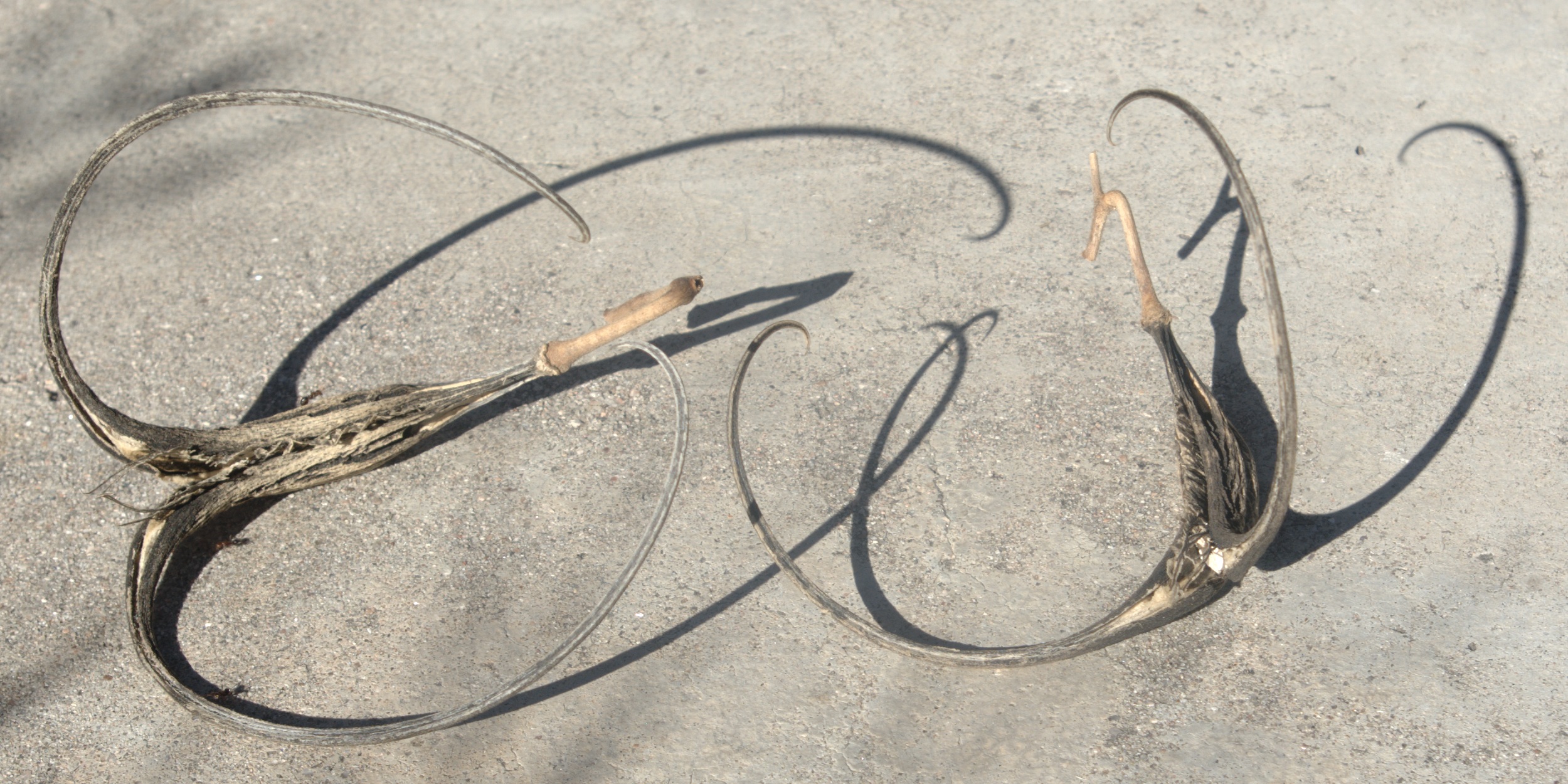
Coyote, hallucinatory mariachi in the desert, Coyote the Trickster. There’s something weird, eerie about Coyote’s song that reminds you of a devil’s claw: a melody that curves back upon itself, barbed Satanic hilarity: yip-yip-wooWOO-ah! wooHOOwahaha! Coyote does not bay, he does not bark. He laughs. And oh, my friend, he laughs at us.

Straining through the black night for echoes of Coyote, I thought of the time I was a little girl in Saudi Arabia, alone in my room in the middle of the night when a jackal came calling. It must have been right outside the bedroom window. In the dark, in the quiet, the howl of a jackal is very loud, very loud indeed. In my childish fright, I imagined the beast was under my bed.

As much as he looks like Coyote, even is called by people in India a Trickster, the jackal does not sing like Coyote or behave like Coyote. Jackal bays, and he bays long, mournful, and clear. It’s not a belly-deep sound like a hound’s. It’s a high-pitched, endless howl taken to soprano register and held longer than you would think possible for any breathing creature: roo-roo-ROOOOOOOOOOOOOOOoooo-ra-ra-rah. It’s a sound that seems to fill all of existence and seep into the nooks and crannies of the cosmos, mesmerizing in the depths of its terror.

And yes, like Coyote he would like to eat your poodle, your chihuahua, your cat,  your corgi. But Jackal is not so easily satisfied. This is a dog that will chase down a rider on a horse. Two of our friends were riding their horses outside of camp late one afternoon when a pack of jackals materialized out of the white sand dunes. After stalking them briefly, the jackals gave full chase. Our friends spurred their mares and took off on a dead run. They barely made it through the main gate, where the Arab guards drove off the jackals with gunfire.

Speaking of barely making it through the main gate, one of my students occupied half the period trying to persuade me that instead of addressing the assignment he should write about the latest drama in his life.

I try to distance myself from students’ personal stories. Freshman comp positions one in the English Teacher as Mom role. And I do not want to be their mother. They break my heart too often.

This one was with a bunch of young people who crashed a party. When the resident partiers tried to drive them off, a free-for-all broke out, in which our young pup’s best buddy brained one of the opposition with a vodka bottle. Our pup’s vodka bottle.

The result: Best Buddy is in jail, charged with attempted homicide and assault with a deadly weapon. Pup is on his way to court, thereat to be deposed and then put on the witness stand.

I. do. not. want. to. know.

Where, I asked him, where were your parents???? Where were the parents of the young people whose family’s home was trashed when your buddy ran his truck through the block back fence and then through a wall of the house? Where, where, WHERE were the adults?

He gave me a blank look.

Where were they? Presumably off somewhere else behaving like children themselves. Damn their eyes.

But the nice thing about freelance teaching is that it doesn’t entail too much work. This afternoon is drop-down dead gorgeous, one of the most beautiful days I have ever seen in this land of beautiful days. Reasonably confident that Coyote had gone on his way well-fed and content, the Cassowary and I spent a fair amount of it loafing in the leafy bower outside the dining room.

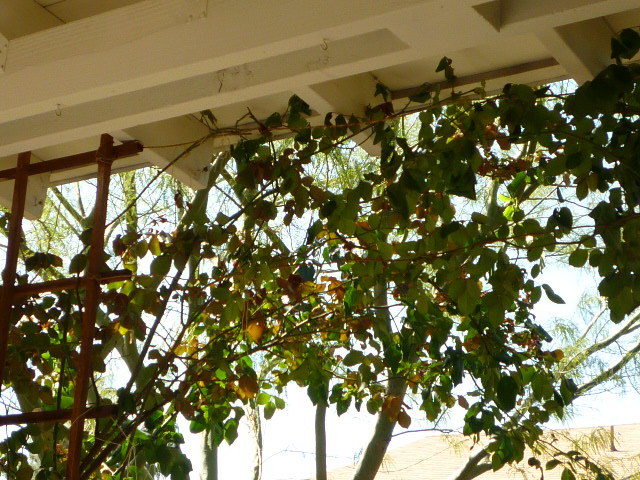
The tea roses, like these much-revived climbers, are bursting forth in plant joy after all the rain we’ve had. They’re already beginning to make extravagant blossoms, along with the bougainvillea and the various potted plants that decorate the yard.

We are, unmistakably, . . .

Not a coyote

Images:

Coyote by Arizona Roadside, Marya
Devil’s Claw. JerryFriedman. Creative Commons Attribution-Share Alike 3.0 Unported

Costco rocks!

At the risk of making this blog sound like the official house organ of the Costco Fan Club, I have to say that the joint certainly came through today. I could not believe it! They took back almost $200 worth of junk, some of it stuff I would normally not dare to ask a retailer to accept.

Okay, it wasn’t surprising that they refunded all my money for the Flip video camera that didn’t work. Their return policy on electronics has always been pretty amazing. Even though they shortened the period in which they would accept returns on such gadgetry, they still will take back just about anything. So, voilà, $130 back on the card.

Now, here’s where it gets amazing…

After the CSR kindly returned my money for the camera, I presented a bag full of raw, sliced-up leg of lamb.

Yes.

My excuse: after I cut it up and put the stuff I intended to eat later in the freezer, I fried one piece of it and realized it had turned. (Rancid is the word we’re groping for.) Yea, verily, you could smell the off odor even though the stuff was frozen solid.

More money back on the card. That was only slightly surprising.

It gets better…

Then I trotted out the RoC facial blowtorch and explained what had happened when I applied it, following the instructions.

She said, “Oh, yeah…I can see that redness on your face.”

“It’s better today than it was yesterday,” I remarked.

Incredibly, she returned my money in full even though I presented her with three unwrapped tubes of face cream, two of which had been opened and partly used!

I couldn’t believe it. Really, I thought they might refund my money for the rotten lamb, but I expected to be told to take a flying f*** at the moon when I asked for money back for the used cosmetics.

Is that or is that not astonishing?

A$k and ye shall re¢eive!

Hoot! Check this out!

A really interesting article has just popped up over at Brip Blap. Steve writes about what happens when a real estate seller idly googled the name of a buyer and came upon the person’s Facebook page. It’s an amazing story.

I won’t spoil the fun by rehearsing it here: you’ve gotta read it!