Coffee heat rising

Kids & Costs: Another point of view

Guest Post by Frugal Scholar

Since I took issue with Funny’s** premise—that having children is intrinsically and unavoidably expensive—and since I promised to write something for her, here is a short version of what I would say to prospective parents.  First of all, I’ve read Elizabeth Warren’s books and articles. She is truly a voice for the American middle-class. I love her. In one of her books, The Two-Income Trap,  she avers that American middle class folks are in a bind: they MUST buy houses in neighborhoods with good school districts. These houses are pricy and come with high property taxes. Hence, both parents must work. Hence if one parent loses his or her job: disaster! This book, by the way, was written before the bursting of the housing bubble, or, as Funny (or I) would put it, the Bush Economy. [uh-oh! Evan, hang onto your hat! 😉)

When I read Warren’s book, a library copy as befits a frugal type like myself, I found myself saying NO. It doesn’t have to be that way. I feel there is always a choice.

Before I moved into the pricey neighborhood, I would check out the schooling in less desirable areas. Often, the schools are better than one would think. Or there are enrichment programs. I am skeptical of school rankings, incidentally, since they seem to correlate with the wealth and education of the parents. So that is what you get in the “better” school districts.

If the schools are really unacceptable, I would consider homeschooling. Why not? The money you save by living in a cheaper house could obviate the need for one parent to work. I would hate to do this myself, but there are many passionate homeschoolers.

If you decide you MUST live in the great neighborhood, why not rent an apartment or buy a too-small house? As anyone with kids in college knows, the years fly by. A little discomfort in the service of a greater good is a fine lesson to be teaching your children.

As a person who is hardwired for frugality, I run through similar processes for almost every decision I make, from the trivial (which tomato sauce?) to the momentous (which college?). As a general rule, I run a value-test on everything: with two choices, test the cheaper one first. That is why my son did soccer locally and didn’t go for the expensive and time-consuming traveling team. Why? He wasn’t that interested or good. That is why my daughter took a very basic ballet class at the local YMCA rather than at the upscale studio. Why? Ditto. Yet when it came to the summer, we opted for an expensive sleep away camp for both. Why? Because as members of a minority religion, we felt it was important for the children to get a sense of their culture.

I hardly need to say that other families will make different decisions, owing to the different talents and interests of the kids. I also happen to believe that most children are over-scheduled these days. That belief fits into my  general laziness.

My happy memories are of trips to the Children’s Museum, Aquarium, and Audubon Zoo—we were members of all and went a lot. Doing art together (I splurged on top-quality materials). Cooking together. Taking walks. Reading. Going to FREE concerts. We spent a lot on trips to faraway grandparents. And, through the years, I kept waiting for my children to get expensive.

**OOPS—just noticed that the post to which I took issue is a GUEST POST. I don’t know what Funny thinks.

(LOL! Funny thinks kids cost even more than pets. And that’s a lot!)

Don’t miss these great posts from Frugal Scholar:

Paula Begoun’s Skincare Recommendations: Anti-aging et al
Kitchen Remodel on a Budget: Beginnings
The Parental Safety Net

An attack of asceticism

{sigh} Decided to kick the caffeine habit for awhile and so now have a fine caffeine deprivation anemia headache. Today being only the second day of this moment of ascetic virtue, I expect another day or two of migrainish crabbiness.

Once when I went off the killer brew, the headache lasted an entire week! Dang. Hope this goes away sooner than that. I’m allergic to aspirin, acetaminophen and ibuprofen, so headaches and other minor pains are experiences to be…well, appreciated. LOL! As in “it feels so good when it stops.”

Normally, a cup or two of regular tea will dull or even kill the pain. Tea has less caffeine than coffee (heh…at least, the way I brew coffee, the result of which will melt a teaspoon left in the cup any length of time), and so it works for backing off the much stronger coffee. After a day or two, I can drop the caffeinated beverages altogether with no further effects.

Just to perfect my misery, I also decided to get off the sauce for awhile. I usually have one or two glasses of wine or beer a day. Probably two is too much, and two is the normal dose around here. Problem is, I tend to slip over that threshold with wine: an open bottle is too easy to tip over into a glass, especially  if you haven’t finished your meal and you think, “Oh well, a tiny swiggle more won’t hurt.” Several tiny swiggles more and you’ve consumed half a bottle of the stuff! Because I have to get up, walk across the room, retrieve a new bottle of beer from the refrigerator, and open it, I’ll invariably stop after two or even one: the minor effort of having to move around and flip off a top is enough to signal that enough beer is enough.

The immediate cause of this frenzy of self-deprivation was yesterday’s conversation with La Maya. She’s determined to go on a diet, and she remarked that a mutual friend has lost a lot of weight but is drinking again and so seems to be gaining it back. I’d like to say our friend is more of a lush than I, but as a practical matter a half-bottle of wine is about a half-bottle too much. So we won’t be calling her kettle black.

Also lately I’ve been having a lot of heart palpitations, diagnosed as “stress attacks” by the worthies at the Mayo. These can be pretty scary, because they cause lightheadedness that at times makes me feel like I’m going to pass out. One of these occurred the other day while I was riding down a long escalator, which was a bit alarming. More often they happen when I’m driving at a high rate of speed on some road where there’s no place to pull over. So far they haven’t caused an actual faint, but I suppose there’s always a first time. Whether there’s a connection between these episodes and the coffee or the wine, I don’t know.

But I do know that sometimes the body seems to get saturated with caffeine, resulting in an overall sense of angst and jitteriness. That’s when it’s time to get off the bean. And I suspect there’s a connection between early-in-the-day caffeine and night-time insomnia. Even though my coffee consumption ends by about ten in the morning, older people metabolize drugs (which is what caffeine is) more slowly than younger ones. So it makes sense that the stuff could build up in your system over time and begin to affect you over a 24-hour period.

Interestingly, opinions are mixed about the real harm or benefits either of my favorite potables cause. We’re told by the worthy authors of Wikipedia that

Coffee consumption has been shown to have minimal or no impact, positive or negative, on cancer development; however, researchers involved in an ongoing 22-year study by the Harvard School of Public Health state that “the overall balance of risks and benefits [of coffee consumption] are on the side of benefits.” Other studies suggest coffee consumption reduces the risk of being affected by Alzheimer’s disease, Parkinson’s disease, heart disease, diabetes mellitus type 2, cirrhosis of the liver, and gout. A longitudinal study in 2009 showed that those who consumed a moderate amount of coffee or tea (3–5 cups per day) at midlife were less likely to develop dementia and Alzheimer’s disease in late-life compared with those who drank little coffee or avoided it altogether.

Very nice. On the other hand, as we learn from the same source,

Coffee prepared using paper filters removes oily components called diterpenes that are present in unfiltered coffee. Two types of diterpenes are present in coffee: kahweol and cafestol, both of which have been associated with increased risk of coronary heart disease via elevation of low-density lipoprotein (LDL) levels in blood. Metal filters, on the other hand, do not remove the oily components of coffee.

Yes. Well, I happen to favor French-press coffee, qui s’en fie de paper filters. I’m doomed!

As for wine, medical researchers apparently like the stuff, because they can’t bring themselves to condemn it wholeheartedly. Let’s get real here: it is, after all, booze. Nevertheless, we learn that

Population studies have observed a J curve association between wine consumption and the risk of heart disease. This means that heavy drinkers have an elevated risk, while moderate drinkers (at most two five-ounce servings of wine per day) have a lower risk than non-drinkers. Studies have also found that moderate consumption of other alcoholic beverages may be cardioprotective, although the association is considerably stronger for wine. Also, some studies have found increased health benefits for red wine over white wine, though other studies have found no difference. Red wine contains more polyphenols than white wine, and these are thought to be particularly protective against cardiovascular disease.

Hmh. I’ll drink to that.

Problem is, we’re never clearly told what “moderate” consumption is. The Brits would have us believe “moderate” means about a third of a small wine glass or half a pint of beer—a sip or two that, IMHO, would never last through a full meal. Five ounces, however, is a fair amount: almost half of one of my huge burgundy glasses. Here’s one of those monsters with five ounces of water measured into it:

Two swiggles of that much wine, and I’m cha-chaing around the kitchen. w00t!

The whole idea of depriving oneself of the minor pleasures of life in the name of some health or moral benefit has always struck me as dubious. Life is difficult, after all. One has few enough small joys (or large ones). Does it really make sense that taking away the small pleasures that make life worth living is going to make things better?

I doubt it.

However, experience has shown that long-term consumption of the type of Europeanized cowboy coffee I happen to favor will build up a state of tenseness and may contribute to the alleged “stress attacks.” Since I have nothing to be stressed over just now, it’s reasonable to run a test to see whether the caffeine has anything to do with that.

And the wine and beer? Well, like my friends, I certainly could stand to lose five or ten pounds. That beloved beer, in particular, is adding mostly empty calories. Now’s the time, while the weather is good, to be exercising, cutting calories, and running off some fat.

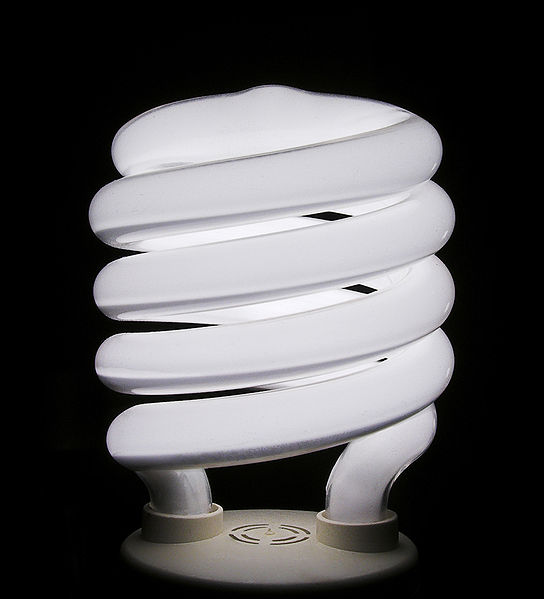
Are CFLs all they’re cracked up to be?

Am I the only person who has developed a certain jaundiced skepticism about compact flourescent bulbs (CFLs)? Or is that yellowish tinge around the eyes just the result of the dim and ugly light the dratted things throw off?

In the first blush of enthusiasm over CFLs, I went out and bought a boatload of them. Replaced all the incandescent lights in the house, except in a couple of lamps that cheerfully blew the contraptions out every time I stuck one in the socket.

Some inanimate objects have better sense than the rest of us.

Time passed. I saw exactly zero difference in the power bill. As far as I can tell, CFLs do little or nothing to lower your electric bill, at least if you’re the sort of person who turns the lights off when you leave a room and who opens the blinds during the day so as to navigate by natural light.

As it develops, there’s an explanation for that. Whether it’s the correct explanation and whether CFLs have as their unintended consequence increased greenhouse gas emissions,  I do not know, but I certainly would agree with Sudden Disruption that these devices have been oversold. And removing all incandescent bulbs from the market to replace them with the things is Big Brother at his Draconian best.

Other unintended consequences wait in the wings. For example, studies have shown that CFLs may induce or aggravate migraines, may be harmful to people with retinal disease, and may aggravate certain skin ailments. The flicker and hum, unnoticeable to all but a few humans, are audible to and may be harmful to cats, dogs, and other household  pets.

It could be, of course, that you can’t see much difference in your electric bill because you can’t see the bill at all. You can’t see much of anything by the light of a CFL. No matter what the equivalent wattage, they cast a murky glow, indeed. They muddy the colors in your room and require you to break out the reading glasses for copy you could decipher easily under a brighter light..

Especially annoying is the dim half-glow they emit when first turned on. Flick on the switch in my bedroom and you feel like you’re inside a cave lit by the bioluminscent mildew on the walls. The older a bulb gets, the more time it requires to come up to speed. It takes quite a while, now, for the lights in my house to reach their maximum brightness. Not a very maximum, we might add.

I’ve already bought a bunch of incandescent bulbs and cached them in the storage room. Thanks to the Selling of the CFL, old fashioned lightbulbs are now pretty cheap. I think I’m going to buy another couple of pallets before they go off the market!

Return-of-Premium Insurance: Is it a good idea?

Over at Bargaineering, Jim recently discussed an relatively new insurance instrument called “Return of Premium Insurance.” This is a type of term life policy whose issuers promise to return your money after the policy expires.

In term insurance, you pay a specific monthly or annual premium so that the company will pay a benefit to your survivors should you die an untimely death. Unlike whole life insurance, which builds something like equity at a very low return, term does not pretend to be any sort of “investment.” It exists simply to protect a spouse or children from the loss of your income. A policy normally has a beginning and an end (typically ten to thirty years), after which it expires and, if you still need coverage, you have to buy a new one.

Return of premium (ROP) insurance offers to return your premiums after the policy expires. In other words, if you paid a total of, say, $15,000 over the term of the policy, at the end of the term you get the 15 grand back. Thus you appear to be getting something for nothing: the insurance coverage works like any term policy, but the amount you pay for it is returned to you if you outlive the policy.

This, we’re told, amounts to a kind of “investment,” and oh, joy, the money you get after 30 years is tax-free! (It’s really not income: it’s a refund.) This strategy supposedly has the advantage, in addition to providing “free” insurance coverage, of forcing you to save over a long period.

Let’s think about that.

ROP insurance costs significantly more than ordinary term insurance, and the costs are going up in 2010 because regulatory agencies now require companies to return a significant portion of your premiums should you cancel the policy before the end of the term. These policies can cost as much as 50% more than a plain term policy. If you can afford to pay that much for life insurance premiums, it stands to reason that you can afford to pay the cheaper amount for the same coverage with a term policy and put the difference away in a mutual fund.

A few insurance premium calculators that don’t make you a target for insurance salesmen reside on the Web. According to this one, an ordinary 30-year term policy for a 30-year-old man ranges from about $620 to $825 a year. A middling premium for term insurance, then, would be about $720. A similar calculator for ROP shows him paying $2,270.50 a year for a 30-year ROP policy.

The difference between $2,271 and $720 is $1,551 a year, or $129.25 a month.

At the end of his 30-year policy, our ROP buyer, who by then is 60 years old and contemplating retirement, gets $68,130 back. At that time, an average 4 percent inflation rate  has reduced the buying power of this amount to $21,005.75, in 2010 dollars.

What happens if our consumer buys the old-fashioned, plain-vanilla term policy and stashes the extra $129 a month in savings?

Let’s say he starts with nothing but invests the $129, faithfully, month after month, in a mutual fund returning a fairly typical 6 percent. In 30 years his fund is worth $129,582.44. The corrosive effect of inflation erodes the purchasing power of this amount, over 30 years, to $39,952.69. But even this pallid value is almost twice as much as he would have had were his premiums simply refunded to him.

Meanwhile, however, the insurance company is not hiding our consumer’s premiums under a mattress. It also is investing the money, but instead of a mere $129, the company has his entire ROP premium to invest: $189.25 a month. In 30 years at 6 percent, the policy earns $190,104.47 for the insurance company. After the company returns $68,130 to the customer, it sees a profit of $121,975.

That’s assuming the company stays in business for 30 years. We’ve seen what “too big to fail” means…who would have thought, just five years ago, that major banks would go down in the dust? An insurance company is just another financial institution, no more nor less vulnerable to the vagaries of future recessions than any other corporation. If the company folds before the 30-year policy expires, our consumer could very well lose all of his “investment,” since a bankrupt company is unlikely to honor a contract to return money it doesn’t have.

Pretty clearly ROP life insurance is a great idea…for the insurance companies!

😀

Consumer-Proof Packaging? Make the retailer open it!

So while I was visiting Costco to collect the AMEX rebate and get some gas, I also picked up some RoC Retinol Correxion Deep Wrinkle Fancy Flashing Lights and Mirrors Face Cream. I’d wanted to get some AlphaHydrox, which (as one might suspect) contains a stiff dose of alpha hydroxyls and did indeed make my ruggedly seasoned face look much better when last I used it. But couldn’t find the stuff at the drugstore on the way from the college to the Costco, so settled for the RoC, which boasts not only alpha hydroxyls but also a retinoid compound. It comes highly recommended by those who claim to be in the know. And it’s made in France. Oooooo! Must be good!

Like the mineral make-up, this set of three small tubes of overpriced face goop also came encased in steely hardened cardboard and impenetrable plastic.

Grrrrr…. To make a point, I asked the check-out dude if someone at the store would please cut the consumer-proof package open, since the last time I bought a package of make-up there I wondered if I was going to slice off a finger before I could get at the stuff.

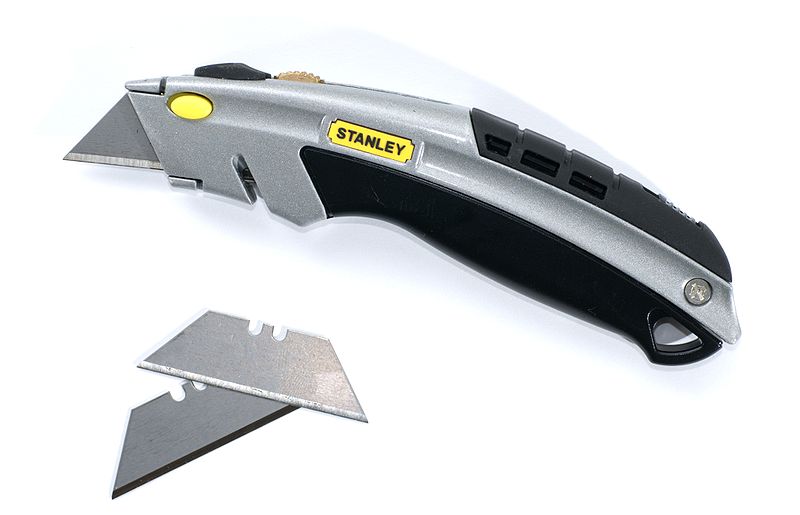
To my amazement, he whipped out a box cutter and cheerfully sliced all the individual components free from their plastic prison!

Clearly, he was not dealing with the first person to make this demandrequest.

So. Now we know: whenever you are forced to buy items sealed in wretched impossible-to-open packages, ask the store’s staff to open them!

Big-picture thinking and the penny-pincher

This morning a fresh experience led me to realize that I spend way too much time on penny-pinching and way too little on focusing on the big picture that is my life—or more to the point, that is my earning potential.

Yesterday one of my former students sent me a LinkedIn invite. This caused me to return to that much-neglected site, where I was reminded that an old friend, a graphic artist with whom I worked at Arizona Highways and later through a talent agency I ran, had made himself one of my “contacts.” When I dropped him an e-mail to ask how things were going and mentioned that I’m now free of the Great Desert University, he invited me to join him for breakfast today with a business networking group he frequents. So, as dawn first colored the sky, I was shooting across the city to a Good Egg restaurant in one of Scottsdale’s toniest strip malls.

I arrived early, and since I didn’t want to be first at the trough, I spent 15 minutes or so window-shopping.

In more halcyon times, a colleague and I used to meet about once a month for lunch at the expensive trattoria that forms one of the small gems in this iridescent commercial strip. She has since moved to a historic whaling village in Massachusetts, and I have since taken to clinging to every penny that comes my way, and so I haven’t been back there in a long time. As I strolled past the elegant interior design stores, clothing boutiques, and gift shops, I thought, “Imagine what it would be like to be able to shop in one of these places whenever you feel like it!”

But when my friend and I were hanging out there, I used to shop in those glittery stores every now and again. And before then, when I was married to the corporate lawyer, I could indeed have shopped there any time I felt like it. Yes, it is true that even when my husband was bringing home a generous six-figure salary, I would never have purchased the luminous bedding set, redolent with satin and hand embroidery (if you have to ask, you can’t afford it…but you can be sure it’s more than my entire month’s discretionary budget). However, on my Great Desert University salary I did buy smaller items, which today I would not buy because I wouldn’t spend that much on, say, bubble bath or bathroom towels.

Can’t say I feel any great loss in the absence of these things, but still…the point is, I’ve taken to denying myself a lovely venue to hang out in and also small, not very expensive luxuries.

The meeting soon got under way: about a dozen small-business owners meet once a week to socialize and trade leads. I enjoyed these guys very much (the group was all-male, though they swore a couple of women belonged). They seemed like pretty nice gents, all of them fully engaged in their businesses and their lives. The group offered a number of ideas for expanding and improving on the enterprises I have in hand just now, and believe it or not, I got a lead to a full-time job. My old Arizona Highways pal has become a successful web design artist, and another member bills himself as “The PC Magician.” These two got me thinking about ways to improve and grow FaM.

At the end of the get-together, the group’s president suggested I apply for membership. Dues are $110 upfront and $50 a month, for which you get the pleasure of their company and breakfast every Thursday.

Gulp! thought I: Where the hell am I gonna come up with fifty bucks a month?

The money would have to come out of the S-corp’s checking account. The corporation actually has enough to cover that. But…it only just recently accrued enough to get me out of teaching one section of freshman comp next fall. And oboyoboy, do I want to get out of teaching one section of freshman comp! If I spend the money on socializing, I’ll be stuck with three sections next fall. And that, in addition to adding to the misery quotient, will put me over Social Security’s penurious earnings limit.

However, I did feel the group delivered more than that much in value received. And it really would take only one assignment to pay for it. Or one full-time job, eh?

Driving home, it dawned on me how ridiculous it is to feel I can’t spend $600 a year to belong to a trade group.

And, like the morning star sitting in that early dawn light, the thought also struck me that I don’t need to draw down money from the S-corp to get out of teaching one section of composition. In fact, I would do a great deal better not to do so! It would be far better to use $2,400 of the $10,000 emergency savings cushion, and to use the pretax money in the S-corp to pay for business expenses.

Duh!

The savings fund has already had the tax gouged out of it. The community college is withholding 15 percent of the $2,400 I earn per class, so that third section is actually worth only $2,040. Using after-tax funds I already have would provide an extra $360 to live on. Meanwhile, The Copyeditor’s Desk can pay for anything that’s even vaguely presentable as a business expense with revenues that are effectively tax-free.

This strategy has two other sterling advantages:

By pushing my earned income below $14,000 in 2010, it would ensure that that I absolutely would not exceed the subsistence wage Social Security allows.

It would cut my taxes significantly, since my total taxable income would drop well below $30,000.

I came away from the meeting feeling energized and excited about building Funny about Money and The Copyeditor’s Desk into serious money-making operations that might, in the future, support me in the manner to which I wish to become reaccustomed. And in that flush of ambition, I realized that I spend too much energy and time figuring out how I can live on next to nothing, and way too little time developing assets that I already have and that could do a great deal more for me.

Case in point: sitting here in front of the computer shivering with cold because I’ve calculated, penny by penny, how much I need to save on utilities in the winter to pay the exorbitant air-conditioning and water bills next summer.

Why have I spent all that time counting little pieces of copper? Wouldn’t I be a lot better off to invest some money in living normally and to devote that time to marketing FaM, spinning off a book from it, and hustling some more editorial clients?

And why am I wasting my time teaching time-consuming, exploitively underpaid junior-college courses when I can live on cash I already have and use that time to develop the two far more interesting enterprises that have already shown they can generate income?

Why? Because I’ve been obsessively focused on pinching pennies, at the expense of thinking about the big picture!

What’s the big picture? It’s life. And it’s how I can make life in Bumhood comfortable without having to accept insulting wages and without having to deny myself little luxuries like central heat.

And so, my friends, to work. It’s time to jump-start that old entrepreneurial engine and get it running again!