I did it again. Yesterday morning I burned a layer of polenta to the bottom of my favorite saucepan. Again. Gotta stay away from the computer while food is on the stove!
This is a venerable, beloved, and very expensive pan. It must be saved. Luckily, I stumbled across an easy fix, one that requires almost no elbow grease.
It goes like this:
First, soak or rinse away the stuff that’s not burned on. Then drop a generous handful of baking soda into the pan.
Fill the pan about halfway with water. Put the pan on the stove over high heat and bring to a boil. Do not wander off! Keep an eye out, because this stuff is likely to foam up and bubble over onto the stove. It’s easy to clean up, but who needs an extra mess to fiddle with?
It WANTS to boil over!
As soon as the baking soda/water solution reaches a boil, turn down the heat to a slow simmer. Let it simmer for about twenty minutes—watch to be sure it won’t bubble over before going off to do something else. No two pansful of this stuff behave the same way.
After it’s simmered for a while, turn off the heat and let it cool. Once the pan and its contents have cooled to room temperature, you should be able to wash out the scorch easily. Because I was doing this at about 11:00 p.m. last night, I left it to soak until this morning.
Here’s the result:
This was achieved with no scrubbing! The layer of scorch fell out of the pan like a piece of brown fruit leather and slithered down the garbage disposal. Then I used an ordinary sponge to wipe out the pan, without benefit of Barkeeper’s Helper.
Amazing, no? I’ve also had this work on a Dutch oven where the burnt carbon had annealed onto the stainless steel like enamel. After the baking soda treatment, a metal spatula scraped the stuff off pretty easily. In that case, I did have to apply a little scouring powder to finish the job, but still, surprisingly little effort was required, and a valued pan was rescued.
What with the dryer overheating the other day and 87 gerjillion errands and chores to do yesterday and today—no way can I stay home and watch that thing for two hours while it thumps through two loads of clothes, a load of sheets, and a load of furry dog bedding—I decided to revert to my favorite clothes dryer: a rope line strung between a couple of hooks on the rafters.
Secretly, I much prefer to line-dry the laundry. Why? Because it’s quiet! A clothes line does not nag you by buzzing raucously at you every ten minutes. Nor does it bump, thump, overheat, or use electricity. I hate buzzers. I love silence.
And, truth to tell, I rather enjoy getting things to happen off the grid. 😉
It’s hot and breezy here today. The underwear that came out of the first washer load was dry by the time the second load was done. Even the bluejeans are now about dry, so there’ll be plenty of room on the makeshift clotheslines to hang the sheets that are running through the wash right this minute.
In the duh! department, today I happened to notice the score upon score of cuphooks Satan and Proserpine drove into the rafters—evidently they were seriously into Christmas decorations. Finally, after—what? five years?—in this house, it dawned on me that those little gems were made to hang clothes on.
I use plastic coathangers, because they don’t tangle up the way wire ones do, nor do they seem to breed in the dark of a closet. At least, not as fast. Because plastic doesn’t rust, there’s no reason you can’t shake the wrinkles out of a shirt, fresh out of the washer, and hang it right up to dry. If you arrange the shoulder seam along the top of the hanger, you avoid getting those hanger bumps. And clothes hangers can dangle from the rafter’s Christmas-light cuphooks, obviating the need for clotheslines or clearing your makeshift line for sheets.
Pants can be folded neatly and either hung on one hanger if the day is hot and dry, or put up on two hangers, each pant leg over a separate hanger. They dry much faster the second way. Alternatively, you can use one of those hangers with two clips, and just clip them up by the waistband. Knit shirts can be laid out flat on the floor to dry, which is better for them than running them through a dryer.
I expected to have to run the new linens that came from J. Jill through the dryer briefly, with the heat off, to shake out the wrinkles. But no! To my amazement, the little orange shirt and the beige Capris (which I did clip up by the waistband) hung dry beautifully. They look better than they did in the store! They don’t even need to be ironed.
Towels, as we know, can line-dry up like cardboard. I personally am not fond of stiff towels. However, either of two strategies will solve that problem.
• After the towels are dry, toss them in the clothes dryer for about five to eight minutes.
or • Get all the detergent out. And we do mean ALL the detergent.
It’s amazing how much detergent remains in clothes after the rinse cycle. One reason for that, as we’ve seen, is that most of us dump way too much detergent into the washer. Using about half the recommended amount will get your clothes just as clean and give you a chance of getting the stuff out. Another reason, I suspect, is that washers are really not very efficient at rinsing out soap.
Determined that my favorite bath towel would come off the line soft and fluffy, this afternoon I ran that load through the rinse cycle a second time. Great flows of suds came out, just as much as the first time around. (My dryer hose empties into a work sink, which Satan installed over the former washer drainpipe. Don’t ask!) Then I ran it through the entire wash cycle with no detergent. More great flows of suds. Only after a third go-through in plain water did the water start to run out of the washer with relatively few suds. At that point I gave up. We’ll see how it turns out when it’s dry!
If you iron your cotton outfits, line-drying clothes that were washed in hard water produces an effect roughly like a light starch job. Pressing line-dried clothes gives you a crisp, sharp finish. I love the effect!
Does line-drying your clothes save much on utility bills? Apparently not. One source suggests the cost of drying a typical load of laundry in an electric dryer is 30 to 40 cents; 15 to 20 cents in a gas dryer. Today I washed four loads, saving at most $1.60. Since I don’t wash the sheets every weekend (just don’t have that many hours in the day!), usually I’d be doing two loads a week: 80 cents worth of drying.
Hmm… Let’s say I washed the sheets and dog bedding every two weeks. That would be 26 weeks at $1.60 and 26 weeks at 80 cents, for a total cost of $62.40 a year.
Well, saving $62.40 over the course of a year is very nice. But in the large scheme of things, pretty negligible.
The real benefits of line-drying your laundry are worth a great deal more than a few pennies here, a few pennies there: the pleasure of watching clean, fresh sheets billow in the breeze, the stress relief that comes from excusing yourself from mechanical harassment and allowing yourself to tend to the dry clothes at your convenience, the wonderful all-of-outdoors scent of clothes and bedding dried in the open air.What luxuries!
Come to think of it, though, this strategy could let me put off having to buy a new dryer for a year or so. That is something, spending-wise. I about fainted dead away when I saw the prices at Lowe’s and Home Depot yesterday. The appliance manufacturers have, as expected, edged the price of dryers up to match the extravagant cost of the new, outrageously overpriced front-loading washers. Only a couple of models were still in the $350 range (add sales tax and we’re talking $400). Most of them ranged from $500 to $1,000.
Give me a break! A dryer is a perforated drum with air blowing through it. It isn’t even worth $350! What can you possibly do to a perforated drum with air blowing through it to drive its price up to five hundred bucks?
Okay, so if we add the cost of a new dryer, now we’re talking savings: $350 + 9.3% tax + $50 delivery + $62.40 savings on the electric bill = $494.95.
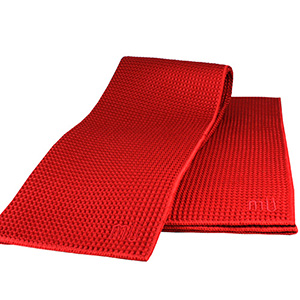
Tammy points out that you can make napkins from bath towels and face towels, among other handy sources of fabric. When I’m here alone, one of my favorite napkins is a waffle-weave dish towel. They’re very absorbent, soft on the hands, and big enough to cover your lap generously.
If you have a family and would like them to behave as though they live in civilized society, it would be very easy to snip a waffle-weave towel into napkin-sized pieces and seam the cut sides. You could get two out of a single towel, and since they only cost about three bucks apiece, this is highly cost-effective compared to buying finished napkins. They come in lots of colors and designs, making it easy to find something that goes with your decor.
Beth points out that it’s easy to make one of those microwaveable warmth bags with a sock and some rice (oatmeal works handily, too). These things are great. She also contemplates various ways to apply ice to sore muscles and bruises.
If you’re not repulsed by the presence of plastic, a convenient way to make an ice pack is to dampen a paper towel (you could use a cotton washcloth or towel, of course!), lay it flat inside a ziplock bag, zip the bag tightly shut, and freeze it flat in the freezer. The result is much less messy than a plastic bag full of ice cubes—doesn’t leak as the ice melts—and as it softens you can mold it around a sore body part. To keep from applying extreme cold directly to the skin, wrap it in a light towel (such as a cotton flour-sack towel) or a napkin.
I find these work exceptionally well for migraine headaches. Yes. Weirdly, an ice pack may ease your migraine. Whatever works, works.
Frugal Scholar, who must read everything of value on the entire Internet, stumbled upon an amazing remark in, of all places, the Wall Street Journal. In one article, Seventh Generation founder Jeffrey Hollender remarks that it’s surprising most people use laundry detergent at all: “You don’t even need soap to wash most loads,” he says. The truth is, it’s the action of the agitator, not the chemicals, that gets most clothes clean.
Uhmmm… Say what, my Captain of Industry?
Most of us have figured out that we need only a fraction of the amount we were brought up to pour into the washer, partly because newer detergents are far more efficient and partly because you don’t really need even the recommended amount. But…no detergent at all?
Well, of course, the gantlet was down.
Straightaway to the garage, stately home of the washer and dryer! Mustering all my nerve, I laundered two small loads with zero detergent, one of whites and one of coloreds. The whites load included a few pieces of underwear; the colored, a shirt I’d worn for a day of gardening.
The result? Pretty interesting.
Everything came out looking clean. Minor stains that I thought would come through unscathed actually washed out. This pair of fluffy cotton socks, which I wear around the house and patio as slippers, was pretty grimy when I put them in the washer. They came out looking exactly the same as they do when they’re washed with detergent.
These socks, which are three or four years old, always have a little gray on the bottom—no amount of detergent or bleach gets it out. If anything, they actually look a little better than the last time I ran them through the washer.
Peeking into the machine during the “wash” cycle, I found the water looked exactly as dirty as it does when I’ve added detergent, only without the suds:
The “rinse” cycle ran clear as tapwater.
The Sniff Test: By and large, all of the freshly washed clothing came out with an odor: it smelled of clean water! Because I didn’t want to heat-set any residual stains into the whites, I line-dried those; the coloreds went into the dryer. When fully dry, most of the pieces were fresh-smelling and free of either body odor or yukky commercial factory perfume. I use a perfume-free detergent, anyway, so there was no way the clothes would have retained any scent from previous launderings.
A couple of pairs of undies retained a very slight odor. I ran one of these through again with the colored clothing, and after a second drubbing in the washer, it came out completely odor-free.
Isn’t that something!
Conclusion: Because I’m not willing to consume the amount of water needed to run my underwear through the wash twice each week, I would put a small amount of detergent in with those. But apparently most outer clothes that have not absorbed much B.O. and that are not excessively dirty can indeed be washed in plain, clean water, without benefit of factory chemicals.
They’re b-a-a-a-a-c-k! The little myrmidons who think my yard is their empire are moving in on the house again. I had a little frenzy the time they got into the kitchen, where they evinced great joy at their discovery of the dishwasher, a rich new world heretofore unknown to the Ant Queendom. And then, after an hour of frantic activity, was a bit ashamed of myself for having sprayed them in a panic.
Yuck! How unecological. How self-destructive. How…messy!
After all, I do know better. When I first moved into this house, the backyard was overrun with ants…never saw so many biting ants in my life! About that time I realized I’d purchased the House from Hell, and the previous owner was Satan. The ants, it appeared, had burrowed all the way down to Satan’s throne.
Gila woodpecker
I really dislike bug spray—have had it make me very sick, indeed—and I will not have an exterminator on the property. (Not willingly, anyway.) Ant baits are pretty effective, but at the time I had two big dogs and didn’t relish leaving poison on the ground where they might get at it.
A little research, however, revealed that many birds, even seed-eaters, will eat ants. Matter of fact, a few local characters eat a lot of ants: the flicker, its relative the Gila woodpecker, the curve-billed thrasher, starlings, sparrows, grackles, Abert’s towhees, possibly mockingbirds. So, at that time I called in as many birds as I could by hanging bird feeders from the eaves and from a branch of the neighbor’s tree that overhung my side of the wall. This worked well. Within a couple of months, the ant population was under control.
Understand: I’m not interested in killing off all the ants. They serve many useful purposes, and besides, they’re interesting creatures. I just don’t want them to make themselves at home in the house. Or around the patios where I like to sit.
Abert's towhee
Lately, I’ve noticed it’s been unnaturally quiet in the mornings and evenings. At dawn, normally, the neighborhood is all a-chatter with birdsong. In the desert, a city with its lawns, trees, and shrubbery forms a kind of riparian area, and so we have a lot of birds. This summer’s extreme heat and droughty conditions, though, may have killed them or driven them to shelter. The heat really has been outrageous this year: we’re two days short of September and it’s still 114 degrees. Plus the ash tree in front has finally, once and for all, died. That removed a lot of shaded shelter, so they may have just moved on down the block. Still: weirdly silent. As in “no birds.”
Then a week or so ago, I’m sitting on the deck and yipe!My feet are getting chewed! The place was overrun with ants! Looking for nothing in particular, as far as I could tell: just foraging around. They were coming from a mound next to a lavender plant which, incidentally, they seem to have undermined and killed. I put down some baits, and, to keep the dog out, laid an old wire fan cage over them.
Red-shafted flickers
The dog and I decamped to the back porch for breakfast. I’d carried a dish of dog chews outside, so I could bribe her to leave me in peace to read the paper. Forgot to bring that in. That evening when I went out to retrieve it, lo! A blanket of ants was swarming over the doggy chews and all over the glass-topped table, carrying off the dog treats an ant-bite at a time!
Argh! In that encounter, a few of the little gals made their way into the house. I beat them back with dish detergent, eventually carrying the day.
But, it was clear, only a day.Time to mobilize the troops.
My neighbor next door—she of the overhanging tree limb—dislikes birds. Hates them. That could be another explanation for their absence, come to think of it. She threw a hissy-fit when she discovered Other Daughter, who’s next-door to her on the far side, was feeding the doves and thereby calling in a passel of grackles…which, it must be admitted, are messier than your average airborne elephant. As you can imagine, then, I need to be careful here.
This afternoon I bought some fresh bird feed, the old stuff having run out a couple years ago, and hung up the two feeders. If you enjoy using your patio to eat outside or just to sit and enjoy the fresh air, you don’t want to call birds in too close to the house. They can make quite a mess, not being amenable to toilet-training. So I placed one feeder in an orange tree, out of the neighbor’s line of sight, and one on an eave away from the patio and the deck, the same location where it hung the first time around.
There are other nonchemical, relatively nontoxic ways to engage battle with ants. Boric acid, available at drugstores and sometimes at Target, is more or less benign, unless you’re a cat and given to licking your paws. Sprinkle a line of it around the foundation of your house and across each threshold. It’s like fine cut glass to ants—slices up their exoskeleton, eventually causing them to dehydrate and die. Because it doesn’t kill them quickly, they’ll carry it back to the hive on their bodies, spreading it around among their sisters and, with any luck, getting some of it on the queen. Takes a while, but eventually it will get rid of them.
Some people claim you can “erase” the scent trails they follow (ants lay down pheromones to communicate where the food is) with 409 or similar strong household cleaners. I have never found that to be true.
Some say you can kill a hive by pouring boiling water over it. Ditto: never found it to work. Doesn’t do any plants around the nest much good, though.
Ant traps are almost as effective against the little ladies as roach traps are against roaches, which is to say very effective. You have to be sure they’re out of reach of pets and children though. And they do kill all the ants, which might not be the wisest thing to do.
No. Birds are your friends here. Bring enough of them into your yard and they’ll take care of the ants for you. They’ll make short work of field roaches, crickets, and other annoyances, too. A plastic bird feeder (available cheap at Home Depot; I got one of mine even cheaper at a yard sale) or even a planter dish full of bird seed will do the job. Remember to refill the feeder(s) every day or two, to keep them coming back. If you don’t have room to store birdseed, bread crumbs work just as well: save heels of bread, break them up into coarse crumbs, and scatter them around some distance from porches and patios. Then sit back, enjoy the show, and say good-bye to the bugs.
Does anyone know how to get liquid Ivory dish detergent off the floor? If so, will you please give me a clue in the comments?
To save on the wasteful amounts of detergent those squirt caps that come on detergent bottles dispense, I pour my detergent into a squirt bottle. One small squirt goes a very long way and makes a bottle of the stuff last forever.
Well, this morning, just as I was about to run out the door, I spotted one of those ONE MORE JOBS that need to be done right this minute: wash out the blender jar before the remains of the breakfast blendie petrified to it. Picked up the squirt bottle, grabbed the handle, and the thing fell apart. Before I could catch it, the bottle of detergent, now lidless, bounced across the counter, flew into the air, and splatted down on the floor. About 14 ounces of liquid goop burbled out, all over the tiled kitchen floor.
I used a roll of paper towels trying to soak up as much as possible. Then hauled out the bucket and tried to wipe it up with water. Every squeeze of the sponge into the bucket results in a bucketful of suds. And adding water to the gunk on the floor creates a slippery patch of slime—so slippery that when I’m down on hands and knees my knees slide out from under me!
Lordie, what a mess! This is even worse than the time I knocked a quart of paint off a ladder onto the shag carpet! At least paint-soaked rugs aren’t a menace to life and limb. This stuff is right in front of the sink, and if I slip in it and fall, that tile is freaking hard!
I’ve got to go to work. Having done the best I can to soak and sponge it up, I’m going to toss a throw rug over it to keep from breaking my neck until such time as I can figure out what to do. One idea I had is to slop water on it and then suck it up with the shop vac…trouble is, the kickboard around the floor is made of the same wood as the cabinets. It’s already gotten soapy water in behind it, which surely won’t do it any good. I’m afraid if I get a lot more water on that, it’ll wreck the stuff.