I’m driving down the road headed back from campus to the Funny Farm and thinking, “Good grief! Three thousand dollars is more than a fourth of the savings I’ve earmarked to supplement Social Security for the next year. That ‘supplement’ represents half my month-to-month living allowance. So we’re talking about disappearing three months’ worth of money for living expenses.”
Furthermore, think I, the prospect of sitting in a dentist’s chair while the guy bangs away at my mouth for two hours sounds…well, counterproductive. As in a very, very bad idea.
Then it occurs to me to wonder whether two crowns are really necessary. Dr. Davis, he of the pricey parking lot, once opined that though the chipped crown on the bottom molar is unaesthetic, a) no one can see it unless I open my mouth in public and yawn like a hippopotamus, and b) it’s perfectly functional. As for the broken tooth on top, the new dentist polished the surface smooth, so that it doesn’t irritate my tongue (in fact, it irritates a lot less than it did after he filled the first break in it). It also seems to be perfectly functional. It doesn’t hurt, and since my teeth are already so dull I can’t chew up a normal bite-sized piece of meat, there’s no change in my ability to chew or eat. hmmm….
The light dawns...
INSIGHT!
If you can get a second opinion for a doctor’s diagnosis and you can get a second opinion for a veterinarian’s diagnosis, why the heck can’t you get a second opinion for a dentist’s recommendation?
If this tooth were so badly damaged it needed to be crowned, wouldn’t it hurt? Not very much of it broke off…certainly not a big chunk, as this guy described it. I would have noticed if a fourth of a large molar had fallen into the mouthful of rice and canned beans I was eating at the time. It says here that the stuff underneath the white enamel of your teeth is called dentin, that it’s yellow, and that if it’s exposed, what you get is sensitivity. I’ve been guzzling iced tea, bourbon on the rocks, and hot coffee for the past two days, with nary a twinge.
Bounce out of the car and into the house, grab the phone, and call Old Doc Davis’s office. Ask if he’ll see me. The receptionist whose head I nearly bit off the last time I was there is polite, if you can imagine. She arranges an appointment on Monday.
Grab a mirror and a flashlight. Take a real close look at that busted tooth. It’s white all over, just the way it looked in the digital image New Doc made of it. That is to say, it’s the same color and consistency of all the other teeth in my head. Pretty clearly, this guy doesn’t think there’s any urgency to crown it; otherwise, he wouldn’t have let his office assistant make an appointment at the end of May.
Maybe, just maybe, it doesn’t need to be crowned at all. Or, if it does, maybe there’s no reason to remove the old crown on the bottom tooth and change that out. And even if that is necessary, maybe it doesn’t have to be done in one long torture session.
And if I really do need two crowns, maybe Davis will do them cheaper.
What could be better than an old friend who doesn’t forget you even after she leaves town? Thanks, Your Godship, for reminding her to call and come over while she’s visiting here.
While all that conversation was going on, a few days ago, at Frugal Scholar’s place and waypoints, about fancy pans and serviceable alternatives, I was crawling around the Net looking for talk on the subject and came across a thread on some forum (which, alas, I’ve now lost track of) in which people were talking about how to clean scorch and burn stains off their expensive cookware.
You know how if you go off and leave a good stainless pan on the burner and forget it long enough to let it burn dry, it will get dark brown flame marks seared into its shiny exterior? Well, I’ve done that to two very nice pieces, a teakettle and that little 8-inch frying pan whose apparent demise I reported during the aforementioned back-and-forth. One commenter described a way of removing those stains, which I thought were permanent.
Said he: Make a thick paste of Barkeeper’s Helper. Rub this into the stains and then leave it to dry. Leave it at least 10 minutes; longer if desired. Then apply some elbow grease.
Hmh. At the very time I was reading this, I’d pressed a beautiful Calphalon teakettle—very expensive, I’m sure—into service as a flower vase, having scorched and scarred it by, yes, going off and forgetting it on the stove. Calphalon had sent it as a replacement for my all-time favorite whistling teakettle, which a) had a lifetime warranty, b) had corroded through under the baleful influence of Arizona’s godawful water, and c) was no longer being made. I really need a whistling kettle, because the minute I wander off and look at a computer, I become utterly mesmerized and lose track of time as well as reality. That’s just what happened to this lovely, formerly shiny pot.
I’d scrubbed and soaked and done everything I could think of to get rid of the scorch, and finally figured the heat had altered the chemistry of the stainless and there was nothing to be done.
This actually is better than it was when I started the experiment with the Barkeeper’s Friend. What you see above is how it looked after the first application of BKF paste. This cleaned a lot of the stain off, leaving the marks visible here, much better than the state of the pot at the git-go.
Well! If once is good, twice must be better. Soooo…
I coated the whole darned thing with BKF worked together with water to form a slurry. Left it in the utility sink, where it sat for several hours until I had to run the clothes washer. Rubbed and scrubbed and polished with a soft Skoy cloth, and lo! Here’s the result:
Lookee there! It took all the stubborn scorch marks off—without a single scratch. The thing looks just like new.
Well. What would it do to the pitted, scorched little frying pan? This I managed to kill by allowing a strong solution of baking soda and water to boil dry and then leaving it to sit over high heat for an unknown length of time—probably about 45 minutes. The pan had the same dark brown scorch marks all over the exterior, and the interior appeared to be pitted. I’d tried cooking something in it, and it worked, so I figured I wouldn’t throw it away…but I was sad. Very sad.
After letting it sit with BKF paste all over it and then scrubbing like crazy, here’s what I got:
Dang! The interior is as smooth as it was before the little disaster! The slightly yellowish pitting apparently was…what? Baking soda burned on? WhatEVER…it’s gone now! That dark spot is a reflection of the camera. The exterior came pretty clean, too:
That mirror-like finish sure wasn’t there when the thing was covered with burnt-on grease and flame-shaped scorch marks! With one more application of BKF paste, that last little marred spot polished up, and now the entire exterior is shiny and bright.
So. With the help of a little water, a handful of Barkeeper’s Friend, a soft cloth, and a lot of scrubbing, a handsome teakettle and a fine frypan with a copper-core bottom are back in service. 🙂
Thanks to God for the lovely gentle rain She blessed us with last night. The air is cool and clean, and this morning all the flowers are shivering with plant joy.
So I was mulling over the All-Clad Frying pan issue, Frugal Scholar having triggered a certain amount of coveting with her discussion of the treasured gourmet cookware and its worthy alternatives. Way in the back of the vast cabinet under the stovetop, I had stashed a pan I’d picked up at an estate sale. A ten-inch stainless pan, just the size of the nonstick Cuisinart that’s about seen its duty and done it.
After I’d bought this thing, I’d thought how can I put my old friend down? Sentimental about a frying pan…think of that! And then instead of putting the new-to-me stainless pan to immediate use, I stashed it and kept on using the tired Cuisinart.
Well, yesterday I pulled that stainless pan out of the back of the cupboard, and what should I discover? Lo! It is an All-Clad!
It looks practically brand-new, but apparently its former owner was one of the ninnies who posts rants at Amazon to the effect that food sticks on the stainless because they don’t know how to cook in a real pan. It has some scratches on the inside as though somebody had scoured it with steel wool, and the bottom looks bunged-up a bit, as though it had been scraped back and forth on a metal burner. But it’s not badly damaged…I think it’s more than serviceable.
We’ll find out soon, ’cause I’m going to try it at the next opportunity. Not just this minute though: I’m still too sick to eat much more than a piece of toast and a cup of tea for breakfast.
Amazon’s price onthe 10-inch All-Clad is significantly less than Williams-Sonoma’s, where you’ll pay 110 bucks for the thing. Given the quality of All-Clad and that it has a reputation for standing by its products—even one of Amazon’s complainers noted that he got a brand-new pan, free of charge—a mere $75 for a brand-new one might actually be a good buy.
What do you suppose would possess a person to take steel wool to a hundred-dollar frying pan?
It’s pretty easy to clean a high-quality stainless pan. You need one or all of these:
• Barkeeper’s Friend (find it with the scouring powders in the household cleaner aisle)
• Ordinary dishwashing liquid
• Powdered or gel dishwasher detergent
• Baking soda and water
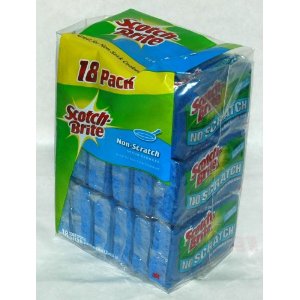
• Blue (not green) sponge with nonscratch scouring surface
So. First, if the pan is just ordinarily dirty with a little stuck-on stuff, pour water and a few drops of liquid dish detergent in it and let it soak while you’re eating your meal. Then wash it in hot water with more dishwashing liquid; often after a soak it will wash right up with no scouring. Alternatively, simply run it through the dishwasher.
If this doesn’t work, scour it with Barkeeper’s Friend. Apply BKF to the interior surface; add enough water to form a thick paste. With the soft side of your sponge, rub firmly in circles, moving from the inside to the outside. This will usually clean most dirt and stains off a good pan.
If this doesn’t work but you haven’t seared grease on in enamel-like black spots, rinse the pan well and sprinkle in about a tablespoon of dishwasher detergent. Add enough hot water to cover the soiled areas, stir to dissolve, and leave the pan to soak at least overnight. Use the hottest tap water you can get, because dishwasher detergent is activated by hot water. Next day, discard the soaking solution (do not put your hands in it!), rinse the pan well, and scrub it with Barkeeper’s Friend.
If this still doesn’t work or if you have enameled grease onto it, place a handful of baking soda into the pan and fill with water. Put the pan on the stove and heat the liquid to a boil. Turn it down to a simmer and let it cook in there for about 20 minutes. Keep an eye on it—you don’t want the liquid to boil dry! It will ruin your pan if it does. Also, this stuff sometimes wants to boil over, so you’ll need to be close at hand to regulate the heat. After about 20 minutes of simmering, turn off the heat and let the pan sit until the baking soda solution cools down completely. Then, at your convenience, scrub well with Barkeeper’s Friend.
You can use the type ofsponge that has a nonscratch scrubbing pad. These are made by Scotch Brite and are commonly available. Just be sure the packaging actually says it’s a no-scratch scrubber. These are usually colored blue. The green heavy-duty scrubbers will scratch the toughest stainless steel, so do not use these on your cookware. Never use steel wool on a good stainless pan.
It’s pretty easy. Soaking is always better than scouring. Gentle abrasives are always better than fierce ones (try substituting baking soda for the Bartender’s Friend, BTW—it doesn’t work quite as well but sometimes it does the job).
When you’re using a really high-quality pan, you don’t have to and you should not turn your burner to its blow-torch setting. To fry or sauté in a stainless pan, place a small amount of oil or butter in the pan and put the pan over medium heat. When the butter is melted or the oil is hot, add your food. Let meat sear fully before trying to turn it over—if you try to flip it too soon, it will stick. To cook bacon in such a pan, always cook it over low heat. Although this takes longer, you’re less likely to burn the bacon, and when cooked over a low flame bacon does not splatter all over the kitchen.
I do not sear beef on salt over blast-oven heat when using a stainless pan, the way you can do with a cast-iron surface. I suppose you could, but it seems old-fashioned, and besides, it’s a pretty brutal way to cook a steak. If I’m not grilling it over propane or charcoal or broiling it in the oven, I’ll fry it over medium-high heat in butter.
Have a little respect for a good pan, and it’ll treat you well. 😉
The conversation over how to strategize a more sustainable lifestyle kicks off still more of what passes for thinking around my household. In a comment, Frugal Scholar pointed out the irony that discussions of sustainability often entail buying things.
That certainly does seem to be the truth! Case in point: after learning that CFLs are supposed to save bundles on power bills, I went out and bought enough for every lamp in the house. That, we might add, was not cheap. Used them for a couple of years and finally had to conclude that I really dislike the quality of the light they emit; that their initial dimness, which gets longer as the bulb ages, is profoundly annoying; and that the truth is my power bills did not drop significantly as a result of this exercise because I don’t leave all the lights burning all the time. Not only an expensive buy, but a bad buy.
So, item 1 in buying sustainable: proceed with caution. Buy a small amount (or number), try the product for a substantial while, and assess whether it’s really worth replacing the old eco-unfriendly version with new stuff.
Second, look around you and see if you already have something in the house that will substitute for both the old ecologically incorrect product and the new (expensive, not very effective) “natural,” “sustainable,” “ecofriendly” product. Household cleaning is a rich field for this kind of trade. Here are a few ideas that have been tried around my house and found true:
DIY Glass Cleaner and All-Around Disinfectant
Windex is really nothing more than alcohol, water, a dash of ammonia, and a few drops of artificial coloring. Here’s how to make glass cleaner that works every bit as well as the expensive stuff:
Rubbing alcohol
White vinegar
Ammonia
Water
Fill a good squirt bottle about 1/3 full of rubbing alcohol, available cheaply at pharmacies and grocery stores. Add enough vinegar to bring the level up to about half-full. Add a tablespoon or two of ammonia. Fill with water. Shake gently to mix.
That’s it! It even smells like Windex. If you want it blue (or whatever), add a drop or two of food coloring…but first ask yourself why. Works well on mirrors, windows, tile, not-too-dirty bathroom sinks, and other hard surfaces. It’s a decent spot remover for color-fast fabrics, too. Obviously, don’t use it on paint or finished wood.
Scouring Powder
Baking soda. That’s it. Baking soda. Substitute baking soda, which you can buy in lifetime supplies from warehouse stores, for scouring powder. It’s mildly abrasive, contains no contaminating chlorine, and does a decent job at scouring sinks, tubs, and toilets. To sanitize afterwards: spray on some of your DIY glass cleaner—both ammonia and alcohol are germicidal. Wipe sinks and brightwork dry with a soft rag. To sanitize the toilet, be sure there is no chlorine in the water and pour in a little ammonia. Remember: never combine chlorine bleach or any product containing chlorine with any other chemical, especially not ammonia!
Bleach
Hydrogen peroxide is oxygen bleach. You can treat many stains with H2O2 , also available for very cheap at your corner drugstore or market. It probably has a mild disinfectant quality, but I wouldn’t rely on it for heavy-duty disinfecting. You may have to let peroxide sit on a surface for a while to do its action.
Want a free source of bleach? It’s called sunshine. Place a stained piece of clothing in the freezer for a few hours or overnight. Then take it outside, still frozen, and place it in full sun. Let it sit there all day. Amazingly, this will fade or even remove some very tough stains. I’ve had it get bloodstains out of white garments.
Hanging sheets and white clothes to dry on a line in the midday sun will whiten them and make them smell wonderful. Conversely, if at all possible colored items should be hung in the shade. They still smell great from the fresh air, but are less likely to fade when kept out of direct sunlight.
Dishwasher Rinse Agent
Plain ordinary old white vinegar. Pour a cup of vinegar into the washer right before turning it on. Glasses come out sparkling.
Some people substitute vinegar for JetDry and competitor products in the rinse aid dispenser. I haven’t tried this; vinegar is quite acetic, and I’m concerned that having it sit there indefinitely could damage the machine. It’s not at all hard to splash a little vinegar into the washer at the last minute. The stainless steel tub in my five-year-old washer is still spotless and shiny, and I never have a problem with clogged spouts on the washer arms.
Fabric Softener
Hair conditioner contains the same chemical that’s in fabric softener. It smells a lot less obnoxious, and there’s no need to buy two products.
Get a squeeze bottle (see below). Dilute one part hair conditioner to ten parts warm water. Stir or shake well. Store the stuff in a squeeze bottle to dispense into your laundry.
Dryer Fabric-softener Cloths
Dedicate an old, clean washcloth to this job. Dampen and wring out the washcloth. Dribble a little of your home-made fabric softener onto the washcloth and squeeze to distribute it through the fabric. Toss it in the dryer with your clothes. If I have a large load of dog-hair-laden laundry, I sometimes put two of these in the dryer. Gets rid of dog hair like a charm.
Furniture Oil
Did you know that mineral oil will work to polish and refresh oil-rubbed finishes? It’s cheap and it’s odorless. Just wipe on a thin film with a clean, soft, slightly dampened and wrung-out cloth. Take another clean soft cloth and buff dry.
Garbage Disposal Cleaner/Deodorant
Ice
Baking soda
Place a few pieces of ice in the garbage disposal followed by a half-cup or more of baking soda. Turn on the garbage disposal. Run cold water through to rinse well.
Another strategy is to drop half a lemon into the disposal, then run and rinse the disposal thoroughly.
Detergent?
Occasionally you do need some actual commercial detergent. Some folks make their own laundry detergent, but IMHO this is more trouble and mess than it’s worth. Instead, be aware of two things:
1. You can use a lot less detergent than most of us are accustomed to using, and still get things just as clean.
2. You don’t need different cleansers for different jobs. One all-purpose cleanser will suffice.
Dish detergents are sold in squeeze bottles so that consumers will use more than necessary. The packaging is designed to help you splash the stuff around with élan and without thought. Transfer dish detergent out of its squeeze bottle into some other container that make it easier for you to measure it out. I use a heavy-duty squirt bottle, available inexpensively at places like Home Depot, Target, or Walmart. One squirt is all it takes to suds up a sinkful of water or to saturate a sponge with enough detergent to do a messy job.
Also, you can dilute dish detergent. When transferring it to its new bottle, add a little water, rubbing alcohol, or ammonia (don’t use ammonia if you’re likely to use the detergent around chlorine bleach). This will make the detergent less viscous, but the viscosity of the stuff seems only to be an illusion designed to make you think the detergent is somehow more detergenty. Think about it: the stuff gets diluted the minute you scrub it around with water in a dirty pan or pour it into a sink, anyway! Diluting detergent makes a bottle of the stuff last a lot longer.
Don’t throw out the plastic squeeze bottle. Use it to hold the home-made fabric softener described above. Washed thoroughly, these bottles are great for holding houseplant fertilizers mixed up from dry granules, and also for dispensing weed killer (don’t use the same bottle for weed killer and then later for fertilizer!).
In the laundry, you can use about half as much detergent as the maker recommends, especially on lightly soiled garments. Use spot cleaner for stains. Your clothes will come out clean, and your laundry dollar will stretch twice as far.
Elsewhere, there’s no reason to use bathroom cleanser to clean the bathroom sinks, floor cleaner to mop the tile or vinyl, and kitchen cleaner to clean the kitchen sink. The stuff is all the same!
Get yourself an all-purpose cleaner whose odor does not annoy you. I happen to be partial to Simple Green, but Mr. Clean, Lysol, Fantastik, Seventh Generation, Mrs. Meyers, Method, or any of a number of others will do the job just fine. Put some of it in a squirt bottle for use in the bathrooms and kitchen. Often these products come as concentrates, and so remember to dilute it when you dispense it into a bottle. Add a little to warm water in a bucket and use it to mop your floors or clean the walls and woodwork.
That’s about the extent of what I have. What are some of your favorite DIY and sustainable household products?
Spent half the morning paying some more dumb tax. 🙄 Last night not one but two amorous gentleman crickets took up residence in the family room, where they filled the night air with serenades to every lady cricket within miles. At night, when it’s quiet and still, these elegant little bugs sound less cheery than they do in the daytime and more, well…like they’re screaming.
Even with the bedroom door shut, way down at the other end of the house, their shrill fiddling kept me awake. Wide awake.
Interestingly, they can sense you approaching, even if you sneak up on them quiet as a stalking cat. As soon as you get close enough to maybe spot where they’re hiding, they clam up. So I couldn’t find them…were they in the fireplace? in the cracks around the Arcadia door? in the plant pots? They were impossible to find.
Finally I gave up, tromped out to the garage, and grabbed a can of bug spray.
I hate bug spray. I hate the stink of the stuff, hate the way it makes my stomach upset, hate having it anywhere near the dog, hate using it near the bug-eating geckos around the yard, and especially hate using it inside the house. But the hour was growing later and later, I wasn’t getting any sleep, and I couldn’t see any other way to shut the critters up. So I tried to restrain myself, spraying it only where I thought they probably were ensconced.
Even a little of a bad thing is too much of a bad thing.What a stench!
The dog and I raced to the bedroom and slammed the door, hoping to keep the fumes out. This worked marginally. We were trapped, but at least we weren’t gagging in there. And the noise quieted down enough for me to get to sleep.
Come this morning, though…ugh! The front part of the house still stank to high heaven.
So, by dawn’s early light I was throwing open all the windows and doors, turning the fans to “tornado,” and scrubbing the floor on hands and knees. Scrubbed the floor twice with Simple Green and vinegar but still didn’t get all the stinky stuff up.
The smell still lingers, to some degree. It’ll be a day or two, I suppose, before it’s no longer noticeable to the human schnozz. Who knows how long a dog can smell it?
So annoying. I wish there was a better way to do in a noisy cricket. If you can’t catch it, swat it, or vacuum it, you’re kinda stuck with applying noxious chemicals.
One site I found said diatomaceous earth will kill the little guys. The pool filter uses that stuff. I’m less than thrilled about getting it around the dog—it’s irritating to the nose and dangerous if you breathe it into your lungs. And it’s really messy…sprinkling it around the house seems kinda counterproductive.
Here’s some folksy-sounding advice: pour a little pile of cornmeal in the middle of a glue board, the type you use to catch mice and rats. Comes from the University of Nebraska, so who am I to argue? Still, it takes a couple of days. What does one do for sleep while waiting for the cricket to stroll onto the glue board?
For that matter, Rattie wasn’t fooled by glue boards. Is there a reason to expect a cricket is any less wiley than a roof rat?
Anybody got any better ideas?
Image: Gryllus assimilis (common black cricket), from Robert E. Snodgrass,
Insects: Their Ways and Means of Living. New York: Smithsonian Institution, 1930. Public domain.
Make that “handyperson hint.” 😉 For the first time in recorded history, a piece of the junk that’s hoarded in the garage actually came in handy! It just became part of a hand-crafted fancy-Dan paper towel holder. A frugal fancy-Dan paper towel holder: today’s out-of-pocket was nothing.
Trying to find places to stash the Lifetime Supply of Costco Paper Towels, I had one roll left over and realized the hated plastic paper-towel holder over the washer area, installed and abandoned by Satan and Proserpine, was empty. Problem is, like all cheapie grocery-store plastic paper-towel holders, the thing won’t hold a roll of paper towels, especially if you have the temerity to try to tear a towel off the roll. Every time a roll of paper towels falls off, it tumbles into the utility sink below, which is often full of water. That’s why the thing has been empty for a long time.
True Junk
Out of the blue, a lightning bolt of inspiration: if a person had a pair of those wooden curtain rod hangers, the kind that come with 1970s- and 80s-style wooden dowel curtain rods, said person could attach them to the wall, cut a piece of curtain-rod doweling to fit, scoot it through the towels’ cardboard tube, and…well. You get the idea. Not to say voilà!
Interestingly, I happened to have a pair of pretty ugly wooden curtain rod holders, stashed inside a dusty shoebox under a hoard of old wooden curtain rings that somehow just never quite worked out.
Not only that, but an old wood-dowel curtain rod, part of the didn’t-work-out project, was collecting dust atop the garage cabinets. And I also happened to have a saw…
The holes that Satan drilled and countersank in the drywall were not far enough apart to accommodate a paper-towel roll between the inch-wide curtain rod holders. But there’s a lot of electric and plumbing where the plastic thing is hanging. So I decided to use the screw hole he’d put on the right side, which really is dangerously close to the pipes that go to the sink, and then drill new holes on the left, where I think (hope) there are fewer obstructions.
Attached the wooden hanger things to the wall, leaving plenty of room to hang the roll of paper towels.
Sawed off 20 inches of the doweling (could’ve made it shorter but am not going to do it over again right this minute). Drilled a hole in the center of the newly cut-off end. Removed the finial from rod’s long remainder and screwed it into the new hole. And…
It works! The paper towel roll fits, exactly as promised, over the dowel. To reload, all you have to do is unscrew one of the finials, take off the empty cardboard tube, slide a new roll onto the dowel, and reattach the finial. Not bad for a garage, eh?
Don’t ask about the wiring draped over the washer faucets! It’s better than the Romex Satan had draped back and forth across the garage door opener chain!
This was strictly a spur-of-the-moment job. If I were going to make a paper towel holder for the kitchen, I’d set the curtain-rod hangers closer together, so they’d just clear a standard roll. And then I’d cut the rod so that it would fit more snugly.
Sometimes I’ve wished I had a paper towel holder in the bathroom. It occurs to me that you could replace the metal hardware-store towel rods with lash-ups like this for your bath towels, and then add a matching paper towel holder. Depending on your decor, of course. And your ambition.




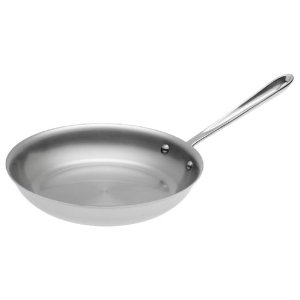
 is significantly less than Williams-Sonoma’s, where you’ll pay 110 bucks for the thing. Given the quality of All-Clad and that it has a reputation for standing by its products—even one of Amazon’s complainers noted that he got a brand-new pan, free of charge—a mere $75 for a brand-new one might actually be a good buy.