Coffee heat rising

Vote, vote, vote!

Remember to vote for Funny at Free Money Finance’s March Madness competition. Things are getting fierce as we get down to the wire. Right now Funny’s post, “Truth, the Highest Thing that Man May Keep,” is running behind by three votes!

The current round ends TODAY! So everyone who wants to support Funny needs to run over there today to cast their vote. FMF says he will announce this round’s winner tomorrow.

To vote, all you have to do is go to this site and enter your favorite for one or both of Games 7 and  8—and tis mightily to be hoped that in Game 8 you like “Truth” :-).

Vote for Funny in the next round of FMF’s March Madness!

Hey, FMF already has a new round of the March Madness blog contest online. This is the place! Would you please go there and vote for “Truth the Highest Thing”? As Funny moves up the ranks, of course the competition gets stiffer. This week’s round has four (if you count Funny’s “Truth” entry) very nice posts, each of which is highly worthy.

Choir members, having gotten wind of the fact that Funny has managed to get through the first couple of rounds, are starting to get excited about the possibility that we might win anywhere from $100 to $500 for the church and its extraordinary music program.

I wish you all could have been there Sunday morning, when 40 little choristers from the Day School joined us in the choir loft (it was very crowded up there!) and sang like beautiful angels. Two of my friends said we should’ve brought a camera to catch Scott’s exuberant body language as he directed them to be all they can be. It’s a great program that reaches people from childhood to old age, from kindergarten to hospice. I hope you’ll help support this good work with your vote at Free Money Finance.

What’s this?

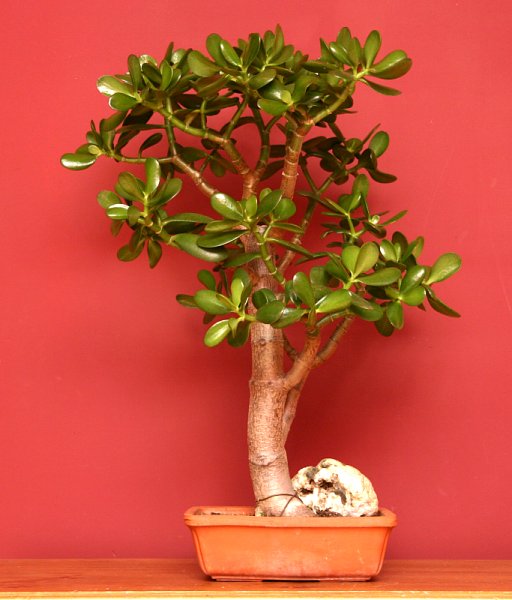
Does anyone know what this pretty little plant is?

Here’s a better picture of it, in the pot where it volunteered. Click on the image for a larger view.

A flurry of these things popped up in the El Niño rains this spring. I thought they were weeds and was about to extirpate them, but the seedlings are so pretty I relented and decided to see what they’d do. As fresh young babes, they have striking foliage: deep green trimmed in red. Here’s some that volunteered between the flags in the courtyard.

When they were younger, they had more red on them. It’s hard to see, in this picture, just how much red they have around the outside of the leaves and the stems.

Anybody know what it is?

In the money happens department…

This is weird.

Yesterday I sent off my tax returns, bearing news to Uncle Sam of the startling amount of money I made last year. Think of this: even though my gross income in 2009 was 2.5 times what it will be in 2010, the net that I’m living on just now is more than my 2009 net!

Is that bizarre?

The only difference is that the university was withholding money for various “benefits.” Still, none of those cost as much as COBRA or Medicare—my health insurance cost me $36 a month, a far cry from the $220 I’ll have to pony up for Medicare, which will be absent dental insurance (about $5 a month at GDU). My ASU net was reduced by contributions to the 403(b), although not by very much. When my pay was not being cut $480 a month by GDU’s furlough strategy, take-home was $3,000 a month. Today…well, check this out:

That’s teaching three sections a semester, or six sections a year. This year, though, I’ve decided to cut back to two sections in the fall, so as to be sure not to offend the Social Security nabobs by exceeding that worthy entity’s earning limitation. So, what will happen in the fall?

Almost $430 less than I was earning at GDU…but still more than what, in full bag-lady syndrome mode, I budgeted to live on. The present monthly budget is $423 less than that:

Now, during the summer when there’s no teaching income, my net will fall way below budgeted expenses…at a time when expenses expand to fill all available space. However, because I’m spending way less than $1,625 in the winter, when I have to run neither the air conditioner nor the heat (and because the discounted COBRA is significantly cheaper than Medicare, which kicks in on May 1), I think there’ll be plenty to cover summer expenses and get by fine in the fall even without the third section of freshman composition.

I figure the five summer months will cost about $1,000 more, all told, than it costs to live through five cooler months. On average, I’ve spent about $222 a month less than I’ve been bringing in this winter. That means that by the end of March I’ll have about $667 saved from budget underruns. So, I need only another $333 to accrue the extra thousand bucks needed to cover the higher summertime water and electric bills; that is, in April and May I’ll need to come in $166.50 a month under budget. Even though bills will start to rise in April, I think that should be doable!

It boggles my little pea brain that I could be netting more than I earned at GDU by teaching three piddly classes of freshman comp, a chore that most weeks occupies significantly less than half-time. That wouldn’t be possible without Social Security…or would it? This year I’m not drawing down anything like 4 percent of savings. If I were, the net would be $600 more than the gross from Social Security! So in fact, you could argue that even without Social Security I would net more in less-than-semiretirement than I did while I was working full-time.

I don’t know whether this is a statement on how little Arizona State University pays its faculty (you net less than you would scrounging together a living with Social Security and $2,400/course adjunct teaching gigs???) or on my own obsessive saving habits. But it’s weird.

An attack of asceticism

{sigh} Decided to kick the caffeine habit for awhile and so now have a fine caffeine deprivation anemia headache. Today being only the second day of this moment of ascetic virtue, I expect another day or two of migrainish crabbiness.

Once when I went off the killer brew, the headache lasted an entire week! Dang. Hope this goes away sooner than that. I’m allergic to aspirin, acetaminophen and ibuprofen, so headaches and other minor pains are experiences to be…well, appreciated. LOL! As in “it feels so good when it stops.”

Normally, a cup or two of regular tea will dull or even kill the pain. Tea has less caffeine than coffee (heh…at least, the way I brew coffee, the result of which will melt a teaspoon left in the cup any length of time), and so it works for backing off the much stronger coffee. After a day or two, I can drop the caffeinated beverages altogether with no further effects.

Just to perfect my misery, I also decided to get off the sauce for awhile. I usually have one or two glasses of wine or beer a day. Probably two is too much, and two is the normal dose around here. Problem is, I tend to slip over that threshold with wine: an open bottle is too easy to tip over into a glass, especially  if you haven’t finished your meal and you think, “Oh well, a tiny swiggle more won’t hurt.” Several tiny swiggles more and you’ve consumed half a bottle of the stuff! Because I have to get up, walk across the room, retrieve a new bottle of beer from the refrigerator, and open it, I’ll invariably stop after two or even one: the minor effort of having to move around and flip off a top is enough to signal that enough beer is enough.

The immediate cause of this frenzy of self-deprivation was yesterday’s conversation with La Maya. She’s determined to go on a diet, and she remarked that a mutual friend has lost a lot of weight but is drinking again and so seems to be gaining it back. I’d like to say our friend is more of a lush than I, but as a practical matter a half-bottle of wine is about a half-bottle too much. So we won’t be calling her kettle black.

Also lately I’ve been having a lot of heart palpitations, diagnosed as “stress attacks” by the worthies at the Mayo. These can be pretty scary, because they cause lightheadedness that at times makes me feel like I’m going to pass out. One of these occurred the other day while I was riding down a long escalator, which was a bit alarming. More often they happen when I’m driving at a high rate of speed on some road where there’s no place to pull over. So far they haven’t caused an actual faint, but I suppose there’s always a first time. Whether there’s a connection between these episodes and the coffee or the wine, I don’t know.

But I do know that sometimes the body seems to get saturated with caffeine, resulting in an overall sense of angst and jitteriness. That’s when it’s time to get off the bean. And I suspect there’s a connection between early-in-the-day caffeine and night-time insomnia. Even though my coffee consumption ends by about ten in the morning, older people metabolize drugs (which is what caffeine is) more slowly than younger ones. So it makes sense that the stuff could build up in your system over time and begin to affect you over a 24-hour period.

Interestingly, opinions are mixed about the real harm or benefits either of my favorite potables cause. We’re told by the worthy authors of Wikipedia that

Coffee consumption has been shown to have minimal or no impact, positive or negative, on cancer development; however, researchers involved in an ongoing 22-year study by the Harvard School of Public Health state that “the overall balance of risks and benefits [of coffee consumption] are on the side of benefits.” Other studies suggest coffee consumption reduces the risk of being affected by Alzheimer’s disease, Parkinson’s disease, heart disease, diabetes mellitus type 2, cirrhosis of the liver, and gout. A longitudinal study in 2009 showed that those who consumed a moderate amount of coffee or tea (3–5 cups per day) at midlife were less likely to develop dementia and Alzheimer’s disease in late-life compared with those who drank little coffee or avoided it altogether.

Very nice. On the other hand, as we learn from the same source,

Coffee prepared using paper filters removes oily components called diterpenes that are present in unfiltered coffee. Two types of diterpenes are present in coffee: kahweol and cafestol, both of which have been associated with increased risk of coronary heart disease via elevation of low-density lipoprotein (LDL) levels in blood. Metal filters, on the other hand, do not remove the oily components of coffee.

Yes. Well, I happen to favor French-press coffee, qui s’en fie de paper filters. I’m doomed!

As for wine, medical researchers apparently like the stuff, because they can’t bring themselves to condemn it wholeheartedly. Let’s get real here: it is, after all, booze. Nevertheless, we learn that

Population studies have observed a J curve association between wine consumption and the risk of heart disease. This means that heavy drinkers have an elevated risk, while moderate drinkers (at most two five-ounce servings of wine per day) have a lower risk than non-drinkers. Studies have also found that moderate consumption of other alcoholic beverages may be cardioprotective, although the association is considerably stronger for wine. Also, some studies have found increased health benefits for red wine over white wine, though other studies have found no difference. Red wine contains more polyphenols than white wine, and these are thought to be particularly protective against cardiovascular disease.

Hmh. I’ll drink to that.

Problem is, we’re never clearly told what “moderate” consumption is. The Brits would have us believe “moderate” means about a third of a small wine glass or half a pint of beer—a sip or two that, IMHO, would never last through a full meal. Five ounces, however, is a fair amount: almost half of one of my huge burgundy glasses. Here’s one of those monsters with five ounces of water measured into it:

Two swiggles of that much wine, and I’m cha-chaing around the kitchen. w00t!

The whole idea of depriving oneself of the minor pleasures of life in the name of some health or moral benefit has always struck me as dubious. Life is difficult, after all. One has few enough small joys (or large ones). Does it really make sense that taking away the small pleasures that make life worth living is going to make things better?

I doubt it.

However, experience has shown that long-term consumption of the type of Europeanized cowboy coffee I happen to favor will build up a state of tenseness and may contribute to the alleged “stress attacks.” Since I have nothing to be stressed over just now, it’s reasonable to run a test to see whether the caffeine has anything to do with that.

And the wine and beer? Well, like my friends, I certainly could stand to lose five or ten pounds. That beloved beer, in particular, is adding mostly empty calories. Now’s the time, while the weather is good, to be exercising, cutting calories, and running off some fat.

Stuff! Where to find storage space for it

Frugal Scholar, still one of my favorite bloggers after all these many months, reflects on decluttering and the challenge of living in a historic house with little storage space. LOL! I do recall that the beautiful cottages in Phoenix’s Encanto district could be heavy on charm and light on closet and cabinet space.

FS describes some of the things we can’t bring ourselves to get rid of for sentimental reasons. That led me to google Steiff animals—I have a whole trunkful of them, my mother’s Christmas presents bestowed each year throughout my childhood—which led to this amazing site. Is this or is it not a hoot? And OMG, I have one of these! Who would think anyone would pay that for an old stuffed animal?

So, given the fact that we are not about to give up our 50-year-old stuffed toys or the faded midcentury tablecloth we acquired as a young bride, what to do about storage space?

In this house, I’ve managed to contend by

adding or widening shelving;
rededicating clothing closets to other kinds of storage;
building new closet and cabinet space; and
using furniture creatively for storage.

One of Satan and Proserpine‘s DIY renovation projects was to pull out all the early 1970s kitchen cabinets and replace them with handsome new Kitchenmaid cabinets. This made the kitchen look very attractive. However, it had a few drawbacks.

Those old Mediterranean-brown cabinets were very spacious, even without adustable shelving. Moving in, I discovered that my dishes, which are Heathware and sized the way dinner plates were sized in the 1970s, wouldn’t fit in the wall cabinets! They ended up in one of the deep under-counter drawers Satan had installed for the pots and pans, leaving that much less storage for cookware.

And the house originally had a generous set of cabinets hung from the ceiling over the counter that held the sink. This was where I had kept two sets of dishes and all my glassware in the old house, built by the same contractor. Satan and Proserpine had removed these by way of opening up the space between the family room and the kitchen. This did indeed look very nice…but it meant the kitchen had just enough storage space for dishes and cookware used every day, assuming you were the type who thinks “cooking” means “warming in a microwave.”

Well, I do cook. And I have a number of items that I don’t use every day but when I need them, I need them. Easily, without having to climb into the attic to get at them.

When I first moved in, I set up some bricks and boards in the garage to hold things that wouldn’t fit in the kitchen, along with various yard care and cleaning items. This worked OK, but the problem with open shelving, especially outdoors, is dirt. The garage door doesn’t fit tightly, and so dust would seep in through the cracks all the time. Whenever Gerardo and his Home Depot Parking Lot Caballeros would show up with their blowers, they’d blow dirt and leaves in through the cracks; same would happen all summer long while the monsoons held forth. Any kitchen items had to be washed thoroughly before use.

Eventually I installed inexpensive garage cabinets. For about a thousand bucks (as I recall—may have been more like $800), I lined both sides of the two-car garage with melamine-coated particleboard cabinetry. Because only one car is parked in there, one of the cabinets could be extra-deep. It leaves plenty of room for two smallish cars. On occasion, SDXB has parked his Toyota truck in there next to my van—that’s a tight fit, but it can be done.

These cabinets hold a ton of stuff. They allow me to stash lifetime supplies of Costco’s finest paper goods and cleaning supplies and still cling to my precious collection of old someday-(surely!)-it-could-come-in-handy glass bottles.

I moved the bricks and boards indoors and set them up inside the closet in the bedroom that is my office. This provided ample space for work supplies, useless old scraps of computer hardware, books that won’t fit in the small bookcase in here, and a great deal of worthless junk. Removing the closet rod created extra room between shelves. There actually is room in there to install another board shelf above the one that came with the house, but I’ve never gotten around to that project.

Notice that bricks & boards lend themselves to constructing extra-wide shelving. The two bottom shelves are two boards wide, effectively doubling their available storage space.

The guest room had no closet. For reasons unknown, some previous owner had removed the closet from this bedroom. Low on linen closet space, I hired a handyman to build a new closet and install closet doors like those in the other secondary bedrooms. He did this for surprisingly little cost—I don’t recall how much, but it was nothing like what I expected. If you know how to frame out a wall and can tape and plaster wallboard, you could do the job yourself. Just because a room has one closet doesn’t mean it can’t have two closets. You could easily add a second closet to a spare room that’s rarely used.

The new closet, too, was furnished with bricks and boards. The handyman offered to install a set of built-in shelves, but since future buyers would be looking for clothes closets in the bedrooms, I decided to keep the shelving mobile.

All but the top shelf in this construction are two boards wide.

Widening shelves that don’t span the depth of a closet can add a surprising amount of storage space. In this hall closet, for example, the original shelf was only half as deep as the closet itself. Simply setting another board atop supports nailed to the drywall more than doubled the size of the shelf.

That flange toward the back is a metal coathanger thing nailed along the front edge of the old shelf, installed when the house was built. So, all the space in front of it is new shelf space. The extra board not only gave me room to store lightbulbs, vacuum cleaner supplies, and miscellaneous junk, it even provided a space for one of those battery-powered closet lights.

In the master bedroom closet, Satan had already added an extra shelf by spanning the width of the back end of the walk-in closet between existing shelves that ran along the left and right walls. It’s not much extra space, but every little bit helps.

The left side of that closet was designed with two shelves accommodating those strange coathanger things (which substituted for traditional clothes rods—SDXB replaced one of them with a regular rod), providing twice as much closet space for short items. Very nice, but the lower shelf was quite narrow. Here, too, I simply added another board. Years ago I got in the habit of storing shoes out of dog’s reach, since the German shepherd was given to eating shoes and the greyhound liked to furnish his nest with them.

Beneath the shelf, there’s a small bookcase, which also holds shoes and boots.

You realize, of course, that armoires were originally intended to store linens and clothing, not televisions. I was reminded of this when visiting my sister-in-sin’s beautiful old Seattle house, where she had placed an armoire on the second-floor landing and filled it with bedding and towels. So, when I bought a new lightweight feather “blanket” for summer and couldn’t figure out where to stash the winter comforter, I thought…why not?

This would annoy me if I watched TV very much. But I don’t. Eventually, I’ll probably hang the television set on a wall and fill the armoire with linens and things. It came with an extra shelf, which is stored inside the piece. With three deep shelves and a large drawer, it offers a lot of extra storage space.

So it goes: cobbled together—some of it jerry-rigged—but it works.