Well, here’s some news: The FDA has finally gotten around to telling a few mass food-distribution companies to quit with the fraudulent claims on the labels.
Mirabilis!
It’s surprising, really, that consumers buy into this hucksterism. They must, though; otherwise the megacorporations wouldn’t bother with foisting lies on the public. They’ve been doing it for a long time. And it must be said that even skeptics get drawn in.
When my son was a baby, I went out of my way to buy Beech-Nut juices in infant bottles for him, because Beechnut advertised loud and clear that all its juices were 100 percent unadulterated juice and nothing but juice: no sugar, no water, no adulterants.
About the time the dentist was excoriating me for feeding him sugar and I was protesting that I never once gave him anything with sugar in it, out came a report that Beechnut’s apple juice contained almost no juice at all: it was mostly water and sugar. His little teeth were ruined. He had to have something like 20 fillings.
Since then I’ve had no trust at all for any food manufactured by any large corporation. If they’ll lie about baby food, they’ll lie about anything. And as for juices, all you have to do is read the fine print on the label (if you can see it!) to find that a large proportion of bottled and frozen “juices” really consist mostly of white grape juice and corn syrup, with a whisper of some other fruit juice added to flavor it like the juice it claims to be.
The wild claims that things like pomegranate juice will do splendid things for your health raise my hackles, as do additives stuck in otherwise normal food to make us think the adulterated stuff has some medical benefit. Personally, I want my food to be food, not medicine. If I want extra vitamins, calcium, or antioxidants, I’ll swallow a pill, thank you!
Well, it’s past time the federal regulatory agencies woke up. No one else seems to be in a position to block the corporate pseudo-government that controls the nation’s food supply from lying about its products, adulterating them, or foisting substandard products on the public. Beech-Nut, we see, is among the several corporations specifically ordered to remove misleading labels.
Bring the bug spray, Uncle Sam! The cockroaches have taken over the larder!
So, when I bought the Costco Lifetime Supply of RoC Retinol Correxion Deep Wrinkle Night Cream gunk, as part of the new lifestyle retread scheme, I thought I was buying the usual wussy over-the-counter pretend cosmetico-pharmaceutical, designed and pitched to make the customer feel good but in reality unlikely to do much of anything.
Wrong!
It definitely does something. What exactly the something is remains to be seen. However, at the moment it’s a shade on the alarming side.
The stuff stings a little when you put it on, but I took that as unremarkable, because the Alpha-Hydrox I used to smear on my face did the same. Today, however, an hour or two after I’d rubbed this stuff in, covered it with an SPF 45 sun block, and powdered over the whole mess with SPF 20 makeup, my cheeks and chin started to hurt and feel uncomfortably parched.
Naturally, I was on the campus, so there was nothing I could do to get it off. Not for several hours after this burning sensation began did I get home where I could remove the layers of makeup and goop.
Once I washed it all off, what I discovered is that my face looks like it’s been burned. Not critically—like a middling sunburn, I’d say. But still: the irritation is there, and the skin all over my cheeks and nose has turned bright red.
I have been staying out of the sun, and each morning I’ve applied a liberal dose of Neutrogena’s best SPF 45 sun cream, plus some fairly opaque makeup also advertised to have some SPF qualities. So I doubt that it’s sunburn. I think it’s a reaction to the wrinkle gunk.
The package copy says, “You may experience mild tingling and redness during use.” Hm. I’m not sure “mild” is the term I’d use here. It continues: “This is normal and should be temporary until your skin adjusts.”
We shall see.
In the meantime, we’ll be hurrying the “adjustment” along by cessation. I’m going to quit using this stuff, at least until the inflammation subsides.
I probably overdid the slathering by applying the gunk in the morning as well as at night. The package does say you can do this, as long as you’re careful to use sunblock and hats. But it seems to recommend using it at night only.
A number of users have complained about similar discomfort. Unlike this woman, I do not have sensitive skin (to the contrary), but the effect fits what she describes, except for the eye symptoms. Presumably the redness and burning sensation will go away, one hopes without lasting damage.
If you’re going to use RoC or something like it, I’d suggest a conservative approach. It might be wise to try it on a small patch for a few days (it took several days for this reaction to develop!). Also, I certainly wouldn’t advise applying it more than once a day—maybe less than that, once every two or three days.
While it’s less than pleasant to go around in old-lady rhino hide, some things may be worse…
So while I was visiting Costco to collect the AMEX rebate and get some gas, I also picked up some RoC Retinol Correxion Deep Wrinkle Fancy Flashing Lights and Mirrors Face Cream. I’d wanted to get some AlphaHydrox, which (as one might suspect) contains a stiff dose of alpha hydroxyls and did indeed make my ruggedly seasoned face look much better when last I used it. But couldn’t find the stuff at the drugstore on the way from the college to the Costco, so settled for the RoC, which boasts not only alpha hydroxyls but also a retinoid compound. It comes highly recommended by those who claim to be in the know. And it’s made in France. Oooooo! Must be good!
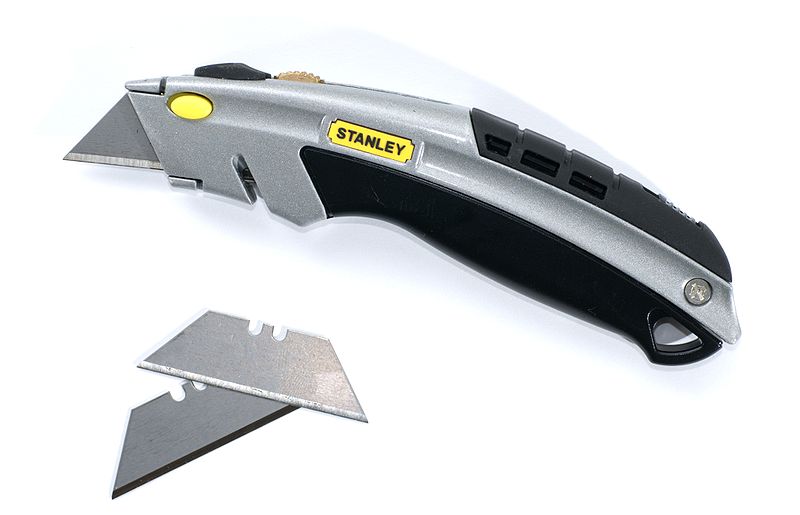
Grrrrr…. To make a point, I asked the check-out dude if someone at the store would please cut the consumer-proof package open, since the last time I bought a package of make-up there I wondered if I was going to slice off a finger before I could get at the stuff.
To my amazement, he whipped out a box cutter and cheerfully sliced all the individual components free from their plastic prison!
Clearly, he was not dealing with the first person to make this demandrequest.
So. Now we know: whenever you are forced to buy items sealed in wretched impossible-to-open packages, ask the store’s staff to open them!
Well, for a change she who hesitates wins. I am sooooo glad I didn’t run out and buy a Prius or some other new Toyota during the infamous gas price inflation of 2008.
Because I was employed at the time, I could’ve afforded it in spite of the market conditions. And I most certainly did covet one of those snazzy hybrids. In saner moments, I thought seriously about trading in the Dog Chariot, which guzzles gas in an obscene way, for a smaller, more fuel-efficient gasoline-powered car. After many years of satisfaction with Toyotas, whatever I would have selected would have come from that maker.
Luckily for me, I couldn’t make up my mind and so did nothing. At one point, I calculated how long it would take for the savings in gas to pay for a replacement vehicle and realized that trading in the ten-year-old Sienna would amount to cutting off my nose to spite my face.
Given the Toyota’s recent, spectacular quality-control troubles, I sure am glad I didn’t leap off that cliff. Probably I would have sent my broker straight to his favorite Toyota dealers without noticing that recent consumer reviews have issued increasingly negative reports. Edmunds, for example, has this to say about the Corolla:
In reviews, we’ve been disappointed with the current Toyota Corolla. Competitors from Honda, Hyundai and Mazda outdo it in most regards, specifically in the areas of interior quality, value and driving pleasure/confidence. In a consumer comparison test where we invited six regular Americans to test several competitors in this class, the Corolla finished dead last and was deemed a disappointment by most.
In years past, Toyota has had a strong reputation for nearly all its models, but some recent reviews report that the gold standard is becoming tarnished. Toyota fell from first place to fifth in Consumer Reports’ annual reliability survey last year, and the V6 Camry specifically received a “Below Average” rating—a first for the popular car.
Experienced, long-term Camry owners remark that the vehicle’s “interior is getting cheaper every year,” apparently because management has decided to follow Detroit’s tradition of cheesying up the product so as to maximize profits at the consumer’s expense and safety.
How sad. Even in Japan, greed trumps integrity every time.
I can’t say that I absolutely will not buy another Toyota when the time comes. But it’s no longer a foregone conclusion.
How about yourself? Will your next car be a Toyota? Or what?
If you enjoy reading and you like your reading matter on paper, not in little lights on a screen, you need to know what is happening to the people who bring novels and nonfiction to you. The following post, originally published in the October 2009 issue of Southwest Signature, is by Bill Fessler, president of the Arizona Book Publishing Association. Bill is general manager of American Traveler Press. ATP has published more than 250 books, primarily focused on the tourism industry, among them souvenir cookbooks, outdoor and nature guides, and general information about local subjects. Bill enjoys traveling, and his business fits in perfectly with this love.
The latest (big) news in the book industry is that Wal-Mart has begun selling bestselling, hardcover books for $10 on their website. Amazon.com decided to match this price, and now Target seems to be joining the fray. Things are getting heated, and the prices have dropped to $9. As a consumer, this sounds awesome; but as a publisher, this is awful. And yes, this includes those of us whose books are not on the bestseller list.
If a book by Sarah Palin, Barbara Kingsolver, or another big name can be purchased for $10, how are the rest of us going to convince the customer that our $19.95 book is worth the extra money? The answer: we can’t compete at this price. If your book is $19.95, the consumer will simply pass over your book and look for a $9.95 competitor. If your book is $9.95, that means you are selling it to the bookstore for $6 or less (probably in the $3 range). Very few of us can make a profit selling books at this price point.
“If readers come to believe that the value of a new book is $10, publishing as we know it is over,” David Gernert, Grisham’s agent, told the New York Times. “If you can buy Stephen King’s new novel or John Grisham’s Ford County for $10, why would you buy a brilliant first novel for $25? I think we underestimate the effect to which extremely discounted bestsellers take the consumer’s attention away from emerging writers.”
“But Bill,” you ask, “what can I do to combat this?”
First of all, don’t buy these $10 books; if you really want to read them or buy them as presents, pay a reasonable price (I suggest no less than 20% off of the retail price). Second, buy them at a physical store, not online; pricing like this is designed to direct consumers to online purchasing, which ultimately leads to closed stores. Third, strongly consider buying them at an independent bookstore; Barnes & Noble and Borders have a better chance of surviving a lengthy online war between Wal-Mart, Amazon.com, and Target, but the little guys need customers in their store every day, buying books, in order to survive.
Last, start discussing this bad decision with your friends, coworkers, and neighbors; we need to break the cycle of Zombie-consumerism (basing our purchase decisions on price more than any other factor). Just as McDonalds does not make the best hamburger, Simon & Schuster does not publish the best book. But if you look at their revenue stream, one could argue they do.
There are better books out there—we know that there are better books among our publishers right here in ABPA. But until we begin to spread the word and change the buying habits of those around us, the loser will be the consumer. Don’t be a Zombie!
If you ever need a reminder to get bids for every…single…project of any kind, here’s a tale with that a moral to it:
Richard the Landscaper proposed to remove the dying ash in front for for $1,000, down from the original $1,500 he thought the market would bear. When I asked if he would please also remove the moribund plantings around the tree’s base, cover the stump with a mound of dirt, spread some more gravel there and arrange the existing rocks decoratively, and then plant one of the baby vitex trees I’ve cultivated in pots, he added $200 to his bid. So, as I’m facing unemployment I’m looking at a total of $1,200 to take down the tree and repair the landscaping.
Welll….
I called the Desert Botanical Garden, which has a master gardener training program, and asked if they could refer any of their graduates. Forthwith came in the e-mail a list of a dozen certified arborists. So I called one—let’s call him Mike the Arborist. He just came by to view the jungle that is my yard and give me some estimates on the large amounts of pruning that need doing.
He said he would take out the dead ash tree for $500!!!!!
More ordinary tree trimming comes in the vicinity of $40 to $100, depending on the complexity and size of the job.
Sharp thorns the size of tiger claws...trimmed back from the sidewalk less than a month ago!
For $225, he’ll also remove the ferocious palo brea on the south side, which has become a dangerous menace—passersby risk facial scratches and eye-gouges if they have the temerity to use the sidewalk in front of my house. For about $40 apiece, he’ll trim up the two trees the palo brea is crushing to help them fill out properly. For a few dollars more, he’ll trim the olive inside the front courtyard, restoring it to its former graceful splendor. With the job in the front yard, he’ll clean up the desert willow and restore the passageway between it and the Texas ebony free of charge.
In the back yard, he proposed some judicious trimming of the exuberant emerald paloverde—not enough to infringe on its shade-giving properties but a little pruning to keep it off the roof and discourage crossed limbs. And though he disapproved of Satan‘s westside weeping acacia (yes—he and Proserpine actually planted two devil-pod trees in back, one where it would drop plaster-staining junk into the pool and the other where its limbs could snap off and fall on the house—or on the neighbor’s house), he recommended against removing it and suggested simply cleaning up the lower limbs, which are dying off because they’re not getting enough light.
So, instantly the guy drove away, Richard got a call canceling the job he had yet to do. I think he’d forgotten about it, to tell the truth. Thank goodness! It looks to me like I can get ALL the pruning and tree removal—take out the dead ash and the nuisance palo brea, prune the palo verde, the olive, the vitex, the desert willow, and one of the hideous willow acacias in back, plus build the mound and move the stones onto it—for not a helluva lot more than Richard proposed for the ash and the mound (all told, R. wanted $1,200 for those jobs).
Wow! I was braced for an $800 to $1,000 bid just to do the basic trimming, to say nothing of removing the palo brea. Can you imagine?
Asked him what his background is and how he came to start a business. He said he and his wife had moved back to the US from Germany, where they’d started their family (she’s German), because they wanted more space and Arizona was where they could afford it. He started working for a large landscaping firm that was doing all the maintenance for the huge new developments out on the west and east sides. There he learned how to climb and prune trees, ended up as a manager, and started studying landscaping seriously. He became a certified arborist, and then after the economic collapse he and a partner bought an existing landscaping company that had about 35 accounts. He said their plan is to target small to medium-sized developments that are too small for the huge landscape maintenance firms to bother with. So…it sounds like he knows what he’s doing and he has some experience. He’s very clean-cut, well-spoken, and even though he’s a gringo he doesn’t look like an escaped convict.
My yard is desperately overgrown. It not only needs to have a huge, mature (dead!) ash tree removed, it needs serious work that verges on relandscaping. Some of that work really should be done by an expert. Unless I miss my guess, this single call to just one other contractor is going to save about $1,000 on the total job.