A small mercy: The air-conditioning guy returned to the downtown house to fix the rattle in the motor he’d installed in the swamp cooler. As you may recall, they clipped us to the tune of $500 for that job, something that frosted my cookies because the guy showed up when neither of us was there (the roommate was in the offing) and they didn’t bother to call and let us know how much it was going to be.
Although a swamp cooler is vastly cheaper to operate than refrigeration, $500 is way, way more than the cooler will save on electric bills this summer. If M’hijito had known how much they intended to charge, he would have told them not to do it.
Then about three days after the work was done, the thing developed a rattle. So I called and bellyached. They said they’d send him back to fix it, free of charge. Last I heard, the thing was working OK.
Sooo… Friday evening along comes a bill in the mail: $85.
Ever notice how announcements that agitate you always arrive on Friday, about an hour after the close of business hours?
In-freaking-furiating! The main reason I’m $94 in the hole right now is that the dentist and the air-conditioning guy joined forces to clean out my checking account last month.
So I called and pointed out that they didn’t leave me with enough cash to pay this bill, and besides, they said they’d get the job done right without charging us for it.
She said, “Just void it!”
Done!
Whenever you have a question about a bill or—let’s be frank—get even a whiff of a possibility that you can work a better deal for yourself, A$K! Merchants do want to keep your business, and they often will try to give you a break if you have a good argument for it.
Frugal Scholar reminded me this morning that everyone has been urging me to take the unfortunate progressive glasses back to Costco and ask for a refund. Since I paid for them last November, I kinda doubt they’re going to do anything for me. But at her urging, I’ve decided to try it.
What can they do? Throw me out of the place? I doubt it.
The worst that will happen is they’ll tell me “no,” and then I’ll wander off to the cooler room and buy the bottle of orange juice I need.
The other day, Budgeting in the Fun Stuff remarked on Frugal Scholar‘s rant about the excruciating customer service emanating from Virgin Mobile. Both bloggers asked readers which corporations are best and worst in the customer (dis)service department.
Apparently they touched a hot button. They each got a slew of responses. Among them, we see that Comcast is roundly hated. Free Money Finance is locked in combat with that worthy organization—as his saga unfolds, it’s hard to tell whether Comcast is merely incompetent or deliberately obnoxious.
Yesterday while I was driving up to the optometrist’s office, what should I hear on NPR but this interesting story. It suggests a new tool for hacking through thickets of bad customer service, at least in some instances: small claims court.
Dartmouth Professor Charles Wheelan was subjected to United Airlines’ latest insult to passengers, a $25 charge for checking his bag. When they lost his luggage, they refused to refund his money. So he took them to small claims court. So far, he has yet to see either the bag or the refund, but, as he notes, even though the action cost him $72 in court fees, revenge is sweet:
Turns out that it’s [the $72 trade-off] actually really important in terms of economics. It’s essentially vengeance, and vengeance has a technical definition, which is you’re willing to harm yourself in order to impose harm on somebody else. Now when we do that, what the behavioral psychologists have learned, is it makes us feel good. It lights up the pleasurable parts of the brain just like doing other things that make you feel good. So vengeance might actually be quite rational.
United crossed the wrong guy when its baggage handlers threw musician Dave Carroll’s expensive guitar across the tarmac, with predictable results. His revenge came in the form of a hilarious (and infuriating) YouTube video that, says he, “became one of YouTube’s greatest hits and caused an instant media frenzy across all major global networks and sources (including the likes of CNN, the LA Times, Chicago Tribune, Rolling Stone Magazine & the BBC to name a few)” and spawned two more videos. He may never have extracted the $1,200 it cost to repair his guitar from United, but the resulting publicity boosted his career, probably returning that much and more in increased revenues.
Well, most of us don’t have Dave Carroll’s talent. But it’s not hard to put up a talking-head video on YouTube describing some egregious example of customer disservice, and the idea of taking the SOBs to small claims court over money owed has its charms.
My own strategy is first to bypass the CSRs by tracking down the names of upper management at the corporate headquarters and firing off a dear-sir-you-cur letter. Often this will get results, or a simulacrum thereof.
If the go-over-their-heads gambit fails, then I head for a regulatory agency or an attorney general. Many of these customer service fiascos amount to fraud or theft—when they stonewall you or outright lie to you, they’re ripping you off. The trick here is to go to the AG in the state where the company is headquartered and send a copy of your complaint to the AG in your own state.
When a company operates across state lines, as most of the faceless monsters that have developed immunity to customers do, then a fraudulent action becomes…yes…a federal case! Corporate America, as we have seen by the vast corporate donations to doctrinaire Kill-the-Beasters’ political campaigns, really dislikes dealing with federal regulators and attorneys general. So if you can’t get any action from a state attorney general, kick it up to the Federal Trade Commission, the Federal Communications Commission, or the U.S. Attorney General. You’d be surprised how fast a call from any of these entities will settle your complaint.
Frugal and Budgeting ask readers what are their choices for best and worst customer service. My all-time worst customer service nightmare is Qwest, an outfit with whom no one should ever do business. Videlicet:
The best? It’s hard to think of many, since retailers and service providers now will openly tell you that the old saying to the effect that “the customer is always right” is dead wrong. CSRs apparently are encouraged to be rude and trained to bounce off complaints like tennis balls hitting a concrete wall. In my experience, the only outfit that’s consistently shown excellent customer service is the Mayo Clinic.
My question to you is this:
What has worked best for you to cut through a customer disservice fiasco?
The other day when I was over at M’hijito’s house, he served up a couple of artichokes with some Trader Joe’s organic mayonnaise. Out of curiosity, I read the label. And to my amazement: no sugar!
Hallelujah! Next time I was in the vicinity of TJ’s, I ran in and bought a jar for myself. It’s the first time in years I’ve seen real mayonnaise come out of a bottle. And the flavor? Exactly like mayo used to taste, back in the Pleistocene when men were men, dinosaurs were dinosaurs, and food was really food.
Yeah. I know. Best Foods—Hellman’s in the East—claims to dish up “real mayonnaise.” And once they did make real mayo. But…read the label. It’s full of sugar. Has been for decades; even more so since 2006, when they changed the recipe.
What happened was Miracle Whip. This vile concoction, a hangover from the Great Depression, was peddled during the 1950s with a great flurry of publicity and perky new-fangled TV advertising. Yum yum! I remember the girlish excitement around the stuff. All of a sudden, everyone was dolloping it onto their Jell-O salads. Next thing you knew, you couldn’t find a sandwich with a schmear of genuine mayonnaise on it. Everyone wanted the sweet, gunky Miracle Whip. To compete, Best Foods was forced to sweeten its own mayonnaise. That’s my theory, anyway.
Mayo is supposed to be a savory condiment, not sweet goop.
Consequently, I haven’t bought mayo in years. If I need it, I make it. But it’s a hassle, so most of the time I do without. So I was pleased to find some real mayo in a jar.
What is it about Corporate Foodarama that it’s so determined to cram sugar down our throats? Have you noticed how many things that aren’t sweet and aren’t supposed to be sweet are doped with sugar or corn syrup? Things like rye bread, for example. Rye bread doesn’t need sugar to rise, and it doesn’t need sugar to taste like rye bread. There’s absolutely zero point in dosing a loaf of rye bread with high-fructose corn syrup.
The other day, preparatory to starting back on Atkins, I bought a package of tasty-looking bratwurst at Costco. Naively, I failed to read the ingredients until after I got home and busted open the plastic wrap, tossed a couple in a frying pan, and watched caramel form on the bottom of the hot pan as the brats cooked. Grab the package, read. Less than halfway down the list: corn syrup. So all those things had to go into the freezer until after the ten pounds are gone from the belly.
Corn syrup. In the brats. Eeeew! Why???Brats don’t contain sugar. Or honey. Or corn syrup. What makes them taste sweetish is mace, allspice, and marjoram. Actually, the predominant flavor in Costco’s brats was salt. Lots of salt.
Are we really so divorced from our food that we don’t even know what food is supposed to taste like? Does Big Food really have to dose every bite we eat with sugar to get us to swallow it? Well…probably, given what’s in some of that stuff.
I was entertained to discover this morning that my fellow food cranks and I have made the Big Time: Nicholas Kristof reports that the President’s Cancer Panel, “the Mount Everest of the medical mainstream,” is about to issue a report urging Americans to seek out organic foods and avoid the pollutants that are ubiquitous in everything we eat and drink. Contemplating the 300 chemicals that have been found in the umbilical cord blood of newborn infants, the panel’s members remark that “to a disturbing extent, babies are born pre-polluted.”
No kidding?
The panel recommends that you and I practice caution about what we ingest and rub on our skin. They suggest filtering water and storing it in glass, not plastic, containers; buying organic foods when possible; avoiding meats that are cooked well-done; and checking radon levels in our homes.
Okay, we don’t eat radon.
But we do eat sugar. To my mind it’s just one of a whole passel of undesirable chemicals that pollute our food and our beverages.
So this bill for $587 came in the mail from the air-conditioning company. This outfit is a small, locally owned company with whom I’ve done business for upwards of 12 years. To my knowledge, they’ve never cheated me. Or so I thought.
The company that used to service my AC would send a guy twice a year for a routine check-up and service job: once in the spring to work on the air-conditioner and once in the fall to work on the heater. Every single time their guy would go up on the roof, he would come down with some part in his hand claiming it needed to be replaced. This would turn a $40 bill into a $200 bill.
SDXB, who was living with me at the time, became suspicious. Our neighbor told me about Mast, and I discovered that for a single annual fee they’d do the semiannual service job…and not once did the serviceman ever claim anything up there needed to be fixed.
Well, time has passed. We have had a recession that has affected Arizona worse than any economic slowdown since the Great Depression. In addition to jacking up the price for the regular check-up, Mast has laid off many of its servicemen, and our guy—who I suspect is the only craftsman they have working for them—is working 50% time. He is not a happy camper.
When I told M’hijito about the six-hundred-dollar repair bill, he remarked that he could have bought a new swamp cooler for that price. Not quite—they cost about $2,200—but in fact, six hundred dollars would run his regular air conditioning through the summer. The whole idea of running a swamp cooler during the two or three hot months before the air gets too humid for the system to work is to save on air-conditioning bills.
Part of this bill is for a new 3/4 hp motor. Another part is apparently a renewal for the annual check-up.
I thought I’d bought a new motor for that unit. Also, because M’hijito bought a new central air conditioning unit last year, we paid for the annual check-up in the fall, so that his bill comes due in the fall and mine comes due in the spring.
Being a pathological saver of receipts, I happen to have all the receipts for all the work we’ve had done on the downtown house. And lo! Here’s one for Mast, dated 2007…
On March 15, 2007, Mast replaced the 3/4 hp motor in that unit. They charged $193 then; this time they billed $393. They replaced a belt for $10.50; this time they charged $20. They replaced three cooler pads for a total of $25.20 at $8.40 apiece; this time they charged $54 at $18 apiece.
Now, supposedly we’re in a period of zero inflation. We all know that’s not so, but we know prices haven’t gone up much in the past couple of years. If the cost of that unit went up 3 percent over the past three years, it should cost $211 today.
Get online and you find that yea, verily: swamp cooler motors range in price from about $60 to about $235.
So I guess we’ll be looking for a new air-conditioning contractor. How disappointing.
It’s easy to understand that when a company is struggling for survival it might raise prices to try to stay in business on the customer’s back. But it seems counter-productive: rip off the customers and pretty soon you don’t have customers.
The other day while cruising the Web, I stumbled across this bizarre and alarming site, describing some of the things that have happened to people while sailing on cruise ships. It left me thinking I’m glad to stick to metaphorical cruising!
As it develops, sovereignties and courts of law apparently have little jurisdiction over what happens on the high seas. Read one or two of these stories and you think, “Naaaah… This person is some sort of complainer.” But when you read a bunch of them, you see a consistency in what they’re saying: rapes, molestations, injuries, deaths (some evidently resulting from foul play) going unreported and uninvestigated, sick people being dumped ashore in Third-World ports. So many themes keep repeating, it’s hard not to take them seriously.
It reminds me of an experience my ex- and I had aboard a Royal Caribbean ship. We spent about three months in England while I worked on my dissertation—he used the project as an excuse to take a “sabbatical” from his law firm and came with me. To get home, our travel agent decided we should take a cruise ship from Dover to London…in the middle of December.
I recall having some vague misgivings, though I didn’t do a lot of thinking while I was married. Most of the time, I just went along for the ride.
And what a ride it was!
The North Atlantic is given to fierce and terrifying storms during the winter. Remember, I grew up with a man who was a sea captain. My father sailed with the Merchant Marine almost all his adult life (when he wasn’t in the Navy and the Coast Guard). We had always lived next to one sea or another. So I knew something about the ocean, mostly because he had taught me by tutoring me with his Bowditch, a thousand-page-long manual for mariners. I knew the Atlantic could be rough at that time of year, but (stupidly) I figured if it was unsafe for civilians they wouldn’t be running passenger ships across it in December.
Come to find out, the reason we were offered the “bargain” price our agent obtained was that Royal Caribbean would not normally offer transatlantic cruises at that time that time. The ship was being moved from Europe to North America simply to get it into the Caribbean, where they wanted to put it to work in the high season there. Rather than run it empty and lose money, the Scandinavian company that owned the line sold space at low rates. They did not give one thin damn about the safety or comfort of the people they suckered into this cruise.
After we were fully out to sea, we ran into a major storm. The seas began to get rough and before long were running very high. Waters were covered with spume, the air grayed-out with spray, and huge waves were breaking not just across the bow but over the bow, over the deck, and as high as the bridge. Water was crashing into the windows around the passenger lounge, which itself was fairly high above the main deck.
Passengers were grayed-out, too: almost all of them laid up with seasickness. I don’t normally suffer from any kind of motion sickness, but even I was so queasy I had to spend most of a day or two in a bunk. Understand, a passenger ship is designed to resist rolling and pitching specifically so that passengers will be insulated from motion sickness. When a lot of people are getting sick, the ship is wallowing in a bad way—indicating the ship itself is in a bad way.
About halfway across, the captain decided to heave to. He didn’t actually stop the ship, I don’t think, but he slowed its speed as far as he could without shutting down the engines. He claimed it was because the winds were pushing us west at a rate that would get us to New York several days ahead of schedule, and the company couldn’t afford the docking fees if they put into port early. Although the fee part probably was true, there was nothing to stop him from standing off shore a day, where at least we would have been within reach of a Coast Guard cutter had the ship started to take on water. The fact was, he simply couldn’t make much headway through such high seas, and he probably slowed in order to take the waves at a more stately and slightly safer pace.
Wind speed at sea is measured according to the Beaufort scale. I happened to know about the Beaufort scale from studying my father’s Bowditch, and from observing storms in the Persian Gulf and off the coast of San Francisco. I estimated the seas were running at about Force 11 and at some points at Force 12, which is the level of a hurricane.
One morning our table’s waiter reported that the waves had stove in the porthole of the cabin where he was bunked below. Though he was a fairly cool, macho young Italian, it was clear he was frightened. For a wave to stave an ocean-going ship’s porthole, it has to hit the ship with a mighty force. It was at that point that I realized for sure, we were in trouble. If the ship had gone down, we couldn’t possibly survive in lifeboats on seas that high, and I would have been surprised if it carried enough lifeboats to accommodate all the passengers and crew. Not that it would have mattered.
Carrying passengers across the North Atlantic in the middle of winter is insane. Intense storms are a fixture of the North Atlantic at that time of year. That Royal Caribbean’s management chose to do so demonstrated they have absolutely no concern for passengers’ safety, to say nothing of their comfort, nor for the safety of the ship’s large complement of servers, stewards, maids, cooks and other employees who are not seamen.
We finally made it to New York—obviously; otherwise you wouldn’t be reading this blog. I would never set foot on another Royal Caribbean ship again. And after having read the reports on the ICV site, which seem to emanate without pause, I doubt if I would book a cruise at all. Sure wouldn’t recommend it to a friend!
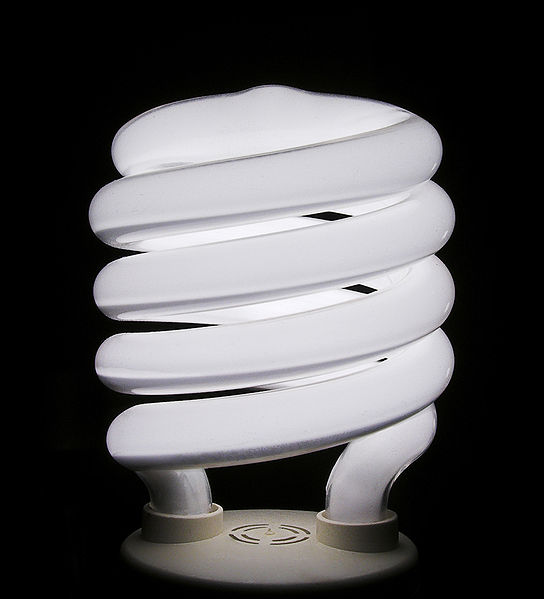
Am I the only person who has developed a certain jaundiced skepticism about compact flourescent bulbs (CFLs)? Or is that yellowish tinge around the eyes just the result of the dim and ugly light the dratted things throw off?
In the first blush of enthusiasm over CFLs, I went out and bought a boatload of them. Replaced all the incandescent lights in the house, except in a couple of lamps that cheerfully blew the contraptions out every time I stuck one in the socket.
Some inanimate objects have better sense than the rest of us.
Time passed. I saw exactly zero difference in the power bill. As far as I can tell, CFLs do little or nothing to lower your electric bill, at least if you’re the sort of person who turns the lights off when you leave a room and who opens the blinds during the day so as to navigate by natural light.
As it develops, there’s an explanation for that. Whether it’s the correct explanation and whether CFLs have as their unintended consequence increased greenhouse gas emissions, I do not know, but I certainly would agree with Sudden Disruption that these devices have been oversold. And removing all incandescent bulbs from the market to replace them with the things is Big Brother at his Draconian best.
Other unintended consequences wait in the wings. For example, studies have shown that CFLs may induce or aggravate migraines, may be harmful to people with retinal disease, and may aggravate certain skin ailments. The flicker and hum, unnoticeable to all but a few humans, are audible to and may be harmful to cats, dogs, and other household pets.
It could be, of course, that you can’t see much difference in your electric bill because you can’t see the bill at all. You can’t see much of anything by the light of a CFL. No matter what the equivalent wattage, they cast a murky glow, indeed. They muddy the colors in your room and require you to break out the reading glasses for copy you could decipher easily under a brighter light..
Especially annoying is the dim half-glow they emit when first turned on. Flick on the switch in my bedroom and you feel like you’re inside a cave lit by the bioluminscent mildew on the walls. The older a bulb gets, the more time it requires to come up to speed. It takes quite a while, now, for the lights in my house to reach their maximum brightness. Not a very maximum, we might add.
I’ve already bought a bunch of incandescent bulbs and cached them in the storage room. Thanks to the Selling of the CFL, old fashioned lightbulbs are now pretty cheap. I think I’m going to buy another couple of pallets before they go off the market!