Coffee heat rising

Control That Impulse (Buy)!

Who could POSSIBLY live without it?

Money Beagle recently offered a series of strategies to help consumers avoid the dreaded impulse buy. The four hints there are filled with good words and true.

Some years ago, SDXB taught me an easy and surprisingly effective anti-impulse buy strategy. When you’re in the store, pick up the object that you covet. Examine it carefully. See if it really, truly has or does whatever you think you want. While you’re turning it over in your hands, consciously ask yourself, “Do I really need this?”

Then, set it back on the shelf and go on about the rest of your shopping. Get everything else you went to the store specifically to buy. Once you have spent some time elsewhere in the store, return to the impulse-buy object.

By the time you get back, nine times out of ten the answer to your question will have coalesced in your mind. And the answer is usually “nope.”

😉

Buying Futures at the Supermarket: Groceries as investment

Guest post by Pinchnickel

PHOENIX, Ariz. – Save big bucks by playing the commodities future market at your grocery store every week. Buy in season, freeze, preserve, and consume later when prices double. Save even more when you factor in clipped discount coupons.

Let’s go shopping. Today’s futures bargain is bananas. Late spring is harvest season in tropical Central America, home of those shoot-em-up banana republics. “America’s favorite fruit” has become a “price-fixed” commodity, meaning all local grocers charge the same price [currently in the Southwest about 69 cents a pound]. But grocers in your area may break from the price-fixing mold and list bananas as a seasonal loss leader. For example, a Phoenix grocery chain currently offers four pounds for 99 cents, or 25 cents a pound.

Bananas spoil quickly, but I’ll preserve the nutrients of that banana bargain by converting them into low-sugar banana bread and muffins stored in my chest freezer for future consumption.

Strawberries currently are arriving here by the truckload from California, as they do every year, and are now available for $4 a 4-pound container, or a buck a pound. To bank strawberries seal in a zip-bag and freeze for up to a year. I mix them with rhubarb for pies, but they can also be turned into toppings for shortcake or ice cream.

Spring is also the time when veggies grown in warmer zones like Mexico arrive at your grocers. They include asparagus, broccoli, spinach, carrots, cilantro. Preserve by blanching in boiling water  and freezing for future use. Turn the cilantro into pesto—delicious spread on toast.

At other times of the year lower-priced pork, beef and even fish will arrive in your local grocery at seasonal prices. Fruits such as apples, peaches and pears arrive in late summer. Learn how to preserve them in syrup or as jams and jellies. Canning supply companies Ball and Kerr both offer recipe books by mail.

The very best “loss leader” season across this land, of course, occurs in early to late autumn, when the great American harvest begins everywhere. Leading the list of good buys then: white flour, beet sugar, potatoes, berries, apples, corn. Because I produce all my own baked goods, autumn is when I put in 100 pounds of flour and 30 pounds of sugar for use throughout the year, when a glut of flour and sugar hit the market for only 99 cents a pound. The same flour and sugar costs $2-plus later in the year—a 50 percent return on my commodities future buy.

If you’re a joyfully consuming foodie or simply a Pinchnickel like me, acquaint yourself with the harvests and when imported products arrive at your grocer, and buy ahead of need. Keep your freezer full of these wonderful bargains. Save big, and enjoy those buck-a-pound strawberries over shortcake next January when your friends are paying $3 a pound for them.

Images:

Bananas: Steve Hopson, Creative Commons Attribution-Share Alike 2.5 Generic license, Wikipedia
Strawberries, Ken Hammond, U.S. Agricultural Research Service, public domain
Asparagus: RyanFreisling, public domain
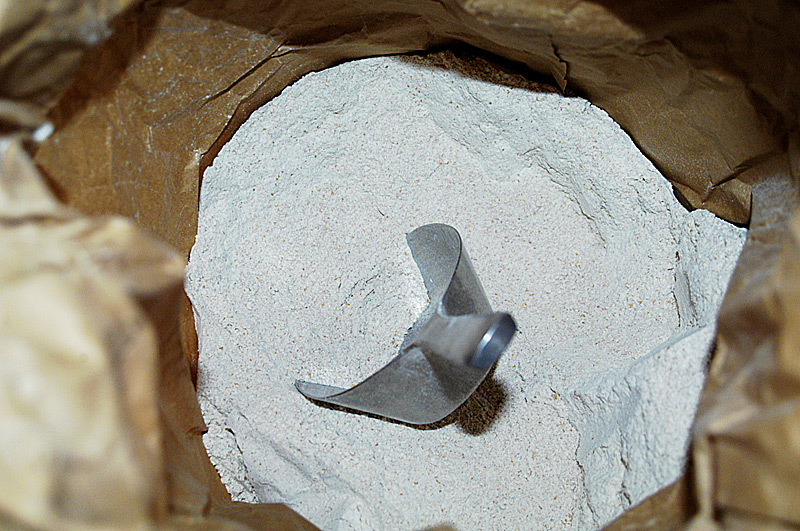
Flour,
R.Wampers, Creative Commons Attribution-Share Alike 2.0 Belgium license, Wikimedia Commons

Five frugal ways to entertain the kids

Guest post by Tina Minchella

I was going to title this post “why it’s never a good time to have a kid.” Many friends and family members as well as the occasional professional acquaintance discuss family planning with me. With the economic situation the way that it is, I hear over and over, “It’s not a good time to start a family. If we could just save…” And this is when I stop listening.

The truth is, it’s never a good time to start a family. I know this sounds quite shocking. But here’s why: kids are always expensive. Yes. Kids cost money. A lot of money.

As I have learned to use public transportation, to clip coupons, and to make that dollar stretch, I have also realized that there are many ways to save money entertaining little ones.

• Trade skills. I play the piano. My friend plays the piano. It’s a bad idea to teach your own child how to play a musical instrument…BUT…you can trade your services with others. Teach your friends’ children and let your friends teach yours.

• Go to the library. This is not just about saving money on books. In the summertime, many local libraries also have story time, free movies with popcorn, and nature walks. The library has become a hub for more than just books. It is a community outreach system full of fun and FREE things to entertain the little ones. Some libraries also offer monthly passes to local museums. This allows you to visit a number of local cultural sites for free.

• Go to the park. I’m not sure when TV and videogames overtook our world, but there is nothing like fresh air and the sun to entertain a child. Pack a small picnic lunch and you’re suddenly on an exciting adventure.

•  Movie theaters. In the summertime, large movie theater chains play early morning movies on weekdays for families only. The theaters play older movies that have been released during the previous year and charge about 75 cents per ticket. Although they are not the newest blockbusters, the excitement and amazement little children have when seeing movies on the big screen remains.

• Kids-eat-free. Recently, a number of chain restaurants have begun having a kids-eat-free night once a week (some even do this every weekday). With the purchase of an adult meal, a child’s meal is free. There are even restaurants that cater to large families and give 2 free meals for every adult meal purchased! This is a great way to have a night out and not break the bank.

Kids cost money, but they don’t have to bankrupt you. There are a number of ways to keep having fun with kids without increasing your debt or further aggravating your financial troubles. If you’re having fun with the kids, they’ll never know that it was at a discounted rate.

Seven painless ways to save

When the job ends on December 31, I’m planning to consolidate all my checking and savings accounts into just three: a checking account, an emergency savings account, and the self-escrow account to pay annual property tax and insurance bills. Right now I use one checking account as a “pool” from which incoming cash is disbursed to a half-dozen “cookie-jar” accounts dedicated to various expense and savings needs. Yesterday, thinking ahead to what the simplified system will look like, I added up all the money that has accumulated in the cookie jars and then estimated the last few pittances due next month. And I was astonished to discover how much cash has quietly accrued, painlessly, without  my trying very hard to save.

Hang onto your hats, folks: over $26,500 is sitting there in the credit union!

That’s about $16,500 more than I thought. What accounts for this startling windfall?

Well, near as I can tell, the combination of a small extra income stream plus certain frugal habits builds saving into your lifestyle in ways that you hardly notice. For example:

Use a budget to help you live within your means.

How it works: By establishing limits to how much you spend, you rarely spend more than you earn, and you occasionally spend less. Every time you come in under budget, the money you didn’t spend tends to accumulate in your checking account.

Automate your savings.

How it works: Ask your bank or credit union to divert part of each paycheck to savings. What’s left in your checking account is the amount you view as your net income, and you don’t even think about the savings set-aside. It’s already done by the time you start to budget.

Also, take advantage of any 401(k), 403(b), or other retirement schemes your employer offers. These allow you to save—automatically—with pre-tax dollars, and if your employer matches contributions, you get double the savings at half the hassle.

Pay yourself first—and last.

How it works: Got money left over at the end of a pay period? Transfer it into a savings account. It doesn’t hurt to have two savings accounts: one to hold automatic savings “payments” from your paychecks for the long term, and one to hold leftovers, which can be used to reward yourself with indulgences and vacations.

Live within your former means.

How it works: When you get a raise, leave your spending level where it was. Add the new income to the amount your bank or credit union automatically transfers from each paycheck into savings.

During the first six months of 2009, GDU’s ill-advised furlough scheme cut my income by $240 per paycheck. In that period, I learned to live on a lot less pay. In July, when the university started paying us our full salaries again, I continued to live on the “furlough” budget and put the extra income into savings.

Drop your spending level a small amount at a time.

How it works: Reduce discretionary spending in small, tolerable steps. This allows you to get used to a smaller budget, and a smaller spending budget leaves more from your income to put into savings.

The layoff message has been scrawled across the wall for a long time. At my office, we’ve known since summer of 2008 that sooner or later the university was likely to can us, and as we’ve seen, that suspicion was confirmed in June.  This has given me time to reduce my habitual monthly expenditures from about $1,500 a month to $1,200 and then to $1,000. Or less! The past couple of months I’ve managed to keep the spending in the vicinity of $800. Because I’m still earning until the end of December, all that unspent income has gone into savings.

Snowball and snowflake savings as you would snowball a loan.

How it works: The “snowballing” principal suggests that you can accrue funds to pay down debt by focusing on a single account and then when that’s paid, add the amount you were paying against that debt to the amount you’re paying against the next debt, speeding payoffs incrementally. “Snowflaking” entails applying every windfall and every bit of “found” money, no matter how tiny, to paying down debt. Well, you can apply that to saving, too:

When you’ve paid off a debt, the amount of the payments can go into savings, rather than being diverted to restaurants and indulgences. Same with unexpected bits and pieces of money—gifts, extracurricular jobs, overtime, bonuses: stash the money in a savings account before you can diddle it away.

Every little bit helps. It’s amazing how fast these dribs and drabs add up. When I paid off the second mortgage on my house, I had the credit union put the $169/month into savings instead of leaving it in my checking account. Same with another $200/month payment I managed to escape. Lo! That’s $369 a month, $4,428 a year of “free” money.

Divert all income from a second income stream to savings.

How it works: A key way to protect yourself from layoffs, pay down debt, and build savings is to build a second income stream. If you don’t need that income to live on, for heaven’s sake keep it!

I have three side income streams: teaching, blogging, and freelance editing. None of them earns much, in the large scheme of things. Taken together, I probably haven’t netted ten grand in 2009. But everything I earn from these ventures has gone straight into savings. Over time, as we can see, it certainly has added up.

It has added up: so painlessly that I hadn’t even realized how much, really, was stashed in the half-dozen credit union accounts I’ve been using. I have to admit that I had no intention of keeping that much money in low-interest checking and savings accounts.

I’d figured to start unemployretirement with a base “cushion” of $10,000, which I expect will tide me over the first year when Social Security rules will allow me to earn no more than $14,160. Ten grand plus $15,000 of Social Security plus $14,160 of teaching income should just net enough to cover my expenses. So, next month, when I’m certain of how much is in there after my last paychecks, vacation pay, and whatnot, I’ll transfer about $16,000 of those surprise savings from the credit union into my investment accounts.

If, as my financial managers expect, the economy continues to grow in 2010, that should go a long way toward reviving my retirement fund!

Shopping estate sales for deals

Five-Cent Nickel features a nice guest post by Craig Ford, proprietor of Money Help for Christians. Craig holds forth on ways and places to find a good deal, among them yard sales. Just last night, I was congratulating myself for having found one of my all-time best buys—a deluxe “Rabbit” wine opener that normally sells for as much as a hundred bucks—at an estate sale. I picked it up for five bucks.

Estate sales are different from yard sales in several big ways.

A true estate sale is organized by professionals. Estate sale operators are companies and so must charge sales tax. They have a good feel for what things are worth (usually less than the homeowner thinks), and they usually do a nice job of organizing the merchandise.

Estate sales are generally held inside the house and in the back yard, so you get to see how other people live.

And some of the other people live mighty high off the hog. Estate sales often take place in multimillion-dollar homes, sometimes owned by people who can afford to maintain several places and who, when selling a house, simply dispose of all the designer furnishings and redecorate the next place from scratch.

Estate sales may take place in gated communities and HOAs where ordinary yard sales are not permitted.

Nine times out of ten, the offerings at an estate sale are much, much nicer than anything you find at a yard sale. Often you’ll find expensive items that are barely used or even brand-new.

In addition to the Rabbit, which I use a couple of times a week, I’ve bought high-quality cutlery, a beautiful set of coveted Tonalaware, a matching red leather sofa and recliner for M’hijito’s house, a fun leather ottoman for my own place, a gorgeous custom-made library table, upscale cookbooks, and any number of tschotchkies, yard items, and household gadgets.

The trick to estate sales is finding out about them and then getting there before they open. An easy way to find an estate sale in your area is to go to Estatesales.net and subscribe. At the site, you can click on your state and then your city to find a list of nearby sales. It’s even easier to subscribe; this will elicit a weekly e-mail listing of upcoming events, and the e-mail generally tells you whether and where the estate-sale company has posted photos.

A listing with photos is especially useful, because you get a feel for whether a given sale has goods that may interest you, and you waste a lot less time than you do wandering from yard sale to yard sale.

Remember, though, that you will be competing with antique and second-hand dealers. This means you need to get there early! Be there a half-hour before the door opens, and be prepared to stand in line. If a sale is really hot, the organizers will let only 15 or 20 people in at a time, for safety and for the sake of maintaining order. The dealers are always there as dawn cracks, and they go straight to the best stuff.

It’s smart to bring a basket, box, or shopping bag, so you’re not having to balance things in one hand while you inspect the merchandise. Also, some people will bring their own tags marked with their name and SOLD. Usually you claim an item by removing the tag or picking it up and carrying it over to the cashier’s table, but not everyone knows an untagged item is considered “sold.”

Estate sales are a lot of fun, not only because you sometimes score a fantastic deal but because you get to see some amazing real estate, some interesting antiques, and some expensive designer furniture. La Maya even found her house in our neighborhood at an estate sale. She visited the estate sale, having found it in a weekly e-mail notice, and once inside she realized she loved the beautiful house. When she asked the estate-sale organizer if the owners were planning to sell, the answer was yes! Instantly she called her partner, who agreed that it was a perfect place for them, and before long they were living around the corner from me. Now there’s an estate-sale triumph!

Six steps to a frugal little Christmas

Ah, yes. Costco has had its Christmas merchandise out since Labor Day, a sure sign that a white-plastic Christmas is y-cumin’ in. Some of us suffer from chronic skepticism about the annual merchandising frenzy. But you don’t have to be totally cheap to come up with a pretty Christmas celebration that won’t leave you feeling like Ebenezer Scrooge.

Here are a few strategies that have saved me some bucks:

1. Stop sending out Christmas cards. Just because someone sent you a card last Christmas doesn’t really mean you have to reciprocate. Add the cost of postage to the price of the cards themselves and this custom gets to be an expensive proposition. Send cards or Christmas letters only to your closest friends and family, and, whenever possible, hand-deliver them.

2. But when people send you cards, put them in an envelope and save them with your Christmas wrappings. Next year, take a pair of scissors, cut out the cute images, and use them to make gift tags. Simply take a piece of good-quality paper, cut it into a rectangle as wide and twice as long as needed to accommodate a cut-out Christmas card image, glue the image to one half of it, and fold the other half under. Voilà! A free and very pretty tag.

3. Make your own Christmas wrapping. Get some brown wrapping paper or white butcher’s paper and a set of stamps. (Or, if you’re really frugal, save and cut open paper shopping bags to lay them out flat.) Each time a gift is wrapped, stamp it with cute little designs, and then tie it up with pretty ribbon or colored rope. A variant on this, if you have children, is to roll out the paper and have the kids paint Christmas motifs on it. When the artwork is dry, roll it back up and you have bright, colorful, and meaningful wrapping paper.

4. Get a living Christmas tree. Planted in a good pot, a small pine will live several years—once I had one last four years. Cart it inside for the holidays, decorate it, and then take it back out when the celebrations are over. Water it well before bringing it in the house and again when you return it to its backyard habitat. If you have a place for a big tree in your yard, you can plant it in the ground after it outgrows its pot.

5. Shop in artist’s consignment stores for unique and interesting crafted gifts. Last year, I found an incredible pair of handblown, solid glass mugs for M’hijito, heavy manly things with swirls of royal purple running through them. The store had so many hand-crafted possibilities it was hard to make a decision, and most of them were reasonably priced.

6. Shop for Christmas gifts all year round…especially in the post-Christmas and midsummer sales. This lets you buy things you know are wanted without paying top dollar, and it frees you from the crazy-making Christmas rush. By spreading the cost over the entire year, it allows you to buy plenty of presents, but pay for them without running up a tab on the credit card.

While it’s true that Christmas is a part of the universally human gift economy tradition, by emphasizing fellowship more and piling junk on everyone around us less, we can keep the costs within reason and have memorable holidays every year.