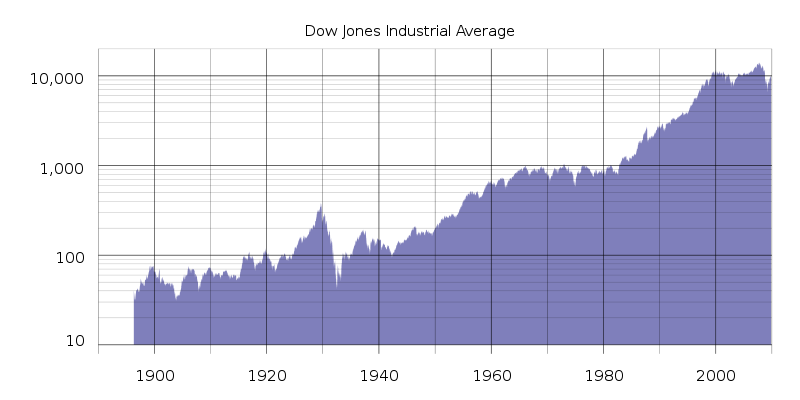
So you thought Bank of America was a blue-chip stock? Seems to have downgraded itself to brown chip. This e-mail arrived, from my elite financial managers:
While we had intended to remain invested in Bank of America (BAC) through the turnaround, we sold that position today. Mortgage delinquencies have eased, but banks are now facing repurchase requests on loans they originated from buyers of those loans and loan guarantors. Leading the charge to make originators repurchase their loans are Fannie Mae and Freddie Mac, the two government-owned finance agencies that guaranteed many mortgages. Freddie and Fannie are sorting through delinquent loans for signs of any violations in the representations and warranties, known as “reps and warranties.” In essence, they are looking for documented misrepresentations by borrowers or lenders on the loan applications. Bank of America is reportedly facing approximately $11 billion of unresolved repurchase demands (up 46% in six months). Just too many clouds on the horizon for U.S.-based banks when compared to other opportunities held in your portfolio.
We will use the proceeds to invest in your other holdings that we believe have a better opportunity for appreciation in the future.
Well. That’s bracing. And of course, BofA isn’t alone.
So this morning I’m driving around and who should come on the radio but Juan Williams, late of NPR and recent of Fox News, chatting with Diane Rehm. Personally, even though what the guy said was taken hugely out of context, my empathy with him is limited by the fact that he was asked several times to quit violating the terms of employment under which he agreed to work. But today he scored some serious points with a couple of telling remarks.
First, he pointed out that if individuals can’t say, on talk shows or in any other respected public venue, how they really feel—for fear of trespassing on some standard of political correctness—then we will not know how people think and feel. All we will know is that they mouth the party line for fear of whatever repercussions may follow an honest statement, right up to and including being fired from their jobs.
And second, while he conceded that conservatives in this country now have an extremist wing that will not tolerate any sort of dissent from its rigid thinking and whose members would happily impose that thinking on all of us, he noted that the same is true of the liberal side. Among the left, who do comprise a large and influential slab of Americans, if you make certain statements that reveal you don’t buy into the accepted dogma, you become a “bad” person, even an immoral one.
As anyone who’s been reading this blog any length of time knows, the threads on my wing-nut turn to the left. But that notwithstanding, I have to allow that Williams has got something there. Advocates of both sides can be bigoted, pig-headed, and doctrinaire. And the consequences for anyone who gets in the line of fire can be devastating.
When I was running the editorial office at the Great Desert University (now it can be said), one of my underlings was a very bright Ph.D. student in history. And one of our client journals was a prominent interdisciplinary journal of women’s studies. To say its contributors were doctrinaire is to understate.
I have little patience for pigheadedness and broad, paranoid assumptions about evil forces, whether they be the white male hegemony or the brown tide. And so, I foisted most of the work onto my graduate student, who enjoyed reading this drivel about as much as I did. She needed the job more than I did, though, so she dutifully plodded through it.
And she did a good job. Authors whose thinking is clouded by preconceived opinion and dictated by emotion produce less than optimal writing. We would get articles that were full of factual errors; muddled understanding of history, literature and science; ill-written copy; and logical howlers. How the things made it through peer review was a perennial mystery. All we could figure was the peer reviewers were every bit as flakey as the journal’s execrable contributors. Copyediting this material was a challenge, and one that took a strong stomach.
Nevertheless, our graduate student persisted through two years of steady, dreary work.
The deconstruction of our office, the only one like it in North America and probably in the world, came on the heels of a series of shattering events in the history department, whose then-eminent public history program fed its graduate students into our handsomely paid twelve-month research assistantships. First, the director of the scholarly publishing program, who had taken over a couple of years before, after its highly respected founder retired, quit with a month’s notice. This left our sister program essentially rudderless for about a year.
Then, in the wake of that disaster, the public history program’s director died. Formerly the chair of the entire history department and deservedly one of the most respected scholars in the Southwest, he was an éminence grise who kept a lid on the craziness over there—and in other precincts in the College of Liberal Arts and Sciences—by the sheer weight of his dignitas.
Shortly after this gentleman passed, I began to hear complaints from the editors of the feminist rag about my research assistant’s work. She made too many errors, they said. Indeed, they said, she was incompetent.
Well, she wasn’t making any more errors than any of us made, which was precious few. Most of the errors were being instilled by authors who rejected our edits and whose inanities then went to the typesetter. They had to be corrected, expensively, at the page proof stage because of changes that were made behind our backs. Additionally, these two women—whose names were, unlike ours, on the masthead as the journal’s editors—apparently declined to review the copy before sending it to press, despite repeated reminders on my part. Consequently, there was, shall we say, a disconnect between the return of edited copy to the authors and the shipping of approved copy to the press that published it.
What you need to know about this young woman is that she was a pretty, trim blonde, an alarmingly wholesome person who was openly devoted to her two children and made no secret of her religious faith. To make things worse, until her husband took up with a colleague at his office and abandoned her, she was a happy stay-at-home mom who intended to home-school her daughters.
Anathema upon anathema!
While our office’s future within the university grew dimmer beneath the gathering financial clouds, the chaos in the history department worsened. My dean explicitly forbade me to tell my staff that we were closing, even though she and I knew it nine months in advance. Consequently, when the time came to grab new assistantships and grants, the R.A. in question, who was A.B.D., missed her chance to get the financial support that the university promised to all the Ph.D. students in that department—because she had no idea her assistantship would cease to exist when the fall semester ended and because some hitherto unheard-from forces were coming into play.
What was happening is that the radical feminists in the department, who had come to dominate the place and who highly resented the success of pretty, wholesome, traditionally oriented young women, had turned on her. The chair of her committee, who like any smart academician bent with the breeze, announced she would not read our young editor’s dissertation because she did not see it as a history dissertation. A number of tergiversations ensued, which I shall refrain from detailing here.
Suffice it to say, they did everything they could to block her from writing the dissertation.
Fortunately, she and I were not without resources. I called a friend who held dual tenure in that department and in another, an internationally prominent scholar and author. He had drifted from the history department in response to similar behavior that he had observed in the past. His annoyance over that sort of thing persuaded him to take my R.A. under his wing. He recruited another colleague to sit on her committee, and they wrested the supervision of the young woman’s dissertation away from the assembled witches. She’s writing as we speak, and the coven, whose department is now defunct, will have little to say about it from here on out.
Interestingly, the response to any woman whose choice of lifestyle did not fit what our dogmatic colleagues considered “enlightened” can only be called reactionary.
One can be reactionary on the left as well as on the right. And that, I fear, is what is ailing our country.
Our nation’s polity has shattered into gangs of reactionaries who spend their time, energy, and wealth undermining and lobbing brickbats at each other. They can’t hear each other because they’re too busy shouting. Meanwhile, vast moneyed interests who care nothing about democracy or constitutions or freedom (and in fact would prefer to operate in the absence of those nuisances) manipulate the citizenry and its distracted representatives as they please.
There’s nothing new about vicious divisiveness in America. Many of us can remember McCarthyism—one wrong word and you were a Communist, a tag that under the influence of Joe McCarthy’s personal star chamber could destroy your career and your life. What worries me is that today extremism is so widespread and so pervasive, there seems to be no help for it.
Unless things change, and soon, the democratic republic that we know as America is going to be over. Once and for all.
My friend and colleague with the talent as an artist has started her own website! Check it out. So far she has just a few images up, but she intends to paint regularly and offer her work online. One of our readers bought her still life of pears when it went online here at FaM. It’s a miniature—6 x 6, I think—and I believe that, at least at the outset, most of what will go up at her site will be 6 x 6 or 5 x 7 canvases.
Evan has a really interesting article—actually, one of several home runs in a row—at My Journey to Millions, suggesting that if you run low on cash, interest charges on the reviled credit card may actually cost you less than a bank overdraft charge.
In the “some people’s kids” department, get a load of this astonishing story from Donna Freedman over at Surviving and Thriving. I thought I had the all-time winning house-sitter story (maybe sometime I’ll tell it to you), but this one may cap mine.
Like Evan, Revanche has posted several interesting pieces at A Gai Shan Life over the past few days. Don’t miss her awesome photos of Chicago, and then scroll up and down to the several posts on either side.
Over at Passage des Perles, Duchesse has a wardrobe challenge going. What I’d like to know is this: is it easier for men to restrict their wardrobes than for women to do so? On the face of it, one might imagine so…think of all the men we love who would happily spend the rest of their lives in a pair of shorts, a T-shirt, and a pair of zorries. But even though the suit and tie men wear to work is basically a uniform, one wonders.
Mary at Simply Forties is headed back to visit her hometown after a couple of footloose years. Ogod. While you’re at that site, don’t miss this amazing thing.
There’s SO much more out there. But I’ve gotta get going. Cassie the Corgi is throwing her ball at me, and I’ve got a full, FULL day ahead of me. Why don’t you share your favorite links of the week in the comments?
Welp, my pay statement went online this morning. Thanks to PeopleSoft’s accursed lagging pay system, it only goes to the 15th. So I don’t get paid for this past week of teaching two sections.
The fine grand total? $448.87.
With Social Security confiscating an entire month’s pay for the crime of earning enough to owe $340 in extra taxes, I had to eat way into my catastrophic emergency fund to pay this month’s bills—and this month isn’t over! Next month SS will deduct $222 instead of $111 for Medicare, leaving me with just barely enough to cover basic living expenses…assuming PeopleSoft bestirs itself to pay out what the College will owe me for both November pay periods. I’m $70 in the black right now, if you don’t count the fact that I transferred money from tax & insurance self-escrow savings to get that way, but I’m going to have to come up with about $555 to cover food and gasoline charged on AMEX. So in fact at the moment I’m $485 in the red.
Truth is, I couldn’t have made it anyway. The amount I transferred out of tax & insurance savings was $18 more than the amount of my net Social Security income.
Except for one lunch out and $5.88 for some gardening supplies, I’ve bought nothing other than food, gasoline, and a couple of small pool maintenance items. We had the hottest September on record, the power bill was $174, probably low compared to what others around here pay—while my neighbors’ units thump way 24/7, I sit in my house and swelter all day, turning the air-conditioning down to 79 at night so I can sort of sleep.
In November, by transferring over the second of three monthly prorations of net summer stipend money and pushing the accounting for October AMEX charges forward a month (this month’s bill isn’t due until the 11th), I’ll just have enough to pay bills. It’s robbing Peter to pay Paul again—October’s charge account bills should be paid with October income, not with November income. But if I buy nothing but food and gasoline in November—say goodbye to Thanksgiving dinner and Christmas gifts—by the end of November I should have caught up. In December I will not get two full paychecks, and so I’ll sink below the waves again then.
This is happening because the long summer with no teaching income drew the excess that I collected through the spring semester of penny-pinching down to almost nothing. Income from one course in the first eight weeks of the fall semester, even though paychecks were doubled up because that course extended over eight weeks instead of sixteen, was not enough to cover expenses, and so the amount available to spend dwindled into the negative numbers.
Meanwhile, I’ve got to go to the doctor. Six weeks of self-medicating and waiting have not helped whatever ails me. I have no idea what that’s going to cost, but I’m afraid that anything will be more than I can afford. Whatever expenses come from that also will have to come out of savings. Plus any tests or treatment that require time away from the classroom will result in pay being docked.
Adjunct teaching plus Social Security just simply won’t support me. I’m going to have to start drawing money out of retirement savings, which at this point is still about as contraindicated as contraindicated can get.
Well, I guess I should start looking for some sort of work that will pay a pittance year-round. I can answer phones and do secretarial work. With the arm out, I can’t stock shelves or do any other very physical work. I need about $20,000, but that’s what full-time secretarial work pays around here. If you can get it.
Wellcare, the outfit I selected (among dozens) to handle my Medicare Part D insurance—that’s prescription drug coverage—just sent me a package to plow through: TWO HUNDRED AND TWENTY-FIVE PAGES of dense, incomprehensible copy to try to figure out!
The booklet you’re supposed to start with, which explains annual changes to the plan, is twelve pages long. Apparently every single year you have to study all this garbage, try to decide if you can live with the changes they’ve come up with, and, if you can’t, try to find another insurance company whose terms you can live with, if any such thing exists.
This year they’re raising the prescription drug coverage from $19.70 to $23.80, or $285.60 a year.
That doesn’t sound like much, except for the fact that you don’t get much for your $285.60 a year. The yearly deductible is $310, so in fact before this thing starts to pay for prescriptions, you pay $595.60 out of pocket. Then it only covers $2,840 until you reach the “doughnut hole.” When your prescriptions have racked up a $2,840 bill (easy to do if you have cancer, diabetes, MS, Parkinson’s, or any of the numerous other ailments of old age), then you’re screwed. You then have to cough up $4,550 for your meds, at which point you reach what Congress in its wisdom has decided is the “Catastrophic Coverage” stage. Then you pay $2.50 for the drugs the company approves, $6.30 for brand-name drugs (many drugs do not come in generic form, you know), or 5 percent of the total cost. Again: Five percent of cancer drugs could add up to one whopping bill.
So really, you’re paying almost $600 for what amounts to only $2,840 worth of coverage. For the cost, it’s very chintzy.
All these plans are about the same: they’re required to provide approximately the same coverage with about the same terms. So, buying a more expensive plan won’t help you, except insofar as some plans apparently are a little more or a little less generous about what types and brands of drugs they’ll cover.
To figure out whether anyone else is offering a comparable drug plan for a lesser price, I’ll have to get a ten- or fifteen-page list from the state SHIP department, plow through that, negotiate telephone punch-a-button mazes to order up information from several insurance companies, and then plow through thirty- to forty-page piles of paper from each of those. Like I have time to do that, and like I could understand what any of that verbiage means, anyway.
Medicare Part D coverage is highly restrictive. To keep you from understanding exactly how restrictive it is, insurance companies have set up a complicated four-tier system involving generic, “preferred generic,” “preferred brand,” and “nonpreferred brand” drugs. It is so baroque as to be incomprehensible. According to the booklet my company sent, some drugs, apparently chosen arbritrarily, can cost you nothing if you order them from WellCare’s pharmacy. Once you start ponying up cash or daring to do business with the nearest drugstore, though, the least you will pay is $36. Yes: per prescription.
Some generics and “preferred brand” drugs can cost you $123 per prescription! Then you get to the Tier 3 “generic and nonpreferred brand drugs,” where you’ll pay $282 per prescription!
Think of that: $282 for a bottle of pills.
To further confuse matters, they move drugs from tier to tier. This year, we’re told, “Some drugs will be in a lower cost-sharing tier; others will be in a higher cost-sharing tier.” So, if you have a chronic disease, chances are you’ll have to change drugs once a year as the companies jack up the cost by moving them up a tier or two.
Evidently they’re supposed to give you some sort of discount on drugs once you tumble into the doughnut hole, but that’s not evident in the 12 pages of daunting gobbledygook in the summary booklet. It says here that the new healthcare legislation, which our Republican friends are campaigning to get rid of, “continues to close the coverage gap, or ‘doughnut hole,’ by reducing the percentage of cost-sharing for beneficiaries in the gap. Effective January 1, 2011, drug manufacturers will provide a 50 percent discount on brand-name drugs and the government will provide a 7 percent discount on generic drugs for those who fall into the coverage gap (Sec. 1101, HR 4872). This is in addition to a $250 rebate, effective in 2010, for beneficiaries who reach the coverage gap.”
All very nice, but it doesn’t change the fact that the doughnut hole amounts to $4,550 and that if you get seriously ill, which all of us will unless we drop dead of a heart attack or are killed instantly in a car wreck, you’re going to be out the cost of your premiums plus the cost of your deductible plus the vast out-of-pocket costs of the doughnut hole. For my modestly priced plan, that would amount to $5,146, not counting the costs of copays ranging from $12 to $235 per prescription.
What we have here is one real good reason why I don’t want to go to the doctor for my bellyache. Don’t know what I’d be getting into…and if it’s anything that requires a lot of drugs, well…
After a month and a half of general misery, I’m pretty sure that whatever is ailing me is probably serious. If it weren’t, it would have passed by now. But with Social Security confiscating an entire month’s benefit—$1,275 gross, $975 net—after my having struggled through a whole summer without enough income to cover my expenses, I’m flat broke. I simply do not have money to pay for doctors and drugs.
What this partnership with despotic private insurance companies actually insures is that seniors will delay going to doctors as long as they can. That actually pushes up costs, because by the time you get to the doctor whatever is ailing you will have reached an advanced stage, which will cost more to treat.
Some puppies are pleased that we lazy, greedy old bustards who oughta get a job won’t see a cost of living increase from Social Security in 2011, for the second year in a row. WellCare’s premium is the smallest part of my Medicare bill. If it’s gone up $4, you can be sure the much more expensive Medigap policy will go up even more. I’m already ponying up $90 a month (God only knows what it’ll be in 2011) to another private plan to cover the many lacunae in the government plans (Part A and Part B), and Part B itself, costs $111 a month for rather skimpy coverage.
With Part D, you have the option of taking a chance that you won’t get sick and won’t need a lot of drugs before you croak over. There’s no law that says you have to buy Part D coverage. (If you think the game doesn’t play out in favor of the table at Vegas, then by all means take this bet!) But if you don’t get it at the first opportunity when it’s offered to you, then the cost goes way, way up: effectively, you’re punished for not buying insurance from private corporations until you think you’re actually likely to need it.
Nor is there any law that says you have to buy Part B. But you’d be a fool if you didn’t, unless you’re already so poor as to qualify for Medicaid. Part A is roughly the equivalent of major medical. It doesn’t cover much.
So far it appears the Medigap coverage works pretty well, though I haven’t used it except for the useless follow-up care for the torn rotor cuff, which I can’t afford to have repaired because I can’t afford to take a semester off my part-time job. So to date, I’ve paid $90 a month for air. Presumably next year the cost of air will even higher.
For $111 a month plus all the Medicare taxes I’ve paid and still pay on every dime I scrape together, Medicare should cover everything—without forcing beneficiaries to open their wallets wide to the rapacious insurance industry.