Coffee heat rising

Less I$ More

Not in the good frugal minimalist way. At Cox, it develops, “less is more” means “less for more.”

After endless calls from “Rachel of Card Services” (who actually is a recorded message used by several offshore phone solicitation scammers) and more recently from creeps who know my age and try to scare me into buying various redundant and useless “security” services and devices, I decided to quit resisting and shell out an extra $10 a month for Caller ID.

So this seems to be working. It’s kinda cool. The phones flash up the caller’s phone number, and for unknown reasons one of the extensions tries to enunciate, in Electronic English, the caller’s name, usually coming up with something  unintelligible. Entertaining. And on the first couple of days it derailed several incoming scams. Nice!

Then a couple of people said they’d tried to call but the voicemail wasn’t picking up.

I figured they probably dialed the wrong number.

Yesterday I’m on the phone with a client. She’s calling from a cell phone with kind of a weak connection, so I figure the periodic BLEEEET in my ear is from some sort of interference.

Conversation ends. Check the e-mail. Message the first:

“I tried to call but your voicemail isn’t answering…”

Check machinery. Yes, it is answering.

Hmmmm….. BLEEEET…no busy signal…no voicemail…uhmmm… Duh!

So I kill another 10 minutes or so trying to get through to a live person at Cox. I figure the guy I talked to a few days ago added Call Waiting in addition to the Caller ID…must’ve figured he could do me out of another few bucks by tacking on an extra “convenience.”

Dunno about you, but I really dislike Call Waiting.

It’s rude.

In the first place, I don’t want to be badgered by someone trying, unknowingly, to butt in to a conversation I’m having.

In the second place, it’s incredibly offensive when someone says “Oh, there’s another call! I’m putting you on hold so I can answer that.” Implication: you aren’t important enough for me to give you my full attention. Or, other possible implication: I think I, wonderful little me, I am sooo important I must be at the beck and call of all my operatives, underlings, and superiors. Either one: offensive.

And in the third place, it’s just plain bad manners to push the person you’re conversing with out of the way so you can let someone else horn in. If, after all, the late-comer’s call is important, she or he will call back.

Rude. Rude, rude, rude.

Finally a human picks up the line. She confirms that yes, the guy I spoke with did give me a package bundling Caller ID and Call Waiting together.

I say I don’t want Call Waiting.

She says she can arrange that, but it’ll cost more.

“What?”

“To get Call Waiting alone will cost $1.20 extra. Plus tax.”

For godsake.

Well, I figure it’s worth $1.20 — $14.40 a year (plus tax!) — to eliminate yet another of the myriad nuisances of life in the 21st century.

But boy, does it piss me off. Why should consumers have to pay more to NOT get something they don’t want?

Then she remarks that the total bill for the Internet and the land line will come to just under $100 a month.

Really? Seriously? A hundred bucks a month for about $30 worth of flicking services????

Started to look around for other high-speed providers. Looks like there are quite a few, and some, including Verizon (roundly hated, I know…but are any telecommunications providers not reviled?), offer the same things I’m getting for less.

So I guess tomorrow when I feel more like hassling with these people, I’ll start calling around to see if I can get a better deal.

Like I have nothing else to do with my time. 🙄

Amazon.com Rises to the Occasion!

Gosh! This is pretty amazing.

Remember that I found the coveted ClosetMaid over-the-sink dish drainer at Amazon, for the bracing price of thirty bucks? Readers were abhorred and protested that the contraption was to be had elsewhere on the Web for significantly less. But then reader Karen found it, at Amazon, for $15!

Well. Truth to tell, I’d already ordered the thing at the inflated price before I wrote that post. My cookies frosted, I wrote to Amazon and groused. A living CSR actually responded by e-mail, amazingly enough. This person emitted some policy, superbly obfuscating and superbly obvious. I wrote back and remarked that I understood all that (“all that” basically came down to caveat emptor), but I still felt I’d been ripped off to the tune of about fifteen bucks.

To my astonishment, this afternoon along comes an e-mail from Amazon reporting that they’ve credited my account for $15!!!

The thing showed up in the mail today, along with the stylish Le Creuset tea kettle I ordered at about the same time.

How cool is that?

Green LC teakettle

One Fewer Worry to Obsess About…

Called the office of the podiatrist who pointlessly injected a dose of dexamethasone into my excruciating foot along about the beginning of September. It was disturbing enough when the New England Compounding Pharmacy’s list of recalled medications included this steroidal nostrum, even when only the stuff doctors were squirting into patients’ spines was known to cause problems. But today two more of their products are implicated, and the FDA is now saying that any injectable drug produced by NECC is “of significant concern.”

Although so far the offending spinal infusion seems not to have been shipped to Arizona, nevertheless NECC’s website says that in general they ship to every state in the union (well…it did, when it was online). So just because methylprednisolone acetate wasn’t sent to your state doesn’t mean none of the company’s scores of other compounds was sent.

After a good 8 or 10 minutes of obnoxious music and annoying advertising, a human being finally got on the phone. He rattled off the names of the doctor’s suppliers; none of them were NECC. Or at least, so he claimed.

So…that’s good. I guess.

If you’ve had any steroid injections for pain, it might be a good idea to check NECC’s list, and if the drug is on there, you might want to call your doctor’s office to find out where it came from. No one seems to know what are the incubation periods of any diseases the contaminating fungi can cause; in the case of meningitis, one person took 42 days to come down with it. At least it’s reassuring to know that your doctor didn’t get the drug from New England Compounding. If, however, that’s where it did come from, you should know to be on the lookout for any unusual symptoms.

Overpackaged! How much is this debris costing us??

I’m sitting here with a bottle of Costco mouthwash on the desk. Broke a fingernail (again!) trying to get it open. The lid is sealed down with a fat strip of melted-on plastic, the name “Kirkland” stamped on it not once, not twice, but thirty times. Now I have to get up and haul this thing into the kitchen and dig out a knife to cut the damn plastic seal off.

In the kitchen, a box of anti-acid pills resides on the countertop. Need to take one of those this morning. To get at it, I have to dig a flat piece of cardboard out of a box, wherein a half-dozen horsepills are sealed between layers of plastic. Somehow I’m supposed to push a single pill through one of these plastic layers. This being a little on the difficult side (often, as in the case with allergy  pills, downright impossible), I’ll have to walk back into the office, dig a pair of scissors out of the desk drawer, carry them back to the kitchen, and cut open the damn plastic-&-cardboard packaging. While I’m at it, I’ll probably cut all of the pills out (it’s a 14-day supply), then walk back down the hall to the linen closet, scrounge out an empty bottle that does NOT have a goddamn adult-proof cap on it, carry it back to the kitchen, fill it with the pills, and throw out the box and the layers of pill “bubbles.”

The box of horsepills came inside a larger box dispensed by Costco, which sells such things in lifetime supplies. To get at the three boxes I bought a year or so ago, I had to open a larger box, which was wrapped in plastic. So to get to ONE pill I’ve had to hack my way through one, two, three, FOUR layers of packaging. All of which made their way to the landfill, where as we speak they’re presumably blowing around in the wind or strangling small varmints.

While I’m in the kitchen, I’ll grab the bottle of topical anti-hot spot drops the vet gave me so I can apply it to the dog’s well-chewed leg. The plastic dropper bottle is encased inside a plastic prescription bottle, soon to join its friends in the landfill. Or not: that one doesn’t have a person-proof lid on it, so I may save it to hold pills gouged out of plastic-&-cardboard bubbles.

What, for the love of God, is the POINT?

Do you know how much all this trash is costing us? In dollars, that is, rather than in pure unalloyed annoyance?

People in the business will tell you that wrapping, rewrapping, and overwrapping every damn thing that gets dropped into a consumer’s  hands can run anywhere from 1% to 75% of the cost of the goods. And that doesn’t count the cost of designing the labels, and it most certainly does not count the cost of hauling the trash to the dump and storing it there. Nor, presumably, does it include the cost of the Bandaids needed to cover the knife, scissor, and sharp-plastic wounds incurred when customers try to hack free the goods they purchased.

Consider just the costs the packaging guys ’fess up to:

Plastic packaging for personal products: between 20% and 35% of the consumer’s cost for the goods.
Pharmaceuticals: around 15%
Beverages: 14% to 20% of consumer cost for goods
Nestle and P&G food and household products: 5% to 10% of revenue
Liquor: as much as 40% to 45% of consumer cost

Why are we doing this? Not because consumers so love having to hack through layers of plastic and cardboard to get at what they bought.

Way back in 2003, Piper Jaffray reported,

The global packaging industry is approximately a $433 billion market. The domestic packaging market, which is the major focus of this report, represents approximately 29%, or $124 billion of the global market…. The largest segments of the industry are paper and board and plastics, which account for 36% and 35%, respectively, of the global packaging market…. While packaging companies serve a variety of markets, the largest end markets for packaging products are food and beverage.  Food packaging accounts for approximately 40% ($175 billion) of all packaging applications.  Beverages represent approximately 18% or $80 billion.  These end markets are stable, non-cyclical, steadily growing markets that are consequently attractive, regardless of the economic climate.

Lovely. We cut our fingers, fume with frustration, fill our landfills with billions of pounds of unnecessary trash, have our taxes raised to maintain those landfills and run garbage trucks, and pay, on average, an extra 20% to 35% for food and necessaries so someone else can get filthy rich.

Apologists for this industry will tell you that individually plastic-wrapping cucumbers and packaging apples in clamshells are necessary to keep them from being damaged in shipping, and besides, you, the consumer, just love that packaging and won’t buy stuff without it.

Why do I think not? Why, indeed: I’ve been on this earth for rather more years than most, and during all that time produce and goods have been shipped, trained, trucked, and flown to market. [OHHH FOR GODSAKE! THIS DAMN MOUTHWASH BOTTLE HAS GOT A FLICKING CHILD-PROOF CAP ON IT! I CAN’T GET IT OPEN!!!!!!!]

Where were we? Yes. For most of those years, apples came in bins, not in consumer-proof clamshells. Pills came in bottles. Soda pop came in cans that you prized open with a churchkey. The same tool worked nicely to flip open a bottle of beer.

Actually, soda pop used to come as syrup. You added your own soda water to it, allowing you to decide on how strong or weak it would be.

No one ever heard of the pointless practice of sealing every single anti-acid and antibiotic and allergy pill individually inside sheets of plastic. Face cream and foundation came in bottles that let you access every last drop, not squirt containers that you can’t open and that don’t dispense all the product you paid for. Mouthwash came in jars whose lids you did not have to leave off (if you could ever get them off) when you put the jar back in the cupboard, so you could get at the product next time you wanted some of it.

The absence of unnecessary packaging didn’t seem to harm sales. People will buy what they need regardless of how it’s packaged or not packaged.

Some indications suggest that some consumers prefer not to buy overpackaged products. I certainly do, but not to such a degree that I won’t buy a product. Nor will I go out of my way to Sprouts or Whole Foods to find bulk products—even though in theory that’s one way to fight overpackaging. Burn more gas to buy less cardboard and plastic…

Here are some other strategies:

Buy larger amounts in single containers. At Costco, for example, a lifetime supply of liquid laundry detergent comes in one plastic bottle, which appears to be made of less plastic than it would take to fabricate three bottles and lids.

At the grocery store, select and purchase individual pieces of vegetables and fruits, rather than plastic bags full of onions, lemons, oranges, and the like.

Buy a head of lettuce instead of a plastic box full of precut and prewashed lettuce (which you ought to wash anyway, to be safe…).

Complain. Every Costco has a “suggestions” box. Whenever a product you want is overpackaged or challenging to break into, scribble a note on the way out, letting the management you object to that. Do the same at every retailer that foists over-packaged and consumer-proof products on you.

Make them crazy. Whenever you encounter a package that requires a box cutter to open it, ask the cashier or customer service to open it. If they refuse to do it, tell them you can’t buy it because you can’t get it open. Amazingly, some stores actually arm their cashiers with box cutters, because quite a few customers report they can’t easily break into the consumer-proof packaging. If enough people demand extra help in opening clamshells and impenetrable plastic, retailers will send the word back to manufacturers.

Before you leave the store, ask for help in opening child-proof and protect-you-from-yourself lids.

Whenever possible, buy products sold in manageable packages instead of competing products that are overpackaged or consumer-proofed.

Avoid products that are packaged in packets inside packages, such as certain snacks and over-the-counter drugs. Buy a bottle of loose generic allergy pills instead a packet of blister-packed brand-name pills—you’ll not only avoid hassle and vote with your dollars against overpackaging, you’ll save some money on the product.

Urge local and national elected representatives to support legislation to limit overpackaging. (Good luck to that! The deep-pocketed packaging industry has a huge lobbying effort under way to put the kaibosh on any such schemes.)

Shop with retailers that make some effort to limit overpackaging, such as Amazon and Walmart.

Recycle. If you’re not already recycling, start now.

Resistance may be futile, but that’s no reason not to resist anyway.

Images:

Kirkland Mouthwash: Shamelessly ripped off from Amazon.com.
Blister-packaged pills: Alex Khimich, Blister with Pills, public domain.
Overpackaged lettuce: Christian Gahle, nova-Institut GmbH, Verpackungsblister aus Biokunststoff (Celluloseacetat), Creative Commons Attribution-Share Alike 3.0 Unported license.

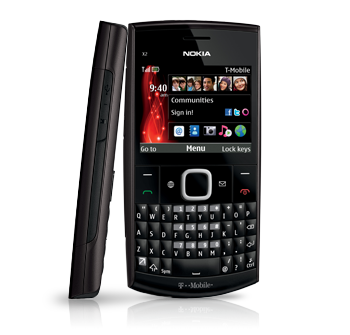
T-Mobile Drags Dinosaur into the 21st Century

ApatosaurusWell, that was an adventure. The new Nokia phone finally arrived from T-Mobile. Of course, I knew very well that there’d be no way I could get the thing hooked up to the ambient microwaves, but I didn’t anticipate that I couldn’t even figure out how to open it to insert the sim card. So right off the bat, it was off to the T-Mobile store, which resides in a run-down Albertson’s shopping center just down the way.

They managed to get it open (turns out you need thumbnails…both mine broke off at the quick earlier this week) and set up the sim card and reinsert the battery. Brought it home and charged it up while I went on about my business, which this week has been considerable.

Next, I couldn’t get it to turn on. Kept pressing the “on/power” button to no avail.

Back to the store. Turns out you have to hold the power button down until the phone responds. Hm. How hard would it have been, dear Nokia, to have said so in your instruction booklet?

Now I go to the website to enroll in the plan of my dreams, which is not available through T-Mobile’s stores. It is so not available that live human staffers don’t even know it exists. None too available to customers, either: when I click on the link, nothing happens.

Back to the store. This time I schlepped my laptop, figuring I could attach to their wireless and, if they could just show me how, sign up from there. Well, of course their wireless wouldn’t allow me on, and they are not allowed to sign people up in the store for Internet offers. They try. Doesn’t work.

So, incredibly—hang on to your hats, Consumerism Skeptics!—one of the guys there actually offers to walk over to the next-door Starbucks, where I can get my laptop online, and get me signed up!

Can you believe that?

That is not only consumer service, it’s Consumer Service Above and Beyond the Call of Duty. I was amazed.

Didn’t take very long to get online, with someone who knew what he was doing  at hand. So I was able to send a brief text-message to M’hijito, which, as expected, spooked him. Reply: “Is this my mother?”

Well, I hope the service level remains that extraordinary. It’s a refreshing change from 21st-century business as usual!

Congrats on Your New Self-cleaning Oven — Oh, BTW, Don’t Use the Self-clean Cycle

No joke.

Before the key hit the doorlock after after I got home from my Thursday morning meeting, I could hear an alarm frantically chiming somewhere inside the house. WTF? Didn’t sound like a smoke alarm. I fly in the door.

Takes a minute or two to find the screaming alarm’s source: the oven. Takes some more time to find the dog, who’s cowering in the back of the house.

I can’t tell why the oven is hollering. It’s flashing an error message on its little electronic control pad: F 7. Very meaningful. I hit “Off/Cancel” and it stops. Thirty seconds later, it starts up again.

Call the appliance repair company. Answering lady suggests throwing the breaker switch. Fortunately, the stovetop, having been switched from electric to gas, is no longer on the same circuit as the oven, so the only appliance that’s shut off by this maneuver is the hysterical oven. Forthwith, she sends a repair dude.

Repair Dude arrives in something less than 45 minutes. He studies the thing and then opines that it needs a new control board thingie. Motherboard. Whatever it is that electronic ovens have. And he says that the reason it’s busted is that the self-cleaning cycle is too hot for the electronics in such an appliance, and sooner or later if you run the self-clean it will burn out the controls. I say it’s been months since I ran it; most recently I had the broiler on, a couple of days ago. He says it doesn’t matter; inevitably this piece of hardware will crash, and that is the cause. You should never, he emphasizes, run the self-cleaning cycle on an oven.

Of course not. Why would you own a self-cleaning oven if you intended to use the self-cleaning feature?

He says replacing it will cost something over $400 (pretty close to $500, actually). Replacing the double oven unit: about $2600.

I say I’m unemployed. And besides, the control panel thingie was replaced (by a different company) not very long ago.

He says (incredulously), well, didn’t the guy who installed it tell you never to run the self-clean cycle? These things can heat up to 800 or 900 degrees! Get yourself some Easy-Off and read and follow the directions.

I say, I have paid my dues and I am never cleaning another oven or defrosting another refrigerator.

He laughs, being soi-même a man d’un certain âge. Then he says, well, in that case, here’s how to make it self-clean without self-immolating: Set the oven temp to 500 degrees. Leave it on about 45 minutes. Then come back, turn it off, let it cool down, and just wipe the oven out. It works just about as well as running the self-clean cycle.

Is he right? Apparently so: there’s a class-action lawsuit against Whirlpool, maker of the Kenmore oven that’s in my kitchen.

So that’s pretty amusing: Basically, today we manufacture self-cleaning ovens that are just for pretty.

The breaker switch for the oven is now permanently turned to “off,” and the oven has been reduced to new cupboard space. After changing out the doors and window, I have no money to fix the thing, and won’t for at least three or four more months. The painter, who’s set to show up right after summer class ends, will clean out  my short-term indulgence fund, and long-term savings have been so reduced that I will run out of living money on November 1, 2012. I expect not to repair the oven until I’m ready to move out of the house, which could be quite some time. With any luck.

Thank God I had enough sense to buy a propane grill!