Coffee heat rising

The Job-a-Day Schedule

My friend KJG shared an awesome time (and work!) management strategy the last time we visited at her home on the far, far west side of the Valley.

KJG’s lovely home is always enviably tidy, clean, and free of the recurrent chaos that characterizes my house. Not only does she manage a large and handsome house, she also cares for an acre of irrigated land’s landscaping and garden, and trains and cares for a large rescued doberman pinscher. 😉 To say nothing of an active and bodacious husband.

Both of us have reached the point in our lives when we regard extra clutter and extra work with a jaundiced eye. I remarked on how difficult and, more recently, how painful I find it to get through the work entailed in maintaining just 1,860 square feet on a quarter-acre of low-maintenance fake desert landscaping.

And she said she had learned to manage the workload by doing only one task a day.

Instead of having a cleaning day and a shopping day and a laundry day and an ironing day the way our mothers taught us, KJG does only one housecleaning task in any given day. On Monday, for example, one might clean the bathrooms; on Tuesday vacuum the floors; on Wednesday do the routine yard jobs.

Hm. I’ve been mulling that over ever since she described it.

My mother, like most of our mothers, had a regular cleaning day. And a regular laundry and ironing day. And a regular shopping day. And so forth. Most of the hours of each day were occupied by getting through all the tasks entailed in each of these projects.

But what if instead of doing projects you divided the projects into tasks and spread those tasks over an entire week or an entire month? Instead of cleaning the house from stem to stern every Monday, why not do one or two parts of that project each day? Wouldn’t this reduce a big, tiring project to a manageable daily chore, not so large as to actually cause physical pain?

This week I finally climbed out from under the paid work long enough to think this idea through, create a schedule, and get started on it.

Here’s what the routine would look like, casa mia:

job-a-day 1

Well. The back pain is unrelenting. But it’s a lot more unrelenting when I have to spend a whole lot of hours lifting, hauling, squatting, climbing under the furniture, scrubbing, scouring, dusting, vacuuming, mopping… The last time I spent a day cleaning house, I hurt so much I could have cried. Maybe even did cry.

Today is Tuesday. This evening after I mopped the floor — that would be all 1,860 square feet of tilework — I felt pretty good. Actually, since I just started this plan today and spent most of yesterday and the day before building the new rose beds, I did a little catch-up and vacuumed before mopping.

Tomorrow — Wednesday — will be the busiest day of the week. So the housework will be limited to light dusting and the ten-minute job of testing and balancing the pool water.

Wednesday Chamber of Commerce meetings usually convene in a north Scottsdale restaurant. A straight line home from those parts will take me past an upscale Costco outlet and the community college campus, where a once-a-week visit will suffice to say hello to colleagues, wave at the all-powerful Admin Assistant, and pick up the mail. Tomorrow I’ll meet a client directly after the CofC meeting before heading back into town via the campus. The surface-street route home from there takes me past a Home Depot.

Sunday after choir, “central area” errands will include trips to the city’s cheapest Costco gas station, located in the ghetto shopping center near M’hijito’s house (providing an opportunity to pester the kid as I breeze through his neighborhood); a trip to Safeway; and possibly a trip to the favored gourmet grocery store that sells my beloved coffee beans.

Note that this scheme a) rarely requires much work; b) leaves plenty of time to walk the dog and hike around the local mountain parks; c) could in theory limit the gasoline-burning automobile trips to three a week; and d) also leaves plenty of time to work on clients’ work. It builds in hours for business networking and still provides ample time to have a life.

Such are the prerogatives of (heh!) “retirement.”


How to Fix a Broken Nail

This one is probably for wimmen only…although any of us, regardless of gender, can bash a toe hard enough to break a nail back below the quick. For women, the following repair project will work on hands or feet; for men, probably it’s only good for toenails, and that only if you never take your shoes off around the guys.

One day when I was a little kid, I was drying dishes (in those days there were no dishwashers :roll:) and I dropped a dinner plate edge on, right onto my big toe. Holy mackerel, did that hurt! It cut the nail bed about halfway across the toe. Amazingly, the toenail didn’t fall off, though my mother luridly predicted that it would. But to this day, a transverse scar under the nail leaves the nail itself prone to cracking horizontally. Usually this is a minor annoyance, but recently I caught the toenail on something, once again splitting it and lifting it bloodily off the toe.

Annoying to the tenth power.

The nail didn’t break completely off. I wanted to keep it in place until whatever was bleeding underneath healed and until the undamaged nail could grow out over the sensitive quick, about half of which was now exposed along the top of the toe.

Thought about sticking it together with Superglue, a common manicurist’s trick: glue a piece of tissue over the split; then layer on the paint. However, the injury hurt, and that didn’t incline me to add more pain by getting a toxic glue into it. What to do?

The fix was simple:

P1010873

Yup. Scotch tape.

The fracture lines lay at right angles to each other: the horizontal crack, plus a vertical break extending to the top of the nail. Almost 1/4 of the total nail surface was broken. Half of that was busted loose, and the other half was pulled up from the nail bed.

P1010875

P1010876Charming.

Soaking the foot in warm water removed most of the blood. Then I took a pair of curved manicure scissors (any type would work, though) and shaped a piece of satin-finish Scotch tape to fit the nail. The “satin” variant looks more convincingly like one’s nail than the shiny stuff, and I suspected it would tolerate a coat of nail polish better, too.

Cutting it to fit the entire nail, rather than just to form a patch over the break, is more likely to hold a large fractured area in place. And, as it develops, if you smooth the tape down carefully and tightly, you can paint over it and not have any unsightly seams showing.

P1010878

P1010881Before applying, hold the patch up to your nail to judge the correct size. Trim as needed to fit the size and shape of your nail. Then carefully lay the shaped piece of tape over your nail and smooth it down evenly from the tip to the cuticle, gently rubbing out any air bubbles. To some extent, you can lightly file along the top to smooth to fit — but use a very fine emery board don’t get carried away with this.

Now you  have a moderately sturdy patch. Because it covers the whole nail, it’s fairly unobtrusive.

The final step is to seal the thing in place. I decided not to apply color, partly because I wanted to keep an eye on the injury and partly because I figured removing this lash-up could be messy. (Surprisingly, it’s not!) For a significant split, use the toughest nail-protecting goop you have around. I happened to find this stuff in a drawer:

P1010882

Hard-as-Nails, available in any drugstore’s cosmetic section, is pretty good. You may have another favorite. I don’t know that it’s worth trying to secure it  further with products that claim to contain fibers, but if that’s what you have around the house, it probably won’t do any harm. Apply two coats, letting the first coat dry well before putting on the second layer.

Overall, the effect is not bad. P1010888I expect that if your feet had about forty years’ less wear and tear on them than mine do, the effect would be considerably better. 😉

This is not a long-term fix. It works to hold the nail together for about a week. Then the process needs to be repeated. But I think the repair will hold together, given an occasional remake, until the broken part grows out.

Here’s the amazing thing:

Getting this stuff off is incredibly easy if you use acetone polish remover — the same stuff you use to soak acrylics off. Acetone dissolves Scotch tape! Put enough on to wipe off two layers of goopy Hard-as-Nails, and it’ll take the tape right off with it!

Dang. Who’d’ve thunk it?

Gents: note that the clear stuff women paint on their nails is day-glo shiny. Even though the gunk is clear, it’ll be obvious that you have something fay on your paws. Some types of clear base coats are matte, but finding them would not be easy, at least not without the help of a manicurist who knows her products. Even then, I expect any type of clear coating would be pretty obvious. So if you just must fix a busted toenail like this, stay out of the locker room until you’ve recovered from your dire injury!

If the break is likely to snag on your clothes or in your work environment, it’s probably more manly to keep it covered with a Band-Aid until you can cut it back without aggravating pain or causing further harm. To prevent lifting, you could layer a piece of Scotch tape over the broken nail, as described above (sans the paint) and then disguise it with a Band-Aid.

A 10-Minute Post: For Plantar Fascitis: Freeze Your Shoes

Ten minutes before I have to race out the door to another networking meeting. So here’s an amazingly short post:

Got plantar fascitis? Hurts like the dickens, doesn’t it…and it takes weeks and weeks and weeks and then some more weeks to go away. If it ever does.

Among the various things you can do to help yourself is to apply cold to the pained foot. This is not every practical if you’re on your feet for hours at a time, as, say, yours truly happens to be. But…I figured something out.

First, take your gel heel cups or your orthotics and keep them in the freezer. If you have several pairs, you can pull out a fresh pair and stuff them in your shoes as you’re about to hit the road.

But…second, and better yet, FREEZE YOUR ENTIRE DAMN SHOE!

Yes. It doesn’t harm leather to put it in the deep freeze. And if you have a fairly hefty shoe, like a Dansko or Sanitas clog, the bulk in the heavy soles will keep the shoe cold for a surprisingly long time. Put your shoes in a plastic bag and stash them in the freezer. Let them live there. Take them out and put them on just as you’re ready to head out the door.

Or…put a fresh pair of frozen shoes on as soon as you come back in the door, after traipsing around on your feet.

It feels sooooooo good to slip your sore foot into that icy-cold shoe!

And I think it may actually help. The current episode I’m enjoying has been particularly stubborn–it’s gone on for about three months now. And lo! Since I came up with this idea, it started healing (heh!) up. Most of the time now, the foot hardly hurts at all.

Combine a frozen shoe with your usual stretching therapy and see what happens.

w00t! 6:41 a.m.! Got this done in less than 10 minutes. And….she’s off and running!

What’s Clean? And…the incredible wastefulness of cleaning products

Sunday afternoon: reduced to cleaning the filthy house. There’s a limit to how much dog hair and floor stickum a human can live with.

I also was reduced to having to buy another Swiffer dustmop, since I’d worn the old one completely out. It was eight or ten years old, and it’s dust-mopped many an acre of flooring—so it was no surprise when it pretty much fell apart.

The new, more chintzily built Swiffer came with two FREE!!!!! dry Swiffer rags and one FREE!!!!! wet-mop rag. I don’t use those things, having found that a microfiber rag works better with less hassle. But since they’d tossed them in with the push-mop duster thing, I decided to use them up.

Have you ever noticed how wasteful cleaning gear that’s marketed to Americans has become? All these individual throw-away paper towels impregnated with this, that, and the other chemical, to say nothing of a different chemical for every purpose…bathroom cleaners, kitchen cleaners, tile cleaners, plastic “wood” floor cleaners, real wood floor cleaners, wall cleaners, window cleaners, counter cleaners, special sanitizing throw-away wipes for the kitchen, special sanitizing throw-away wipes for the bathroom, special toilet cleaners, special shower cleaners, special throw-away wipes to dust the furniture, special stuff to clean off the top of the useless glass stove…holy mackerel there’s no end to it!

Swiffer seems to me to be a special case in point.

The stupid little throw-away dust rags you’re supposed to clip to the gadget…have you noticed how they clog up after one or two rooms? Okay, at 1860 square feet of tile, I suppose my house has more hard flooring than most…but maybe not. A lot of people like to be able to clean under the sofa and the bed, and quite a few think carpets aggravate their allergies or are simply dirty, because it’s impossible to get them clean. Which, of course, it is.

So there you are with your tile floor. You Swiffer up a couple of rooms, take a look at the bottom of the gadget, and see the throw-away duster rag is chuckablock full of dust and dog hair.

But you have miles to Swiffer before you rest. (Click on the image to appreciate its full, high-res glory. This is how a Swiffer looks after I’ve vacuumed the floors: to get this place clean, first I have to vacuum, then dust-mop, then wet-mop or steam-mop. Yes. Here in the low desert we do have dust, and here in the Palace of the Queen of the Universe, we have dog hair. A lot of dog hair.)

Now you think, ah! rather than throwing this thing away, I’ll flip it over and do another room or two with the backside, thereby extending its life a little and cutting the waste a tiny bit.

Well, no.

Proctor & Gamble has designed its Swiffer rags so that they’re puffy and absorbent on one side and shiny and UNabsorbent on the other—the better to block consumers from doubling up on their use!

Cute. How much environmental degradation is a dollar worth, anyway?

Absent the questionable throw-away towels, Swiffer dust mop gadgets come in handy, and you don’t have to buy into clear-cutting Montana for the privilege of using them. The trick is pretty simple: get yourself a bunch of microfiber rags. These are available in lifetime supplies at Costco, and you may be able to find them at hardware and auto supply stores.

Attach a microfiber rag to the bottom of the Swiffer duster in exactly the same way as you attach the Swiffer cloth, by punching the fabric into the little punch-in clips.

Et voilà!

Because a microfiber rag is bigger and softer than a Swiffer paper, obviously it’s going to flop around the floor a bit. But for me, that’s just fine—provides a wider pick-up swath and makes it easier to push into corners. If you want it tight and neat, you can fold it envelope-style around the Swiffer head and clip it on with clothes pins or binder clips.

Microfiber fabric is much more efficient at picking up dirt and pet hair than a disposable Swiffer paper. Here’s what happened when I ran the clean rag over the area that I’d already Swiffered:

And a microfiber cloth will dust your entire house, not just a room or two. So you’re not having to fiddle around with changing the things out every five or ten minutes, as if throwing one dustrag in the trash every time you clean the floors weren’t wasteful enough. Here’s how the microfiber rag looked after I’d gone over the rest of the house:

Why can’t dog hair stay as cute when it’s off the dog as when it’s on the dog?

Jeez. Just imagine how much I’d spend on these Swiffer paper dusters if I went through four or five of them every single week? And think of the incredible waste of forest products, energy to produce the stupid paper rags, more energy to package them, still more energy to ship them, and still more energy to cart them to the landfill. Think of the waste of landfill space!

Microfiber rags last for-freaking-ever! There are some out in my garage that have gotta be eight or ten years old. Do they get grungy when you use them to clean the floor? Sure…that’s why we have clothes washers. Though they do get stained and tired, that doesn’t interfere with their ability to magnet up dust and animal hair, a job at which they are very, very efficient.

Well, anyway, now the floors are as clean as floors can get.

It was Erma Bombeck, I think, who once held forth humorously about how different people have different ideas of what makes their homes “clean.” She was talking about women, but it applies to men, too. Bombeck reflected that she didn’t feel like the house was truly clean if there were finger smudges around the light switches. Other women felt the house wasn’t clean until the kitchen counters were spotless or the baseboards dust-free or the house redolent of furniture spray or the bathroom fixtures polished bright enough to blind all comers. Everything else could be dirty, but as long as those things were right, the house was “clean” enough.

😀

It’s true, I think. For me, it’s the furniture and the floors. I can’t abide dust on the furniture or grime on the floors. And when I can write my name on the top of the file cabinet and feel the grit under my bare feet, I know it’s time to clean. SDXB was obsessive about the bathrooms: if they weren’t clean and sanitized, the house just was not clean. La Maya believes clean baseboards make a clean home.

What’s the gold standard of cleanliness around your house?

DIY Pool Debris Shields that Work and Save Dollars

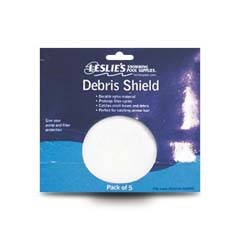
Leslie’s sells a nifty gadget called a “debris shield” that does a nice job of protecting your swimming pool filter from floating crud, cuts down on the backwashing jobs, and staves off the day that you’ll have pay someone to take the filter apart and clean it out. It’s extremely simple: a stretchy nylon mesh bag that fits down inside the plastic skimmer basket. And for what it is, it’s stupidly pricey: $12.49! For this package of five, that would be $2.50 apiece.

Though you can rinse them out, they don’t last very long. If you live in a place like Arizona, where high summer winds blow dirt and leaves into the pool all summer, or if you have a dog that likes to swim, you need a finer filter than just the skimmer basket.

The other day, M’hijito wanted to bring Charley the Golden Retriever over for a dip in the drink. Meanwhile, Cassie the Corgi has taken to falling in the pool during her frenzies over the humans’ swimming activities. Cassie has more loose hair on her 25-pound body than Charley has over his entire 70-pound expanse, and Charley alone will leave a skiff of hair floating on the surface. Fresh out of debris shields and unable to afford a new one just then, I cast about…and found this:

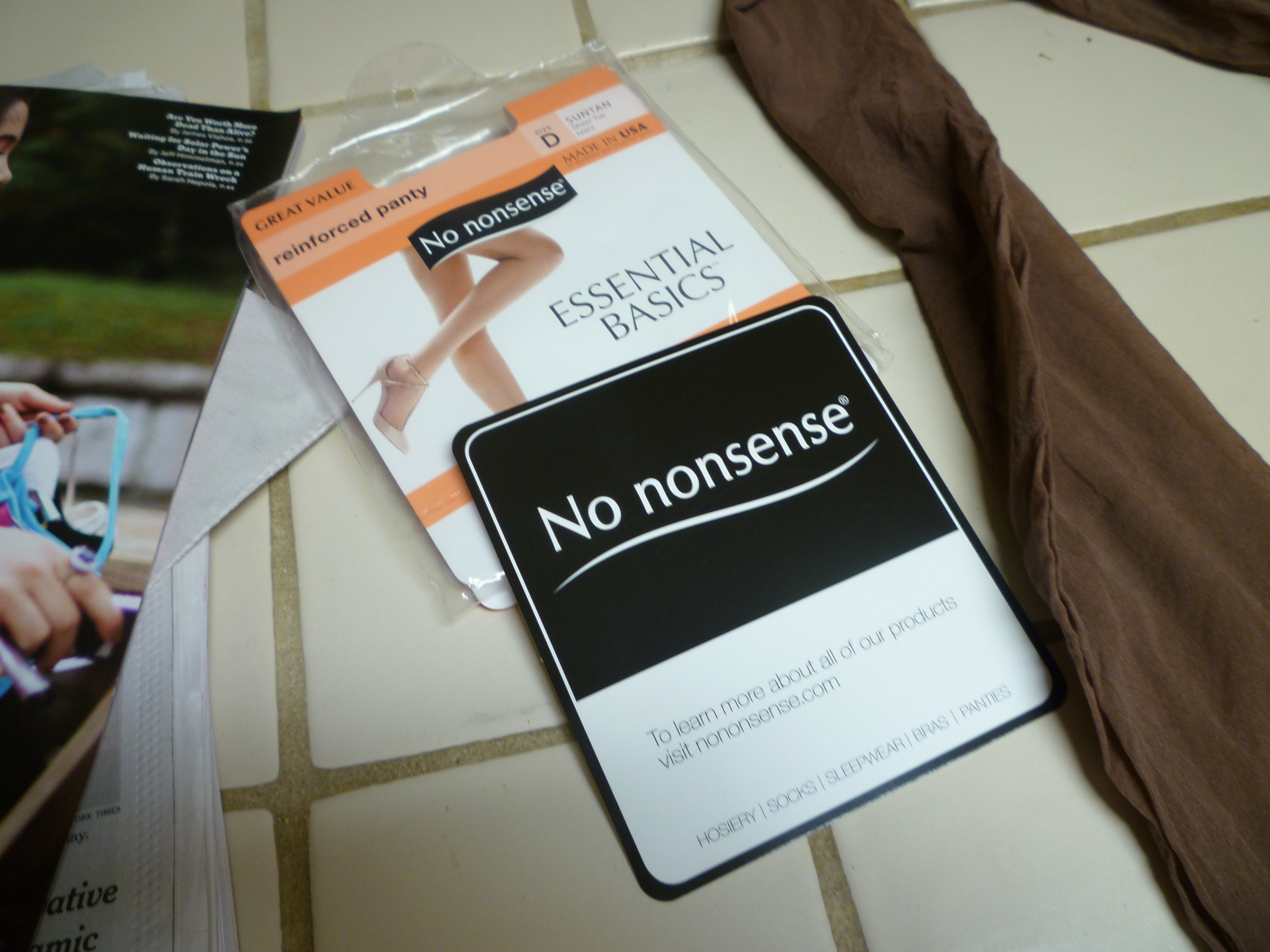
Nylon hose ($1.24). Yea verily, an investment of a dollar and twenty-four cents will get you not one, not two, but five very effective debris shields. Here’s the trick:

Get the cheapest pair of pantyhose you can find. These came from Walgreen’s, where I paid a buck and a quarter for one “queen-size” pair. Take a pair of scissors and cut off the bottom part of the legs, about halfway up.

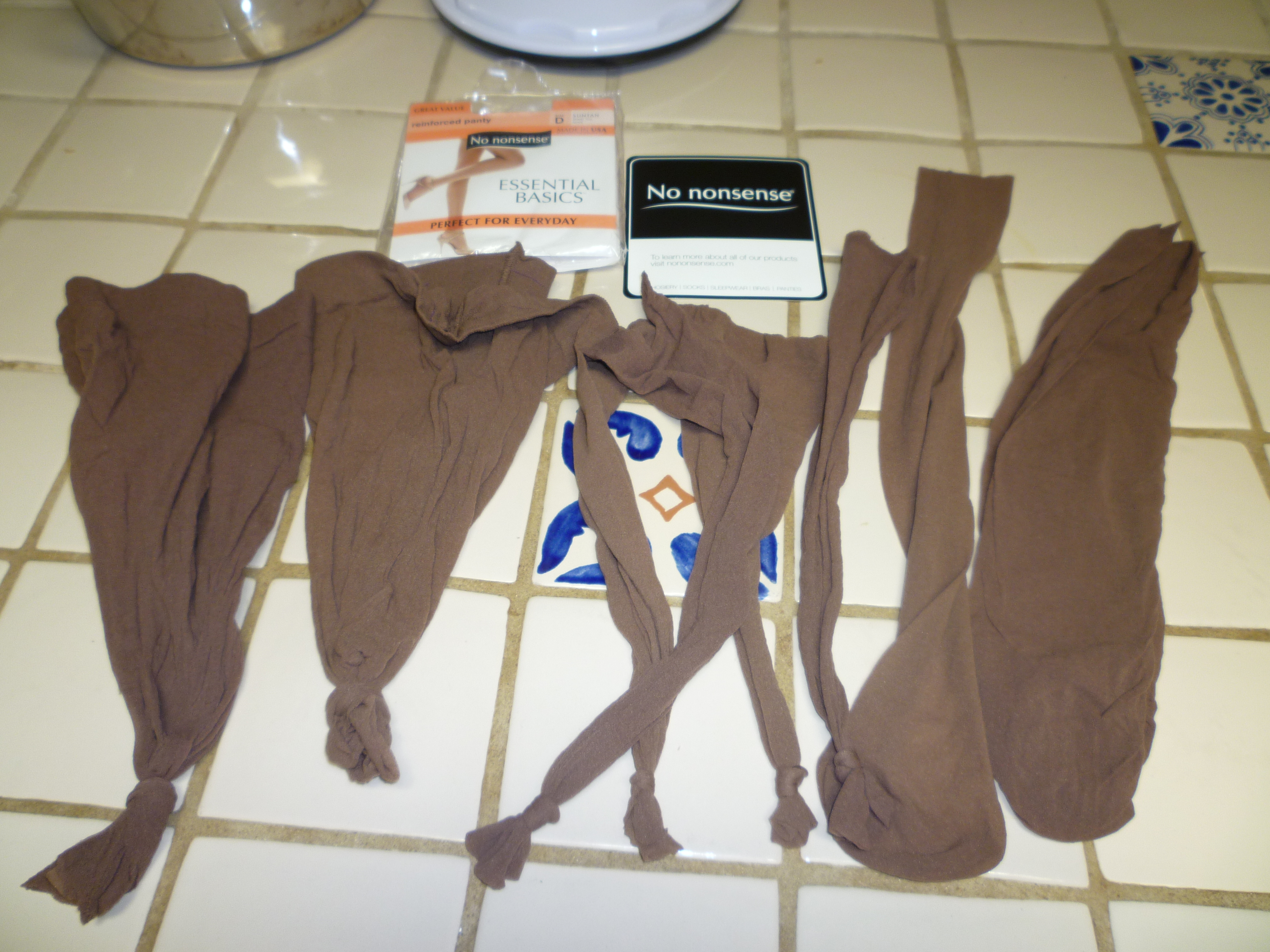
Now you have two debris shields.

Next, cut off the remaining length of the legs, just above the line where the reinforced panty part ends—this is right at the crotch. Don’t include the crotch seam in either of these two lengths.

Tie a knot to close one end of each of the second two lengths of hose you’ve cut off. Lo! This creates two more debris shields. The second set ends up with a tight, stretchy reinforced segment at the top.

Take the panty section and tie a knot at the bottom, where you cut off the legs. Presto-digito! Another debris shield. Two pair of hose gave me ten DIY debris shields.

Drop the knotted or toe end into the filter basket. Stretch the top over the rim—it should fit firmly. And there you are: exactly the same thing as Leslie’s $2.50 (plus tax) mesh debris filter, only you’ve paid 25 cents for it.

This works very effectively, and you can rinse it out and reuse it quite a few times. Check out the wad of dog hair the thing kept out of the pool’s filter!

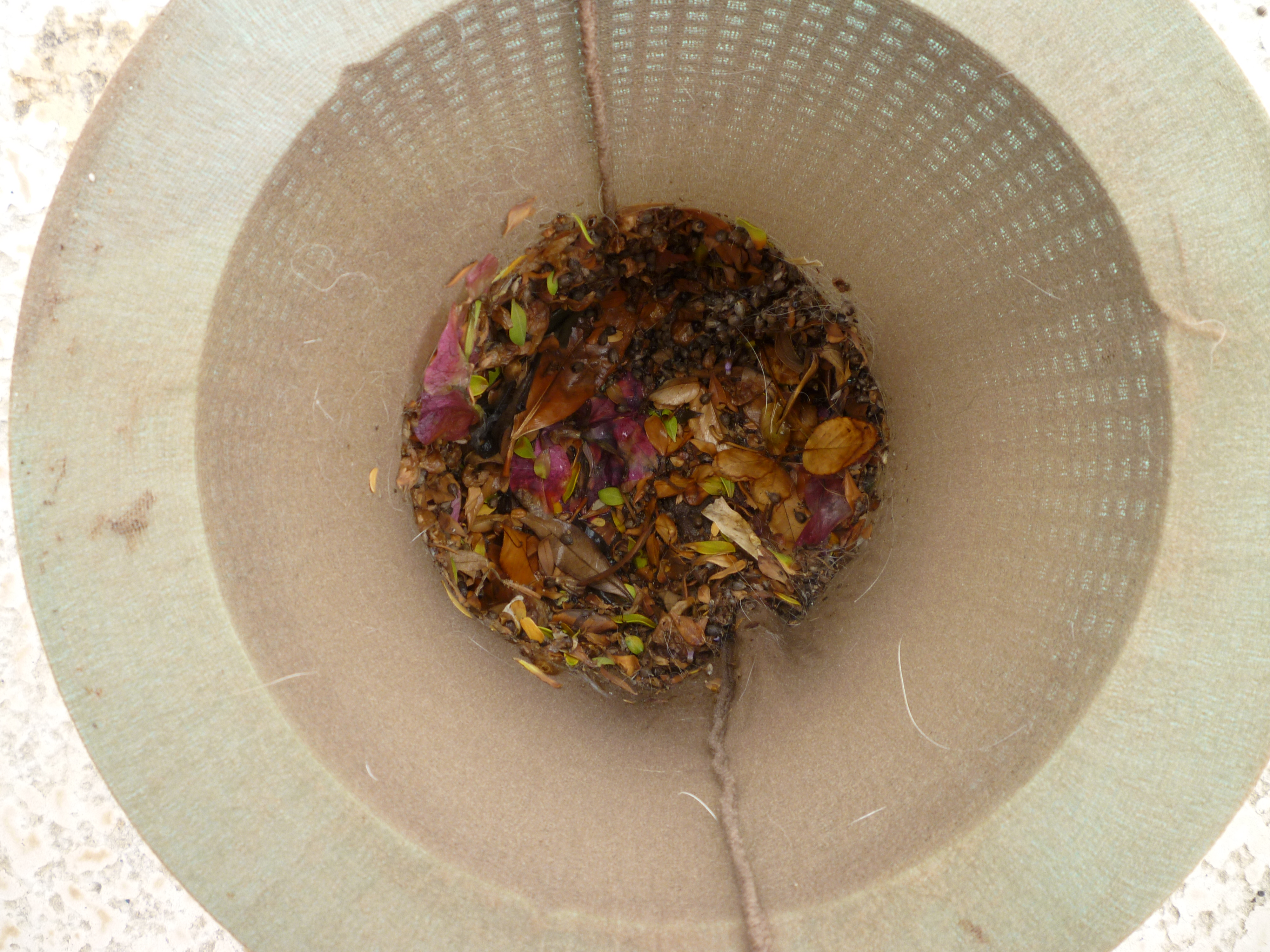
After this heroic save, I simply washed the bag out and put it back into the skimmer basket, where it kindly grabbed a fistful of small, filter-clogging leaves the next time the wind blew:

Works perfectly. And it’s cheap. Very, very cheap.

New Arcadia Door Curtains: $75!

Et voilà! Now that the fine new ultra-low-E, all matching Arcadia doors were installed, I developed a craving for prettier draperies in the bedroom. The sliding doors in the dining and family doors have sheer floor-length curtains that I made shortly after moving in to the house. I ran out of steam, though, before I got to the back room. In there, a couple of layers of Pier One curtains were jury-rigged on a double rod to keep out the early-morning light…not very effectively.

While I was washing the sheers that had to be taken down for the new door installations, it occurred to me that a set of sheers laid over that cheapo peacock-colored silk curtain just might look pretty nice. They would attenuate the gaudiness of the eye-popping teal, which picks up a more subdued teal on the bedroom’s accent wall. And with windows that no longer radiate heat like a wall furnace, the blue-green things could be slid open, allowing sheers to filter the light and making the room look pretty nice.

So it was off to Fabric Depot, the one surviving fabric store within 15 miles of my house, to pick up the nicest sheer white nylon they had, in 96-inch lengths. They didn’t have the wood clip rings I wanted, but Home Depot did. Unfortunately, HD’s were too dark; however, the clips are easy to remove, and I have a shoebox full of wooden rings that lack the clips. I needed 22 with clips; I had 18 of those. So…it was just a matter of buying one package of HD’s Mediterranean-ugly rings, removing their clips, and snapping them onto my lighter-colored rings. Fabric: $68. Rings: about 8 bucks.

Making unlined draperies is a little time-consuming, but really very easy. First, get the fabric retailer to cut the cloth into the lengths you need. Wide curtain and upholstery fabric comes on rolls that fit into a machine designed to measure out the correct lengths; these have a groove along which the sales clerk can cut a pretty straight line. Once you get the stuff home, lay it out on the floor, one piece atop the other, to be sure they really are the same length.

These are folded in half—they’re actually twice as wide as they appear in the photo. As you can see, the raw edges are not exactly straight—although the saleslady did a better job than most! Straighten the edges either by running a long straightedge from selvage edge to selvage edge (usually these are straight and pretty close to parallel) or by folding the fabric up so that a selvage edge runs along the cut edge, showing where the cut edge is uneven.

Good nylon irons easily; you can press a sharp crease in it, and you also can easily press it out and press out any wrinkles. Set your iron at silk/wool, anddo not try to steam the fabric. At the lower temperatures, your iron will not steam; it will spit. Higher temps will melt nylon. Use a spray bottle to lightly dampen the fabric as you go.

Your ironing board should be well padded, and you’ll need a package of very sharp pins. Large craft pins are sometimes dull; use sharper pins designed for sewing. You’re going to use the pins to secure the hems as you press them in, and then, once a hem is properly pressed and creased, take pin it in place  preparatory to stitching it.

I started by turning the selvage over to form a narrow hem on what would be the curtain’s vertical edges. Fold it over once, pressing:

Press and pin it as you go. You can stick the pins straight down into the ironing-board cover to hold the fabric in place while you press this narrow edge, and then lift them out to secure the hem after it’s creased:

Stitch these narrow hems, and you have now finished the vertical sides of your curtains.

No, I don’t cut off or slash the selvage. And yeah, I know you’re supposed to. For one thing, nylon doesn’t shrink when it’s washed, and so you don’t risk puckering. For another, it’s more trouble than it’s worth.

You can sew these curtains on a machine or by hand. Personally, I prefer to stitch each hem by  hand. Obviously, a sewing machine will go a lot faster, but with very fine fabric, you need some real skill with the machine to avoid puckering or damaging the fabric. The effect of hand-stitching is very nice—makes your curtains look like you paid a ton of money for them. If you do use a machine, set it for fairly long stitches with a light tension.

It’s very easy, however, to sew long straight hems by handpicking with a long, baste-like whipstitch. Use a single (not doubled) strand of thread. Tie a knot on the end and start by poking the needle through the folded part of the hem. Then pick up two or three stitches from the weave of the fabric, on the side that will be the front; pull the needle through that and then back into the folded section. You can make eight or ten such stitches at a time, holding as many as your needle will take, and then pull the thread through them all at once. This speeds things along mightily.

Wax the thread to keep it from tangling as you sew. Ideally, beeswax in a special holder works the best. However, these are now pretty hard to find. You can substitute a white(!), unscented(!) candle. Lay the length of thread against the side of the candle and hold it firmly with one finger. Pull it through, coating the thread with wax.

Alternatively, you can wax a piece of thread with the natural waxy oils from your skin, but you cannot be wearing makeup to use this trick. Place the length of thread against the side of your nose and hold it firmly in place, as shown above with the candle. Pull the end so that you run the entire piece of thread between your finger and your nose. This will lightly coat the thread enough to help keep it from tangling, especially if you’re fairly young and still have an oily face. 😉

Now you’re ready to stitch the top and bottom hems. First, fold over the top and bottom edges in exactly the same way as you did the vertical hems. Because these narrow hems will not show, you can sew a simple running stitch to hold them down. Press these edge hems flat. And now you can move on to sew the actual hems.

I like a hem about four inches wide. Use a tape measure or ruler to ensure that these turn out to be the same width all the way across.

Once again: pin, press, and stitch.

You’re almost done! All that remains is to measure for the bottom hems and stitch those up.

First, clip or otherwise hang your curtains-in-progress to the rods you intend to use. I have a peculiarity with sheers, in that I like to fold the top hem over so that it lazes loosely and sensuously between the clip rings (which IMHO are about 897% easier to use than sewing on regular rings. You’ll need to do some math here: take the width of the curtain and divide it by the number of hangers you want to use. This will tell you how far apart to place the clip rings. I came up with 14 inches.

The curtain’s bottom edge will now drape on the floor.

This was the height of fashion a few years ago, and if you like that effect, well…then you’re done. But I think most of us have now figured out how big a mess and hassle it is to clean around curtains that slimpse stylishly across the flooring. So if housework is not your cup of tea or you can’t afford a cleaning lady about whose welfare you care nothing, you’ll be wanting to hem the bottom. This is very easy, much the same as hemming a woman’s skirt.

Because I wanted those peacock silk curtains in behind the sheers, I hung them before measuring the bottom hems. This was to make sure the sheers came out no shorter than the curtains behind them.

Draw the curtains together in the center. Gently pull them down—do not exert a lot of tension here—and note where you would like the bottom of the hem to fall. Place pins to mark this level in each panel. This is where the bottom of your curtain will fall.

Take the curtains down and measure the distance between the pin and the bottom of the curtain. This will be the depth of your bottom hem.

Pin up, press, and stitch your hems, and your sheers will be ready to hang. Before stitching that last seam, you might want to hang the pinned-up curtain, just to be sure you have the hems the right length and that they’re even. That extra step is a lot easier than having to rip out hems, remeasure, and restitch.

You understand, this is wild stuff, putting the sheers outside the colored drapes. But I was right: the effect is really  neat. It allows you to create several styles.

Closing the sheers over the top of the bright Pier 1 silk curtains softens the gaudiness while letting some of the teal hue be seen. It’s after dark here, so you can’t see what happens when sunlight is shining in from the other side.

You can pull the sheers open, to expose the colorful underlayment:

You can have them both opened, sort of layered so you can see both sets of curtains but also have sunlight come in. This looks a lot better in the daytime:

And, speaking of the daylight hours, pulling the underlying colored curtains open behind the closed sheers creates yet another effect, filtering the bright outdoor light and yet letting the teal shade come through. It’s hard to see with the Arizona sun backlighting the window, but to the human eye it looks pretty nice.

Here’s a view of those flipped-over hems at the top. They’re folded toward the back and clipped along the sewn part of the hem. This gives them a little more heft and causes them to drape attractively between the clip-rings.

This project took two evenings in front of my favorite videotaped TV programs plus a Sunday afternoon listening to Click and Clack and This American Life on NPR. Obviously, if you used a sewing machine you’d get through it a lot faster—you probably could put both panels together in one afternoon.

Not bad, eh, for $75!