Coffee heat rising

Can Minimizing Go Too Far?

This is a guest post from Crystal of Budgeting in the Fun Stuff: A Personal Financial Blog about the Next Financial Step. It’s an open fiscal diary and a personal finance blog rolled into one that is looking to get as many people involved as possible.

Minimizing is in. I’ve seen three different articles in two weeks about getting rid of clutter and minimizing your junk. I am personally trying to declutter our home this month as well. BUT, I do have my limits.

I want my house to be rid of the actual junk…the stuff that just takes up space that I just haven’t Craigslisted yet. For example, I want to get rid of our old GPS, cell phones, my wedding dress and petticoat, and two boxes of Nintendo games and White Wolf magazines that we were unable to sell for a friend. I’ve already successfully sold a few things and am working on the rest.

I don’t want to get rid of our books, DVDs, board games, or Magic: The Gathering cards. Those are things that we enjoy or will enjoy again in the future. Do we read our books every year? Nope. Do we frequently watch our DVDs? Nope. But when I want to read the whole Harry Potter series again, I know where they are. When I want to bring The Princess Bride, Paranormal Activity, or Terminator 2 to someone’s house, I can easily pluck them off the shelf.

We own the board games and Magic cards for much the same reasons. Some games get played all the time (like Power Grid), but others only come up once in a while (like Merchants of Venus). That doesn’t mean we want to get rid of Merchants of Venus…we’ll just hold on to it until it’s requested again.

In short, I want to own these things for the ease factor and because I enjoyed them enough to want to have them as part of my life.

I just hope that the true minimalists (like these people) will not accidentally cause a bunch of people to go on a crazy cleaning spree and regret it a month later when they are re-buying the hobby gear they just sold or the clothes they just donated.

Enjoy these other posts at Budgeting in the Fun Stuff:

How We Chose to Buy Our Home
Diminishing Inheritance Returns
Let’s Get Controversial: Hiring Help

Buying Futures at the Supermarket: Groceries as investment

Guest post by Pinchnickel

PHOENIX, Ariz. – Save big bucks by playing the commodities future market at your grocery store every week. Buy in season, freeze, preserve, and consume later when prices double. Save even more when you factor in clipped discount coupons.

Let’s go shopping. Today’s futures bargain is bananas. Late spring is harvest season in tropical Central America, home of those shoot-em-up banana republics. “America’s favorite fruit” has become a “price-fixed” commodity, meaning all local grocers charge the same price [currently in the Southwest about 69 cents a pound]. But grocers in your area may break from the price-fixing mold and list bananas as a seasonal loss leader. For example, a Phoenix grocery chain currently offers four pounds for 99 cents, or 25 cents a pound.

Bananas spoil quickly, but I’ll preserve the nutrients of that banana bargain by converting them into low-sugar banana bread and muffins stored in my chest freezer for future consumption.

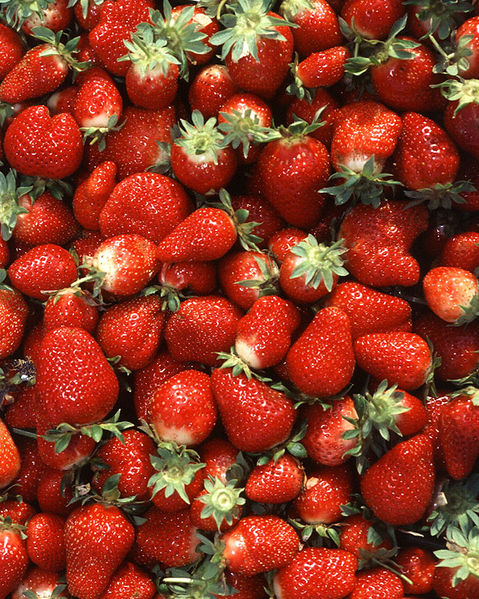
Strawberries currently are arriving here by the truckload from California, as they do every year, and are now available for $4 a 4-pound container, or a buck a pound. To bank strawberries seal in a zip-bag and freeze for up to a year. I mix them with rhubarb for pies, but they can also be turned into toppings for shortcake or ice cream.

Spring is also the time when veggies grown in warmer zones like Mexico arrive at your grocers. They include asparagus, broccoli, spinach, carrots, cilantro. Preserve by blanching in boiling water  and freezing for future use. Turn the cilantro into pesto—delicious spread on toast.

At other times of the year lower-priced pork, beef and even fish will arrive in your local grocery at seasonal prices. Fruits such as apples, peaches and pears arrive in late summer. Learn how to preserve them in syrup or as jams and jellies. Canning supply companies Ball and Kerr both offer recipe books by mail.

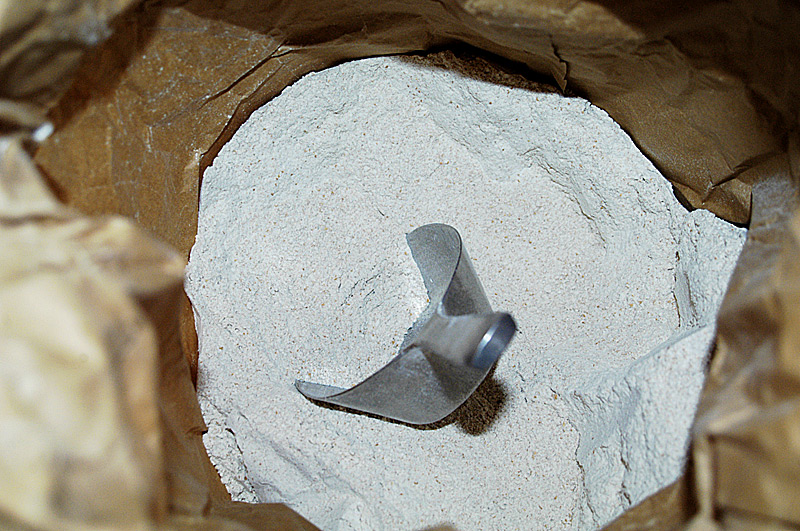
The very best “loss leader” season across this land, of course, occurs in early to late autumn, when the great American harvest begins everywhere. Leading the list of good buys then: white flour, beet sugar, potatoes, berries, apples, corn. Because I produce all my own baked goods, autumn is when I put in 100 pounds of flour and 30 pounds of sugar for use throughout the year, when a glut of flour and sugar hit the market for only 99 cents a pound. The same flour and sugar costs $2-plus later in the year—a 50 percent return on my commodities future buy.

If you’re a joyfully consuming foodie or simply a Pinchnickel like me, acquaint yourself with the harvests and when imported products arrive at your grocer, and buy ahead of need. Keep your freezer full of these wonderful bargains. Save big, and enjoy those buck-a-pound strawberries over shortcake next January when your friends are paying $3 a pound for them.

Images:

Bananas: Steve Hopson, Creative Commons Attribution-Share Alike 2.5 Generic license, Wikipedia
Strawberries, Ken Hammond, U.S. Agricultural Research Service, public domain
Asparagus: RyanFreisling, public domain
Flour,
R.Wampers, Creative Commons Attribution-Share Alike 2.0 Belgium license, Wikimedia Commons

March Madness Results Are Up!

Free Money Finance has posted the winners of this year’s March Madness competition:

Debt-free Adventure’s Identify & Overcome Money Anxiety & Stress in Relationships: $500 to Habitat for Humanity

Personal Finance by the Book’s Debt Free in One Year: A True Story: $300 to ¡Vámonos! Community Ministries

Bible Money Matters’ Managing Your Money Is An Exercise In Both Mathematics And Psychology: $100 to Second Harvest Heartland

Funny’s Truth, The Highest Thing that Man May Keep: $100 to All Saints Episcopal Church‘s music ministry

What an inspired and generous thing FMF’s March Madness project is—even more generous of his time, I expect, than of his cash. Thank you, FMF!

w00t! A win!

FMF just e-mailed to say Funny won one of the $100 prizes in Free Money Finance’s March Madness competition. Thanks to everyone who kindly participated by voting for Funny in each of the contest’s many rounds!

Far as I can tell, he hasn’t posted the grand prize winner’s name yet. But the final round is here, showcasing the two finalists. One post was Debt-free Adventure’s rumination on Money Anxiety Disorder, and the other was Personal Finance by the Book’s amazing story of son and daughter-in-law’s marathon escape from debt. Both are very fine examples of the blogger’s art. If you haven’t read them yet, you absolutely should.

Spring in Arizona

The winter-long El Niño rains have brought a bumper crop of spectacular flowers. The rain’s about over now, and now we have the stiff winds that, each spring, blow in the summer’s 110-degree heat and blow out the blooms. But for a few days yet, we can enjoy air perfumed with orange blossoms and spectacular sights in our yards (click for larger images):

Who needs money when we have real riches?

Five frugal ways to entertain the kids

Guest post by Tina Minchella

I was going to title this post “why it’s never a good time to have a kid.” Many friends and family members as well as the occasional professional acquaintance discuss family planning with me. With the economic situation the way that it is, I hear over and over, “It’s not a good time to start a family. If we could just save…” And this is when I stop listening.

The truth is, it’s never a good time to start a family. I know this sounds quite shocking. But here’s why: kids are always expensive. Yes. Kids cost money. A lot of money.

As I have learned to use public transportation, to clip coupons, and to make that dollar stretch, I have also realized that there are many ways to save money entertaining little ones.

• Trade skills. I play the piano. My friend plays the piano. It’s a bad idea to teach your own child how to play a musical instrument…BUT…you can trade your services with others. Teach your friends’ children and let your friends teach yours.

• Go to the library. This is not just about saving money on books. In the summertime, many local libraries also have story time, free movies with popcorn, and nature walks. The library has become a hub for more than just books. It is a community outreach system full of fun and FREE things to entertain the little ones. Some libraries also offer monthly passes to local museums. This allows you to visit a number of local cultural sites for free.

• Go to the park. I’m not sure when TV and videogames overtook our world, but there is nothing like fresh air and the sun to entertain a child. Pack a small picnic lunch and you’re suddenly on an exciting adventure.

•  Movie theaters. In the summertime, large movie theater chains play early morning movies on weekdays for families only. The theaters play older movies that have been released during the previous year and charge about 75 cents per ticket. Although they are not the newest blockbusters, the excitement and amazement little children have when seeing movies on the big screen remains.

• Kids-eat-free. Recently, a number of chain restaurants have begun having a kids-eat-free night once a week (some even do this every weekday). With the purchase of an adult meal, a child’s meal is free. There are even restaurants that cater to large families and give 2 free meals for every adult meal purchased! This is a great way to have a night out and not break the bank.

Kids cost money, but they don’t have to bankrupt you. There are a number of ways to keep having fun with kids without increasing your debt or further aggravating your financial troubles. If you’re having fun with the kids, they’ll never know that it was at a discounted rate.