Coffee heat rising

Shoring up the Defenses, and Tales of Perps and Dumb Marks

The other day when I remarked that some clown was (or maybe was not) ringing the doorbell after dark but the motion-sensitive coach light near the gate hadn’t clicked on, TB of Blue-Collar Workman commented that it’s a good idea to install motion-sensitive lights high enough to be out of reach of a six-foot-tall man, since, as we know, one thing these guys like to do is unscrew your porch light before kicking in the front door.

That struck me as a real good idea, so I went by HD and bought a couple of China’s best motion-sensitive searchlights. I hate those things—they about put your eye out. IMHO, the dark is supposed to be dark, and I happen to much prefer it that way. Oh well. We’re not in Kansas anymore…

At any rate, Dave the Electrician and his sidekick came by yesterday and installed them. Dave thought it was a great idea. He put one on the west side, where the motion-sensitive light stopped working years ago, and another on the east side, positioned so that walking by on the sidewalk shouldn’t kick it off, but trying to climb the wall sure will. Its range covers the length of the wall that isn’t obstructed by thorny vines…and also, if any dude cares to try to climb through a bougainvillea, he’ll have plenty of light to show him the way.

The one on the west side is especially great, because it comes on if you walk up the driveway or if you walk across the yard on the west side, or if you’ve come over the back wall it will come on when you approach the area where the west-facing sliding door is. This means that when somebody (or somebody’s cat) is out there, I can see through that damn sliding door and spot the poor wretch.

There are a lot of trees out there, and so o’course it’ll be on all the time a light wind blows. I suppose when it gets windy I could bestir myself to walk into the garage and turn off the switch. That requires more ambition than I usually have, though.

The other day TB, trying to make peace with Lady Karma (one expects), fessed up to his youthful life of crime and offered a long series of excellent tips on how to protect your car from break-ins. Some of these are common sense and some are pretty subtle—it’s a worthwhile read, unless you enjoy engaging with insurance companies and car repair guys.

TB’s post reminded me of a hilarious episode that happened here in the neighborhood. My neighbor across the street at the time (this was when I lived in the old house) worked as a kind of man-for-all-seasons for a spectacularly wealthy Scottsdaleite, and since he was largely on call, he would come and go at odd hours.

One morning he was about to leave for work. He’d climbed into his car, turned on the ignition…and realized that damn! he’d left his coffee in the kitchen. So he jumped out of the car, trotted back in the house, poured his coffee and shut off the Mr. Coffee, and darted back out to get back into…a missing car!

Yes! In the time it took the guy to walk into the house, pour a cup of coffee, and walk out, some dude had walked up, seen he’d left the keys in the car, and driven off in it!

😆 😆 😆

So, there you go: Never. Leave. Your. Keys. in. the. Car. Tip of the day.

Image: Motion Detector Attached to a Garage. CHG. Public domain.

Disaster Preparedness

In the wake of the astonishing destruction Hurricane Sandy wreaked on New York, bloggers and normal citizens alike are talking about how to be prepared if the unthinkable happens “here,” wherever we happen to be. Costco is selling a disaster preparedness kit: paranoia in a backpack. There’s a point where you lapse from envisioning the worst to flaming silliness. However, it certainly is reasonable to think through the most likely disasters that could happen in your part of the country, and to be prepared for them.

Hereabouts, believe it or not, we have had floods. Mercifully, nothing like people in other parts of the country experience, and since the Pacific is 350 miles from here, we don’t need to prepare for storm surges. The Salt River, which historically has flooded sections of Phoenix, is now dry, dammed to extinction upstream. Some of the dams on the Salt are earthen lash-ups that are, shall we say, pretty rickety; all it would take is for one of them to collapse to take out every other dam downstream, and that would flood the downtown area and suburbs that have grown up in the river’s lower flood plain. As a matter of fact,  much of the city is in the Salt River floodplain, but the likelihood of that much water coming downstream is almost nil.

The most likely short-term emergency here is high wind and damage to the electrical grid. (This excludes drought, which just now has afflicted the state for over 10 years and which eventually could render the area unlivable.) As the climate has warmed, we’ve seen more and more apocalyptic-looking dust storms, some of them reminiscent of the Dust Bowl.

While these do cause monumental freeway pile-ups and create unhealthy living conditions, they’re not going to bring the entire region to a stop. However, we have been seeing more and more violent windstorms, including tornadoes, which once were so rare in these parts as to be nonexistent. The wind doesn’t have to swirl around in a funnel to be extremely destructive and to lead to lengthy power outages.

So it makes sense to think through the most likely disruptions you’re likely to experience in your part of the country. Power outages represent a major potential problem, and as the nation’s electrical grid ages, loss of power becomes more probable. Many modern gas stoves will not work — at least not safely — without electricity, because they have no pilot lights.

Clean water is another necessity you should be prepared to provide for yourself. As long as a stove works, you can boil water, but…what if the power is out?

And, as we’ve seen in New York, if the power is out any length of time, you could find it difficult or impossible to get gasoline. If you live in a city like Phoenix, built for automobile transport down to the smallest detail, that could be a problem: even getting to a grocery store would be a challenge, to say nothing of getting yourself and your family to a hospital or to work.

Here in Arizona, you need to carry water with you even for routine trips across the desert. So most people have some sort of water carrier. Propane grills are commonplace, and so most of us have at least some propane on hand.

Here’s what I think of as the basic emergency kit:

  • Two or three five-gallon containers of water
    • I keep that much so as to have enough on hand for the dog and for myself, should things become so dramatic that we have to evacuate the city. Fifteen gallons would get me, another person, and the dog to Flagstaff or Yuma, even if we were stuck in traffic for a day or two.
  • At least one and preferably two extra barbecue-size propane tanks
  • A small propane camp stove
    • Small containers of propane for camp stove
  • Large container of dried beans
  • Large container of dried rice
  • Canned or dry dog food
  • Canned and dry  human foods
  • Manual can opener
  • Battery-run radio
    • Batteries for said radio
  • Candles (tapers provide the best light)
  • First aid kit
    • Large and small bandages
    • Antiseptic liquid or ointment
    • OTC painkiller; prescription painkiller if you can get your hands on it
    • Scissors
    • Tweezers
    • Eyedrops
    • Gloves
    • Roll of athletic bandage
    • Prescription meds for humans and pets
  • Fire extinguisher
  • Water filter, iodine tablets, or both
  • Soap
  • Detergent (dish detergent can be used for hair and clothing as well as dishes)
  • Toilet paper
  • Paper towels
  • Camp dishes & eating utensils
  • Dog dishes
  • Toothbrush and toothpaste
  • Pocket knife
  • Matches or butane fire starter
  • Extra gasoline stored safely in an approved container
  • Camp lantern and batteries or propane to operate it
  • Gun and ammunition
  • Blankets or sleeping bags and jackets
  • Cash

Some of this stuff would only be needed if you had to evacuate, and even then, some of it would be usable only if you could get out of town in a vehicle. You probably should have a day pack loaded with personal emergency items (meds, toiletries, water purification tabs or gadget, toilet paper, underwear, & the like) and a box of camping-type stuff that you could load into the car quickly if need be.

Few of us are likely to have to evacuate, however. More likely, we’ll have to deal with an extended power outage. In that case, extra gasoline, propane for cooking, and candles or a camp lantern would be your most important tools. And if the electricity is out, lo! So is the ATM! And so is every credit-card machine in every store that has still managed to stay open. A stash of emergency cash, as much as $500, should be hidden someplace in your house where the burglar is not likely to find it.

People should be prepared for disruption of water services, too. In that case, a source of heat (propane) to boil water is critical, as is a portable store of water. The trick is, water can’t just sit in a carboy forever. It gets stale. About every three months, I use my five-gallon water containers to water the plants; rinse out the containers, and refill them.

It’s important to remember that the water heater contains 50 or 60 gallons of water, which can be rationed out for drinking in an emergency. And in Sunbelt areas, swimming pools are reservoirs of water that can be made drinkable by filtering, boiling, or iodine.

It’s amazing how few people, even in disaster-prone regions, have emergency supplies on hand.

My friend Elmer used to live on top of the San Andreas fault — he grew up in Hollister and lived in Salinas. His wife was here in Arizona visiting their daughter but he’d stayed home when a big earthquake hit Salinas. Power, gas, and just about everything else were out for days. The road out of town buckled, so people were pretty much stuck where they were for a week or two.

Elmer liked to camp, and he also had lived through several big California earthquakes during the many decades of his life. He and his wife gardened, and they liked to put up tomatoes, fruit, and other foods. They’d designed the shelves where they stored these goods with barriers to keep cans and jars from falling on the floor. So in addition to the garden, he had plenty of edibles on hand.

He had a camper with a stove and propane-driven refrigerator, plus plenty of propane for a grill.

Elmer kept the entire neighborhood going, because was the only guy around who had power to cook food and sanitize water. The neighbors would gather at his house, bringing things to eat and seeking moral support.

We don’t have to be prepared for Armageddon to be ready to cope for a days-long power outage. But if Armageddon is what you anticipate, a good set of camping gear, extra propane, extra gasoline, cash, a decent medical kit, and a store of food and water should suffice.

It’s really not that difficult to be ready.


Delayed Gratification and the Beloved Dishes: I want these!

I want them. Gotta have them. Want them so much I NEED them!!!!!!!

They are a few Heath stoneware bowls to replace several that have been busted, leaving my beloved set short of its original eight place settings.

Alas, however, my set is so old that Heath no longer makes dishes in the color, a kind of aqua blue. They also no longer make the larger of the bowls that came with the set, one that apparently was once billed as a “salad bowl.” Checked on e-Bay, where I found only one dinner plate in The Color, which I don’t need and which is in a different style from mine, anyway.

Interestingly, prices on e-Bay are just about the same as the prices Heath Ceramics is charging for brand-new pieces. Only trouble is, Heath’s offerings are somewhat limited. But then…so are e-Bay’s. Prices for these “mid-century modern” dishes are, in a word, bracing.

However, they’re almost unbreakable, the style is so pleasing that one never tires of them, and they last a lifetime and then some. M’hijito has my mother’s set, which he uses every day (as I use mine), and I still have the earth-mother green set my ex- and I bought shortly after we married, a ceremony performed by gaslight. I no longer use that set unless an awful lot of people come to dinner, but it’s still unchipped and unwinnowed by breakage.

Okay. Can’t get the color anymore, and for one bowl, can’t get the shape. What to do?

Well, my set is in the style that has a wide unglazed-looking rim. The native color of the stoneware is a kind of taupe, a very pretty shade that contrasts nicely with just about any glaze Heath uses. No law says that every piece in the set has to be the same color—matter of fact, at Heath’s website you see “curated” (yeah) (stop that laughing!) sets that mix & match. Why not get replacement bowls in a color that would pick up the rim on the smoky aqua plates? Like this:

For example, here’s the dessert bowl, of which I need one and would like five, in a color combination called “cocoa fawn”:

That would go exceptionally well with the foggy sky-blue set I have. In fact, it would help to tone down the turquoiseness of the blue. Could be a very desirable choice.

When I got the set, I bought only four of these, because I didn’t expect to use them much. However, as it develops, I use them all the time. I’ve broken one and so need to replace that, but if I’m going to have three in blue and one in greige, then I guess I’d like to fill out the set to eight (i.e., buy five of new bowls), so if anyone ever comes over to dinner and we need to use this size dish, everyone can have the same color.

This bowl comes in a style called “coupe,” which was introduced in the 1960s. They’re only making two bowls in the desired style anymore, one the size above, which I need, and one billed as a “cereal bowl.” That means I can’t replace the larger bowls I originally bought. The available 6.5-inch bowl looks like this:

Note that it’s a different shape. The old “salad bowl” was the same shape as the “dessert bowl,” sleeker and lower. I got them because I don’t eat cereal often and because I much preferred the leaner, crisply-lined design. But if I’m going to get a 6.5-inch-diameter bowl in Heathware, I guess this is what I’ll have to settle for. To make up for the missing bowls, I need three of these.

Let us consider the price: The dessert bowls are $23 apiece. The cereal bowls are $28. So… just to replace the missing bowls:

That’s not too breath-taking. I can afford that this month, with no problem.

However, I really do think that if I’m going to do this, I ought to get eight of each, so as to have eight in the same color to go with the eight otherwise intact place settings I already own. How much would that set me back?

Four hundred bucks. Holy mackerel! That’s pretty problematic, especially at this time of year. The August power bill will arrive this month, and it’s likely to be around $250, as high as it gets all year. And as we speak, my car is at the shop for its regular maintenance, plus I think its battery should be replaced before it craps out in some remote place, and I’ve whacked the front right wheel on curbs several times, and I hit a pothole with the same tire twice, so I suspect it’s out of alignment. And one of the rear brakes is squealing again. These things could add up to a substantial hit.

And we know—we know, because it’s a law of physics—that the instant I pony up $408 for a passel of dishes without which I probably will not die, Chuck the Wonder-Mechanic will come up with $650 worth of repair bills.

What if I bought the replacement pieces (5 dessert bowls, 3 cereal bowls) this month, and then next month, when I’ll have new cash infusions from Social Security and the junior college district, round out the collection with to bring the total up to 8 apiece? It would cost me $199 this month, and then $209 next month.

This would leave enough in the September budget to cover moderate-sized unplanned expenses, and then the October budget, which will reflect slightly lower power bills, should be able to accommodate the second order.

What we have here is an example of the frugal principle of delayed gratification. When you want something, wait.

Wait until you have the cash to actually pay for it, rather than racking up the cost on a charge card. Requires some restraint. But it keeps you out of debt, and eventually you get what you want.


Overpackaged! How much is this debris costing us??

I’m sitting here with a bottle of Costco mouthwash on the desk. Broke a fingernail (again!) trying to get it open. The lid is sealed down with a fat strip of melted-on plastic, the name “Kirkland” stamped on it not once, not twice, but thirty times. Now I have to get up and haul this thing into the kitchen and dig out a knife to cut the damn plastic seal off.

In the kitchen, a box of anti-acid pills resides on the countertop. Need to take one of those this morning. To get at it, I have to dig a flat piece of cardboard out of a box, wherein a half-dozen horsepills are sealed between layers of plastic. Somehow I’m supposed to push a single pill through one of these plastic layers. This being a little on the difficult side (often, as in the case with allergy  pills, downright impossible), I’ll have to walk back into the office, dig a pair of scissors out of the desk drawer, carry them back to the kitchen, and cut open the damn plastic-&-cardboard packaging. While I’m at it, I’ll probably cut all of the pills out (it’s a 14-day supply), then walk back down the hall to the linen closet, scrounge out an empty bottle that does NOT have a goddamn adult-proof cap on it, carry it back to the kitchen, fill it with the pills, and throw out the box and the layers of pill “bubbles.”

The box of horsepills came inside a larger box dispensed by Costco, which sells such things in lifetime supplies. To get at the three boxes I bought a year or so ago, I had to open a larger box, which was wrapped in plastic. So to get to ONE pill I’ve had to hack my way through one, two, three, FOUR layers of packaging. All of which made their way to the landfill, where as we speak they’re presumably blowing around in the wind or strangling small varmints.

While I’m in the kitchen, I’ll grab the bottle of topical anti-hot spot drops the vet gave me so I can apply it to the dog’s well-chewed leg. The plastic dropper bottle is encased inside a plastic prescription bottle, soon to join its friends in the landfill. Or not: that one doesn’t have a person-proof lid on it, so I may save it to hold pills gouged out of plastic-&-cardboard bubbles.

What, for the love of God, is the POINT?

Do you know how much all this trash is costing us? In dollars, that is, rather than in pure unalloyed annoyance?

People in the business will tell you that wrapping, rewrapping, and overwrapping every damn thing that gets dropped into a consumer’s  hands can run anywhere from 1% to 75% of the cost of the goods. And that doesn’t count the cost of designing the labels, and it most certainly does not count the cost of hauling the trash to the dump and storing it there. Nor, presumably, does it include the cost of the Bandaids needed to cover the knife, scissor, and sharp-plastic wounds incurred when customers try to hack free the goods they purchased.

Consider just the costs the packaging guys ’fess up to:

Plastic packaging for personal products: between 20% and 35% of the consumer’s cost for the goods.
Pharmaceuticals: around 15%
Beverages: 14% to 20% of consumer cost for goods
Nestle and P&G food and household products: 5% to 10% of revenue
Liquor: as much as 40% to 45% of consumer cost

Why are we doing this? Not because consumers so love having to hack through layers of plastic and cardboard to get at what they bought.

Way back in 2003, Piper Jaffray reported,

The global packaging industry is approximately a $433 billion market. The domestic packaging market, which is the major focus of this report, represents approximately 29%, or $124 billion of the global market…. The largest segments of the industry are paper and board and plastics, which account for 36% and 35%, respectively, of the global packaging market…. While packaging companies serve a variety of markets, the largest end markets for packaging products are food and beverage.  Food packaging accounts for approximately 40% ($175 billion) of all packaging applications.  Beverages represent approximately 18% or $80 billion.  These end markets are stable, non-cyclical, steadily growing markets that are consequently attractive, regardless of the economic climate.

Lovely. We cut our fingers, fume with frustration, fill our landfills with billions of pounds of unnecessary trash, have our taxes raised to maintain those landfills and run garbage trucks, and pay, on average, an extra 20% to 35% for food and necessaries so someone else can get filthy rich.

Apologists for this industry will tell you that individually plastic-wrapping cucumbers and packaging apples in clamshells are necessary to keep them from being damaged in shipping, and besides, you, the consumer, just love that packaging and won’t buy stuff without it.

Why do I think not? Why, indeed: I’ve been on this earth for rather more years than most, and during all that time produce and goods have been shipped, trained, trucked, and flown to market. [OHHH FOR GODSAKE! THIS DAMN MOUTHWASH BOTTLE HAS GOT A FLICKING CHILD-PROOF CAP ON IT! I CAN’T GET IT OPEN!!!!!!!]

Where were we? Yes. For most of those years, apples came in bins, not in consumer-proof clamshells. Pills came in bottles. Soda pop came in cans that you prized open with a churchkey. The same tool worked nicely to flip open a bottle of beer.

Actually, soda pop used to come as syrup. You added your own soda water to it, allowing you to decide on how strong or weak it would be.

No one ever heard of the pointless practice of sealing every single anti-acid and antibiotic and allergy pill individually inside sheets of plastic. Face cream and foundation came in bottles that let you access every last drop, not squirt containers that you can’t open and that don’t dispense all the product you paid for. Mouthwash came in jars whose lids you did not have to leave off (if you could ever get them off) when you put the jar back in the cupboard, so you could get at the product next time you wanted some of it.

The absence of unnecessary packaging didn’t seem to harm sales. People will buy what they need regardless of how it’s packaged or not packaged.

Some indications suggest that some consumers prefer not to buy overpackaged products. I certainly do, but not to such a degree that I won’t buy a product. Nor will I go out of my way to Sprouts or Whole Foods to find bulk products—even though in theory that’s one way to fight overpackaging. Burn more gas to buy less cardboard and plastic…

Here are some other strategies:

Buy larger amounts in single containers. At Costco, for example, a lifetime supply of liquid laundry detergent comes in one plastic bottle, which appears to be made of less plastic than it would take to fabricate three bottles and lids.

At the grocery store, select and purchase individual pieces of vegetables and fruits, rather than plastic bags full of onions, lemons, oranges, and the like.

Buy a head of lettuce instead of a plastic box full of precut and prewashed lettuce (which you ought to wash anyway, to be safe…).

Complain. Every Costco has a “suggestions” box. Whenever a product you want is overpackaged or challenging to break into, scribble a note on the way out, letting the management you object to that. Do the same at every retailer that foists over-packaged and consumer-proof products on you.

Make them crazy. Whenever you encounter a package that requires a box cutter to open it, ask the cashier or customer service to open it. If they refuse to do it, tell them you can’t buy it because you can’t get it open. Amazingly, some stores actually arm their cashiers with box cutters, because quite a few customers report they can’t easily break into the consumer-proof packaging. If enough people demand extra help in opening clamshells and impenetrable plastic, retailers will send the word back to manufacturers.

Before you leave the store, ask for help in opening child-proof and protect-you-from-yourself lids.

Whenever possible, buy products sold in manageable packages instead of competing products that are overpackaged or consumer-proofed.

Avoid products that are packaged in packets inside packages, such as certain snacks and over-the-counter drugs. Buy a bottle of loose generic allergy pills instead a packet of blister-packed brand-name pills—you’ll not only avoid hassle and vote with your dollars against overpackaging, you’ll save some money on the product.

Urge local and national elected representatives to support legislation to limit overpackaging. (Good luck to that! The deep-pocketed packaging industry has a huge lobbying effort under way to put the kaibosh on any such schemes.)

Shop with retailers that make some effort to limit overpackaging, such as Amazon and Walmart.

Recycle. If you’re not already recycling, start now.

Resistance may be futile, but that’s no reason not to resist anyway.

Images:

Kirkland Mouthwash: Shamelessly ripped off from Amazon.com.
Blister-packaged pills: Alex Khimich, Blister with Pills, public domain.
Overpackaged lettuce: Christian Gahle, nova-Institut GmbH, Verpackungsblister aus Biokunststoff (Celluloseacetat), Creative Commons Attribution-Share Alike 3.0 Unported license.

Pots and Phones: Decisions taken

Thanks to everyone who responded to my post asking for opinions on cell phones! The hive mind, it develops, has a great deal of common sense. I’ve come to the conclusion that people who suggested an ordinary PHONE phone would suffice, for a great deal less money and waste than the proposed Android smartphone, are dead right.

What was I thinking? Forhevvinsake, I have an iPad. It does most everything a smartphone does (and in fact with a little hassle can be made to function as a phone, sort of). Why does one need a phone with a measurable IQ when one already has a gadget that can direct you to the nearest decent restaurant and allow the FBI to track your every move as you engage you in mindless games?

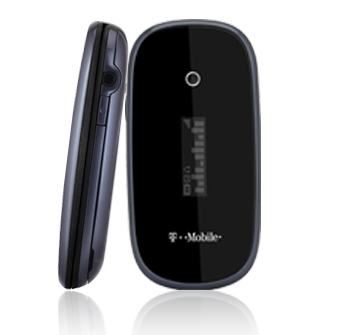
So, in the phone department, it’ll be an inexpensive device that will allow for talking and texting, probably from T-Mobile because there’s a store right down the street where I can go in, trap a handsome young man, and beg for advice on how to work it.

* * *

Next, the burning (perhaps literally…) issue of the teakettle.

I got to thinking about all those reports about exploding Pyrex. Though I’m pretty sure my two glass percolators predate Corningware’s sale of its glass cookware operation to an outfit that promptly offshored production to China, giving us exploding casseroles and pie-plate shrapnel, on reflection I decided that the prospect of that cute little retro pot blasting me with glass shards and boiling water was more than I cared to contemplate.

So…ugh! Back in the market for another teakettle.

Went over to Williams-Sonoma, where for $60 I could buy a Le Creuset pot that

a) is pretty enough, but…
b) is said by users not to whistle loud enough to matter; and
c) elicits complaints about easy chipping and rust.

The way the new whistling kettles are constructed, they have a cap over the spout that you have to lift by placing a finger or thumb on a little lever. But this lever is far enough from the handle that you either have to have a very long thumb (it’s made for chimpanzees, maybe?) or you have to use two hands to pour the hot water.

My old one had a heat-proof whistle that you simply grabbed with your fingers and removed to pour water. Sounds scary, but amazingly, it was easy and pain-free.

One at W-S has a lash-up on the handle that you squeeze to lift the spout cap. It was stiff and hard to work. And it looked like…yes! One more thing to break!

Target has some pretty little Kitchenaid kettles. The operative word is “little.” And they have the same issue: damn nuisance to pour water out of it.

Most of the pots have rather small lids that fit tightly and would be inconvenient to remove for refilling the pot. Refilling through the spout while you hold the handle in one hand and the lever down with the other: what part of N.U.I.S.A.N.C.E do Chinese manufacturers not understand?

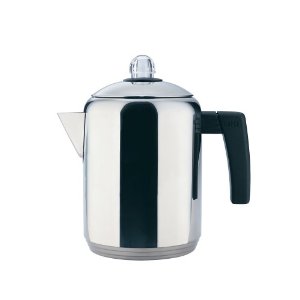
Over at Cost Plus (World Market), the same issue presented itself. However, lurking there next to the useless teakettles was…ta DAAAA! A stainless-steel Copco percolator!

No whistle, but then the old Corningware has no whistle, either. I’ll just have to get into the habit of staying away from the computer while the water’s on the stove.

The design is appealingly midcentury, and the price was decidedly right: about $25.

Now I ask you: how retro can you get?


Privacy: A thing of the past?

Big Brother is watching you…

Over at Prairie Ecothrifter, a lively conversation is going on about the steadily increasing loss of privacy. Ecothrifter has written a great post on the subject, one of my favorite hobbyhorses.

The interesting thing is the number of people who actually don’t seem to be bothered by this! Every time one of these discussions arises, someone says something like “I don’t care much as long as I am not harmed.” Right. As though loss of your liberty to do as you please and to come and go as you please without somebody’s nose up your you-know-what is not harm? As though silently gathering information that not only can be used to pester you with more and more advertising but can actually be used against you in a court of law is not harm?

Apparently most Americans don’t value their privacy, and so all of us, including those who do, have lost our privacy.

My tinfoil hat isn’t shiny enough to lead me to wallpaper the rooms and ceiling with matching foil. However, I do take some steps to cling to a few shreds of privacy:

Don’t carry your Social Security card around with you.
Don’t hire on to jobs that require fingerprinting (these include everything from teacher to real estate sales agent).
Refrain from entering information in social media—tell Facebook, Twitter, & Linked-In as little as possible about yourself, or actually dispense disinformation.
And ask Facebook “friends” not to “tag” you in photos.
Lie yourself stupid when people ask for information that’s none of their business! Give out fake phone numbers, fake addresses, and whenever possible, fake names. Safeway, for example, thinks it’s doing business with my deceased dog, whose telephone number is the same as Safeway’s corporate headquarters’.
Wear broad-brimmed hats in public so it’s harder for camera snoops to capture an image of your face.
If you still use checks, have a fake phone number printed on them.
Don’t carry around cell phones and pads that can track your location, or if you must, turn off the geolocator function. If you can…
Do business only with retailers that don’t demand personal information in exchange for a fair price.
Don’t buy things off the Internet.

There’s a difference, IMHO, between what Crystal describes in her comment—willingly sharing information that’s culturally regarded as “private”—and surreptitious gathering of information, aggressively forcing information from you, or invading your private space (as in fingerprinting you when you’re the victim of a crime or as in X-raying your naked body through your clothes or as in listening in on your phone conversations and e-mail).

If you want to divulge things about yourself, fine. But what’s objectionable is the invasion of your privacy and the use of information gleaned by spying on you or by making you give it up against your will. Or aggregating that information without your knowledge. That is what we as individuals need to fight.

Resist!

Image: Telescreens from the movie 1984. © Rosenblum Productions, Inc.