Coffee heat rising

Cash Card as Budget “Envelope”

Okay, so tomorrow is the first of July, which we hereby call the first day of a new budget cycle…even though, infuriatingly, credit-card billing cycles do not coincide with the first or last of a month. Couple of weeks ago, I came up with the idea of using Costco cash cards as metaphorical budget “envelopes” to help get a grip on my spending in those Elysian realms. And just a day ago, I also had the bright idea of using my credit-union checking and savings accounts as another type of “envelope” in which to organize the annual required minimum distribution (RMD) from the 401 K and the monthly Social Security income into categories:

  • cash-flow money,
  • emergency savings, and
  • set-asides for the upcoming year’s tax and insurance bills.

Hm. Sounds plausible, doesn’t it? But…how will that work, in practice?

The RMD came in last week: a couple months early since I’m running out of cash. Forthwith, I transferred the tax-and-insurance set-aside — 8400 freaking bucks! — to savings, and I set up the checking account to automatically transfer Social Security deposits to another savings account, where the money (barring any immediate catastrophes) will accumulate to create an emergency fund.

This leaves a rather limited amount to live on over the next year: a little less than $1400 a month, about $365 less than average monthly 2018 spending.

That is going to represent a significant cut in spending. How to pull it off?
Come to me, come to meeee….

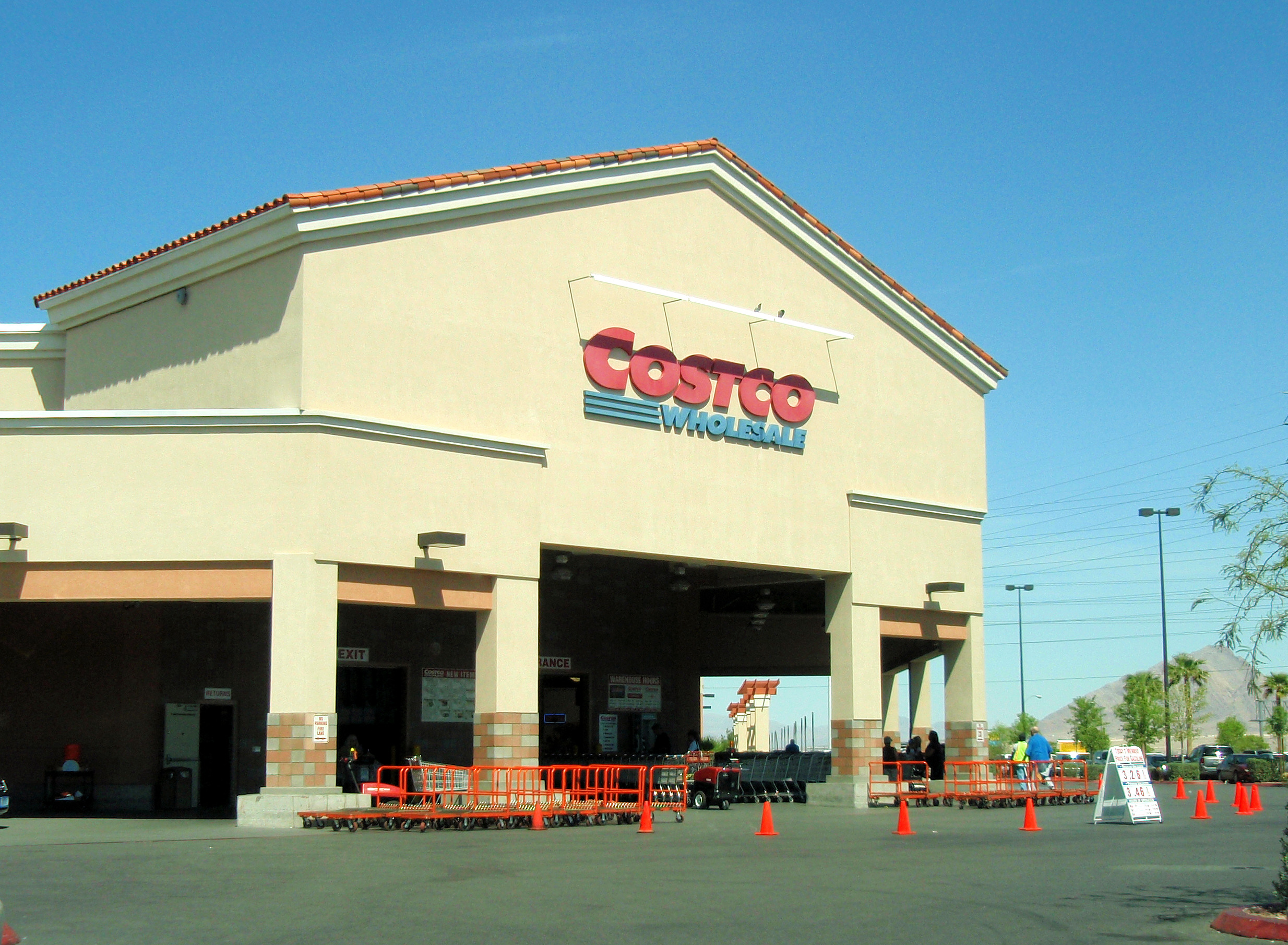
Well, the big challenge (IMHO) is Costco, lovingly known as Impulse Buy Hell. Even when I go in there with a list, I still come out with a bunch of junk (no, valuables!) I had no intention of buying. Consequently, a $300 tab is not unusual, and a cash-register bill in excess of $200 is pretty routine. To get a grip on this predicament, I had the idea of purchasing a cash card on the first of the month and using it to buy as much as it will bear, and then when it runs out…well…STOP buying at Costco for the rest of that month.

Two cash cards, actually: one for in-store shopping, and another, to the tune of about $60, for gasoline and propane.

But…how much to budget for Costco in-store spending?

Since I buy most of my groceries, all of my household goods, and much of my personal-care products at CC, $200 is probably not enough. On the other hand, presenting myself with a prepaid card for $300 may do nothing to resolve the diddle-it-all-away issue.

While studying this conundrum, I remembered the box into which I toss Costco receipts. Costco will take anything back and fork over a full refund. Often they’ll do so without a receipt (because, like Big Brother Himself, they have a detailed record of everything you’ve ever bought, and when), but it expedites things to have the receipt. Wouldn’t a fistful of these paper scraps contain a record of how much my various regular purchases cost? And with that in hand, wouldn’t I be able to calculate what any given shopping list of Costco items would cost?

Well… Yes. And yes! Rummage through a few months’ worth of yellowing receipts, and here’s what you come up with:Yea, verily…  😀

Now we have a clue to some of the things I buy all the time, some things I rarely buy, and a couple things I’ll never buy again (bear spray?). Some of these prices you can find at Costco’s website, but of course they don’t list produce prices (because they can’t, in any sane way, without updating pages about every day).

With this in my computer, now I can know about how much a given shopping list is going to cost! Woo-hoo!!

POWER!

So. On Monday, when I intend to make a run on the Costco in outer Richistan, where they carry the fancy products I crave (you can’t get pomegranate juice at the Inner City Costco down the street, for example), I will have a clue:

Tax is about 10% here. Not everything on the list is taxed at that rate; food is a little lower, but things are considered “food” in highly erratic ways. So it’s safest to assume all purchases will be taxed at 10% and then be pleasantly surprised.

I’m going to have to buy chlorine tablets for the pool, now that the water is getting tropically warm. Until recently the granulated stuff from Leslie’s was working fine (though it, too, is spectacularly expensive). But with summer definitively here, I need the tablets’ stabilizer to keep levels steady under the merry ultraviolet sunlight. At Costco, ninety bucks (plus 10% tax…) will buy you 40 pounds of the stuff. Leslie’s will sell you 35 pounds — some 12 percent less — for the same price, unless you want to fart around with finding a coupon and making an extra trip to an extra store to apply it.

My feeling about that: Hey, guys. If you think $72 (about what you can bring it down to) is a fair price for your product, then that’s the fair price, and I shouldn’t have to be jacked around with stupid coupon bullsh!t.

Truly. I do hate coupons. As I hate “membership” cards at grocery stores. Just charge everyone a fair price and quit the crap.

Where were we? Fifty pounds of chlorine tablets last exactly one year. (Hence, you could argue, if I’d had any sense I would have bought a bucket of the things when I ran out last winter, instead of stupidly waiting till the middle of the summer when the power bill is hovering in the stratosphere….) Thirty-five pounds will last less than a year, plus I’ll have to put up with marketing bullshit or let Leslie’s rip me off on the cost by about 12 percent. Conclusion: Buy the damn things at Costco.

That purchase will push this month’s bill to something around $290.

While the chlorine tablets are an “extraordinary” buy in the sense that the purchase will not appear on any other bill over the next 12 months, note that this month I’m not buying either beef (about $45 for a package) or fish (around $20 to $30, typically). Or shellfish (neither shrimp nor the beloved scallops). So in other months when I would not buy chlorine but would have to buy meat, that cost would keep the total right about where it is for this month.

That suggests that I should budget around $300 for in-store Costco purchases. At the end of a month, I reload the cash card to top it back up at $300 for the following month. So if, say, this month I really do spend only(!) $290 on food and household products, $10 should be left on the card come August 1. So next month I will only have to put $290 on the card.

Now, what about gasoline?

A glance at last month’s Visa bill shows that I spent only $30 on gasoline over the past month.

Freaking astonishing! Especially since if you’d asked me I’d’ve said I spend upwards of $60 a month on gas.

The car’s computer claims it can run another 51 miles, enough to get out to the coveted Paradise Valley Costco. As a practical matter, though, I think I will buy these cards and fill up with gas tomorrow at the Inner City Costco, which is closer to my house and whose gas prices are usually lower. Then I’ll drive to the store in PV or up in Whiteyville, where I can get the upscale products I crave and walk across the parking lot in reasonable safety.

Why did I spend so little on gas last month? Several reasons:

  • Choir season is over, so that eliminates two round trips to the church per week.
  • I stopped driving halfway to Blythe to attend monthly meetings of my favorite writer’s group.
  • And I quit attending the weekly Scottsdale Business Association meetings when they started convening at a Denny’s on the border of the Pima Reservation, halfway to freaking Tucson.
  • And I haven’t had to drive out to the Mayo this month — halfway to freaking Payson.

One or two doctor’s appointments will cause the car to soak up a fair amount more than thirty bucks worth of gas. Same would happen if I chose to drive to My Sister’s Closet or Nordstrom’s Rack in Scottsdale to shop for clothes — unlikely, but both those establishments display the best of their products in Inner Richistan. There’s hardly any point in going to either of those stores at their uptown Phoenix locations.

So I’m thinking it would be best to put $60 on the gas card. And the same will apply: if I don’t spend that much, it won’t take as many dollars the following month to top it back up.

Setting a rule that I have to quit buying when one of these cards runs out will at least stop me from spending more than $360 a month at Costco. I may just run over to Safeway to buy whatever the CC budget cannot sustain. But…maybe not. If a purchase isn’t urgent, I may just defer it to the following month.

And since the bulk of my buying occurs at Costco, that should help to keep 2018/19 spending under control.

Budgeting: Back to the Envelope Method

And, for a change: back to Funny about Money’s long-defunct theme: personal finance. You’ll recall, those of you who are Dave Ramsey fans, that one strategy for keeping yourself on budget is called the “envelope method.” In that scheme, you cash out a month’s worth of dollars and fill a separate envelope with the amount designated for each budget item. So, $200 for groceries in one envelope; $100 for gasoline in another, $30 for dog food…and so on, ad ditzy nauseam.

Well, some of us have neither the patience for that kind of ditz nor the stomach for putting an entire month’s worth of funding at risk of being heisted by some enterprising burglar or dropped unnoticed on the pavement. I use credit cards and electronic payment to minimize loss from theft and incompetence.

Conveniently, though, if you happen to bank at a credit union, you have an easy route to create electronic “envelopes.” My CU allows members to add any number of savings accounts. So right now, for example, I have one to collect the constant dustfall of tiny checks from Medicare and the Medigap insuror — whenever a couple hundred bucks accrues, I fork it over to the Mayo. And one for emergency savings. And one to hold enough to cover income tax, accounting bills, property tax, homeowner’s insurance, Medigap insurance, and car insurance, all set aside at the beginning of my personal “fiscal” year, when I have to take an RMD from my 401(k).

This allows you to earmark and set aside specific amounts for specific purposes, placing them where they’re unlikely to get diddled away in day-to-day spending.

Now we have this question: in the absence of a desirable Visa credit card, how — really — am I going to continue to shop at Costco? I haven’t cut up the credit card or closed the account — it’s never a good idea to close a credit account in good standing — but because I don’t do business with outfits that treat me like sh!t, I will never use the card again.

I do have a debit card. But for a variety of reasons, I prefer not to use it. For one thing, there’s not a chance on God’s Green Earth I’m gonna put the thing in a gas station pump — certainly not at the Costco where I shop, which is flanked to the south and the west by dangerous slums and a park that has been taken over by bums. But I do prefer to buy Costco gas, because it’s the cheapest deal in the city. And there’s always an attendant — invariably a large, imposing male — standing around that Costco gas station, so I don’t feel so much at risk as I do at the rip-off QTs within reasonable driving distance of the ‘hood.

So. Here’s my plan:

Create a new savings account to hold money budgeted to spend at Costco. That would be an entire year’s worth of money budgeted for Costco ventures: shopping and gasoline, combined. So let’s say on average I spend, maybe…what? $340 on food, clothing, household goods, dog treats, personal products, impulse buys, and gasoline. When the 2019 RMD comes in — which will be about in September — I set aside $4,080 (= $340 x 12 months) in this account.

Then I trot in to Costco and buy a cash card for the amount I imagine I’ll spend at Costco, both inside the store and at the pumps, over a month. That would be around $340. That is what I carry to the store to make purchases. Each month I pay for it out of the Costco Envelope savings account.

I spend no more than that in any given month. Run out of money: quit shopping at Costco. How hard is that?

If money is left over at the end of the month, the next month’s cash card is loaded with accordingly fewer dollars. So, say, in March I spend $250, leaving $90 unspent; the April card has $340 − $90 on it: $250. Thus whenever I spend less than $340 over a month, the overage stays in the bank account.

So at any given time, the Costco cash card never has more than a month’s budget on it. If I don’t spend the entire budgeted amount, then whatever is not diddled away stays in that savings account.

I figure at the end of the year, anything that’s left can be transferred to the Emergency Savings account, and the Costco Budget account can start over from zero at the start of the new “fiscal year.”

When you know there’s an upper limit on what you can spend, you find yourself feeling a lot more cautious about your spending.

Therein lies the threat of Costco, the Mother of All Impulse Buy Hells. When the budget is open-ended — in your mind you think you have plenty to live on (which you do, if you don’t run amok) — you go “oh, it’s only $20…no problem, I can afford that.” And you could, if you just didn’t keep doing it over and over…

But if you’re thinking, “Helles Belles, I’ve only got x number of dollars to spend today,” then you realize the $20 doo-dad is not a life-or-death purchase. The beauty of the Envelope Method is that it sets a limit on what you’re willing to diddle away.

So, what started out as an annoyance — yet another stupid faceless bureaucratic hassle — may work out to my advantage. Not so much to Costco’s advantage, but certainly to mine: by getting the Costco spending under control, this new, enforced budgeting strategy will let me stay within the annual RMD for another year or two, despite soaring health insurance and property tax rates.

After that, it’s anyone’s guess. I may have to think more seriously about moving out of the country, to some venue where I can stay in the middle class on the retirement income. But we’ll cross that bridge when we come to it…

Losing the Visa Card but Keeping Costco

You may recall that when Costco dropped American Express and switched all its customers over to Citibank’s Visa card, I demurred — having enjoyed Citibank’s customer disservice in the past and had a bellyful. Instead, I decided to opt the wondrous benefits that attach to the Costco Visa card (which, it must be allowed, are considerable) and stick with a Visa card issued through my credit union.

This has worked OK. The CU’s Visa card even offers a few kickbacks, though of course nothing as generous as the Costco card provides.

But there have been a few problems. The biggest one has been getting the bills paid on time.

Item: When you use the credit union’s online bill-pay service — which should be transferring the payment electronically — the CU in fact pays Visa with a freaking paper check sent by snail-mail!!

This means it takes some ten days to arrive in Visa’s precincts. And then it takes another day or two for the check(!) to clear Visa’s bank. So if, say, the due date is April 10 and the check arrives there on April 10, payment is considered late!

The envelopes in which the CU-branded bills arrive are so discreet as to be practically incognito. It’s not obvious at first glance that a Visa statement (or any financial document) is inside. So it’s possible to simply miss an incoming statement, if you’re not paying attention.

I have paper statements sent as signals that it’s time to pony up some cash. This I favor over electronic statements, because a) my incoming email is a freaking NONSTOP tsunami, and sooner or later an electronic blat will get lost; and b) things computer make me tear my hair out. I do not want to deal with any more than I’ve already got, thank you.

So, if a statement doesn’t get here, chances are I will miss a payment.

This happened last month. The May statement seems to have been lost in the mail, and I never noticed that it hadn’t come and so hadn’t been paid.

This week, in comes a snarling wallop upside the head from Visa, saying they not only are gouging me $25 as a late payment penalty, they also are reporting me to all three credit bureaus as delinquent.

This morning I call and ask to get this reversed, which you usually can do if you don’t try it very often. WonderAccountant says most credit-card vendors will forgive one lapse a year.

Not so this outfit. The guy I reached, who sounded like a sweet enough young fella, said there was not a thing he could do about it. He pretended to absent himself long enough to make it look like he was talking to a boss, then came back on the line and said there was nothing they could do to reverse or undo the black blot with the credit bureau.

So I had to get in the car, traipse across the city to the credit union, and talk with the manager in person.

Forthwith, she got the late charge reversed and arranged to pay the bill in full. I said I wanted to close the account. She suggested not doing that. And yeah, I do know you really shouldn’t close a credit card account, because just closing it — whether or not a dispute is involved — will ding your credit rating. She did say that the credit ding was not slated to go through until the 22nd, and since we’re a long way from that date, there should be no report to the damned credit bureaus.

Okay. Well, that’s fine: I still have an active card. But there’s no way they can make me use it. It’s now in a file folder, hidden in a drawer.

In passing, I considered opening a Citibank Costco card, which after all would provide some rich kickbacks. But that is going to be a major hassle, with all the freezes on the three credit bureaus. When I talked with Citibank over the phone yesterday, their rep said they could not know which of the three credit bureaus they would use — apparently their software rotates among them  at random. So this would mean I would have to apply; then sit by the phone till I got a call from Citibank; then call the specified credit bureau; then demand a temporary lift of the freeze.

Yeah. Right.

Well, to start with, I have only one phone number that reaches a human (or did, the last time I called), and that’s with Experian. Trying to get through to those people is a headache of migraine intensity; as for the others…don’t even ask.

So. That leaves me with a Visa debit card, which I decidedly do not want to use at Costco’s gas pumps (or anyone else’s) and would prefer not to use at all.

Hm.

I spend way too much money at Costco, AKA “Impulse Buy Hell.” Matter of fact, over the past six months, I’ve averaged $332 a month in store purchases and $36 a month in gasoline.

Really, that’s not all that terrible when you realize I buy most of my clothing there, most of my food (I don’t eat out, so this is significantly less than $10/day), ingredients for the dog’s spectacularly expensive DIY food, all my personal products, and most of my household goods. And a fair amount of the S-corp’s office supplies.

Still. I suspect that if I weren’t packing a credit card every time I shop there, I could cut the spending. A lot.

Sure don’t want to write checks, and I sure don’t want to have that much cash around.

So. I think what I’m going to do is this:

Figure out what would be a reasonable monthly budget for all those necessaries, absent the impulse buys. Let’s say about $275, maybe $300 at the outside. Add on enough to cover gasoline — around $40 just now, but rising fast. Then go into the store at the start of the month and buy a Costco cash card in the amount of, say, $340.

Be more careful about purchases…knowing there’s a palpable upper limit will help a lot with that. Use it till it’s gone, and then stop buying there until the next month. Or if push comes to shove, pay for any serious necessaries with the debit card.

I refuse to put a debit card into a gas pump, nor will I use one at a restaurant — there just aren’t enough consumer protections against theft. But the occasional restaurants I visit always accept AMEX, and if the tank runs dry after I run out of dollars on the cash card, I’ll just pay a couple bucks more to buy at a gas station that takes AMEX.

It’s really not that much hassle. If memory serves, the last time I bought a cash card I was able to get it at the regular checkout register, rather than having to stand in a different line. But even if you do have to buy from the customer service desk, so what? It’s not that big a deal.

I guess…

Costco Day!

So this morning the plan is to make a very fast, very low-end Costco run: the first trip to Costco in a month!

The $50 cash card I bought to pay for gas fueled the car for a month and a half (!!). And I still have enough pork in the freezer to feed Cassie and Ruby almost to the end of the month. The visit from Borderlands — the outfit that hands out 60 pounds of produce for $10, grâce á local grocery stores donating fruits and veggies that come to the end of their shelf life — has stocked the freezer generously, meaning the only food I’ll need to buy between now and the end of the month will be incidentals like salad greens and the like.

Today Costco is going to sell me another cash card so I can refill the Dog Chariot, and while there I figure to pick up a package of paper towels and a bag of mixed veggies for the dog food. That’s it.

The difference this is making in the budget has been a life-saver. The utility bills, which the bastards have been slowly hiking up a little at a time, are more astronomical than I realized, having stopped keeping track of every penny over the past couple of years. This month’s water bill is $218 and the power bill is $248. They’ve jacked up the gas bill, too: $19, a little much when you consider that in the summertime I hardly use the hot water at all.

But the big budget-busters this month have been a $250 bill from the flicking dentist, who inflicted that gouge just to clean my teeth, and the $293 for the countertop oven.

Every time I go in for a routine cleaning, the dentist’s assistant wants to X-ray my jaws. I’ve been able to put her off for quite a while, claiming (truthfully) that I’ve been exposed to more than enough radiation thanks to the Adventures in Medical Science and do not want any further exposure. This time, though, I have a sore tooth — an old, failed root canal that has been neglected since I gave up on the former dentist after three root canals in the same goddamn tooth — and thought it had better be looked at. But nay: nothing shows up on the X-ray. The pain is prob’ly caused by my tooth-clenching habit.

So that was about $100 for naught.

I probably should have bought the $99 Kitchenaid toaster oven that JestJack found at Macy’s. The prospect of dealing with Macy’s, though…ugh! I dislike shopping there so much, it was worth paying twice as much at Williams-Sonoma to get a comparable item, just to not have to deal with the place. It’s no wonder they’re having to close 100 stores. Their customer service sucks.

Anyway, $486 in utility bills plus another $541 in surprise! bills has done in this month’s budget. I have $163 to live on for the next two weeks. The $25 needed to partly refill the gas tank will cut that to $138.

So I’m going to end up in the red again.

I wonder why it is that every freaking time the utility bills are through the roof, there’s some outrageous extraordinary bill? It never, ever fails.

Looks like I’m going to have to budget $500 for the summertime utilities. I wish I dared get one of those solar rooftop plans. But the utility companies here are trying to drive the solar companies out of business, and they’re about to succeed. The Corporation Commission, which regulates power rates (heh! after a fashion) is in the utility companies’ pocket — that’s not an exaggeration. Arizona Public Service, the most rapacious of our suppliers, buys these guys by underwriting their election campaigns, so anyone who’s likely to resist the endless demands for higher rates hasn’t got a chance.

So I’m afraid that doing one of those leases will be too risky. Some people are already complaining that because of APS’s machinations, their solar systems will not pay for themselves over the lifetime of the house. And in Las Vegas, the companies that were selling those installations just gave up and left town, thanks to the machinations of the local power companies and corrupt officials. So…forget that.

If it’s going to cost me $500 just to air condition the house at 82 degrees & water the plants, we’re reaching the point where it may be worth renting someplace where it’s cooler. I could go up to the Flagstaff area and rent a condo or a cabin. The smoke from the forest fires isn’t very pleasant, but most of the time the weather is a great deal more tolerable. I’d have to shut down this house, though…and am not sure what to do about the pool. You can’t drain it in the summer, because the plaster won’t hold up if it’s allowed to dry out in the heat. Plus of course if the irrigation system goes on the fritz unnoticed, half the landscape plants will shrivel up and die within a week. Not even “xeriscapic” plants can survive 115 degrees without water.

Well, onward. Want to get to Costco before it gets crowded. Have an economically cool day, wherever you are!

w00t! Money happens!

American Express has emitted this year’s rebate: $334 back in my pocket! Took it direct to the credit union after having cashed the voucher at Costco.

Despite the new regime of penury, I decided to try to continue putting $200 a month into a savings account for indulgences and emergencies. This will jack the $400 accrued in January and February up to $734.

I do hope that American Express doesn’t pull the widely favored stunt of instituting an annual fee. I doubt that they will, because this card doubles as a Costco membership card. I think it’s more likely that they’ll get their pound of flesh by persuading Costco to raise  membership fees and then kick the increase back to AMEX.

If they put an annual fee on the charge card itself, then I’ll drop it. If they increase the Costco membership…hmmm. That’s another matter. I do almost all my shopping at Costco. It’s extremely convenient, the gas is cheaper than anyplace else around, and the meat is very high in quality. Plus they sell a brand of jeans that actually fit around my capacious rear end.

All of which could be said to fall under the heading of “cutting off your nose to spite your face.” Why would you drop a rebate card that returns $300 or $400 because the lender starts soaking you for $15? It is kind of stupid, isn’t it…

Well, it’s the principle of the thing: we’re already paying for these cards in the form of increased prices, since the banks charge retailers a stiff transaction fee for the privilege of taking payment in the form of a credit card. The cost is passed along to every consumer, whether or not that consumer pays with a card.

So I think the banks are earning quite enough without adding an extra gouge. If they want to charge users a fee for carrying a piece of plastic around, then they need to remove the transaction fee levied against retailers.

For the nonce, though, money has just happened. And I’m glad enough for that.

🙂

Would you buy a house near a Walmart?

Mighty Bargain Hunter has a new money site, called Cash Commons. It’s pretty interesting: readers ask questions, others answer them, and people earn “reputation points” whose value is unclear but which make for a fun gimmick.

One of the questions, “Is having a Walmart hundreds of feet from a property a good or a bad idea,” led me to draft a response that was way too long for the site, which apparently is designed for the short & the quick. The more I thought about it, the more my response began to look like a whole new post. So I decided to cut it short there and hold forth at greater length here at FaM.

There’s a Walmart within walking distance (more or less) of the house M’hijito and I co-own in mid-town Phoenix. His neighborhood is on the low side of middling; it’s one of the few in-town areas that have been seriously thumped by the recession—in general the worst-affected districts are outlying suburbs. The main source of the property devaluation in that specific residential area, sandwiched between a slum and a very upscale district, has not been the nearby mall—also the scene of a Costco and a Target—but the many foreclosures that have driven down comparables.

The shopping center, which is extremely busy, has a correspondingly high rate of car break-ins, thefts, and robberies. So, when you look at one of those online maps of crime rates, it appears that the entire area has a high crime rate, even though the neighborhood to the east of it, where the pretty little house resides, is relatively safe. This factor undoubtedly will influence some potential buyers.

The area just to the south of it, on the other hand, consists of run-down apartments and is the scene of almost nightly cop helicopter fly-overs. A few years ago, a friend of mine, who lived in one of those dumps, was murdered in the parking lot by some guys who were trying to steal his car. The low-rent apartments were there before the WalMart went in and probably were neither created nor worsened by the nearby commerce.

Reds show high criime areas, yellow middling rates, greens relatively lower rates. The Walmart shopping center forms the bull's-eye here.
Reds show high-crime areas, yellow middling rates, greens lower rates. The Walmart shopping center forms the bull’s-eye.

The City has built a light-rail line that passes about a half-mile from the house and has a terminal in that Walmart shopping center. This has turned a substantial part of the mall’s parking into a park-‘n’-ride for those who are brave enough to leave their cars there. We are told that light-rail is supposed to increase property values in bordering neighborhoods. So far we haven’t seen that happen in the area; this could be attributable either to the scruffy shopping mall and tenement district or to the deprecession.

On a slightly tangential note, friends owned a house that backed onto a Fry’s Supermarket. In our area, Fry’s caters to a downscale crowd, and in this case that was true with a vengeance. The Fry’s and the shopping center owners were particularly insouciant about the neighboring residences. They arranged for garbage to be collected (illegally) in the wee hours of the morning (commercial garbage collection sounds like a wrecking yard—SDXB and I lived several blocks away and could not leave a window open on a nice night without being awakened by the racket) and allowed homeless mentally ill to camp in the parking lot and throw trash, garbage, and human waste over the neighbors’ walls.

At the top of the bubble, the couple arranged to have a new house built.  Lacking a crystal ball, they decided to stay in their existing home while construction proceeded, rather than selling right away and squatting in a rental until the new house was ready. We know what happened next. After the market crashed, they couldn’t even give away the old house. No one in their right mind would buy a house—or rent!—behind a Fry’s, not when far more desirable property could be had for a song. After several years of struggling to sell it or to keep it rented, they finally defaulted.

The bank hasn’t been able to unload it, either.

Extrapolating from that, I’d advise that the instant you get wind of a new Walmart or any other large commercial retail about to go in near your home, sell!

Image: Phoenix Police Department Uniform Crime Reports, Monthly Maps, Property Crimes