Coffee heat rising

Cash Card as Budget “Envelope”

Okay, so tomorrow is the first of July, which we hereby call the first day of a new budget cycle…even though, infuriatingly, credit-card billing cycles do not coincide with the first or last of a month. Couple of weeks ago, I came up with the idea of using Costco cash cards as metaphorical budget “envelopes” to help get a grip on my spending in those Elysian realms. And just a day ago, I also had the bright idea of using my credit-union checking and savings accounts as another type of “envelope” in which to organize the annual required minimum distribution (RMD) from the 401 K and the monthly Social Security income into categories:

  • cash-flow money,
  • emergency savings, and
  • set-asides for the upcoming year’s tax and insurance bills.

Hm. Sounds plausible, doesn’t it? But…how will that work, in practice?

The RMD came in last week: a couple months early since I’m running out of cash. Forthwith, I transferred the tax-and-insurance set-aside — 8400 freaking bucks! — to savings, and I set up the checking account to automatically transfer Social Security deposits to another savings account, where the money (barring any immediate catastrophes) will accumulate to create an emergency fund.

This leaves a rather limited amount to live on over the next year: a little less than $1400 a month, about $365 less than average monthly 2018 spending.

That is going to represent a significant cut in spending. How to pull it off?
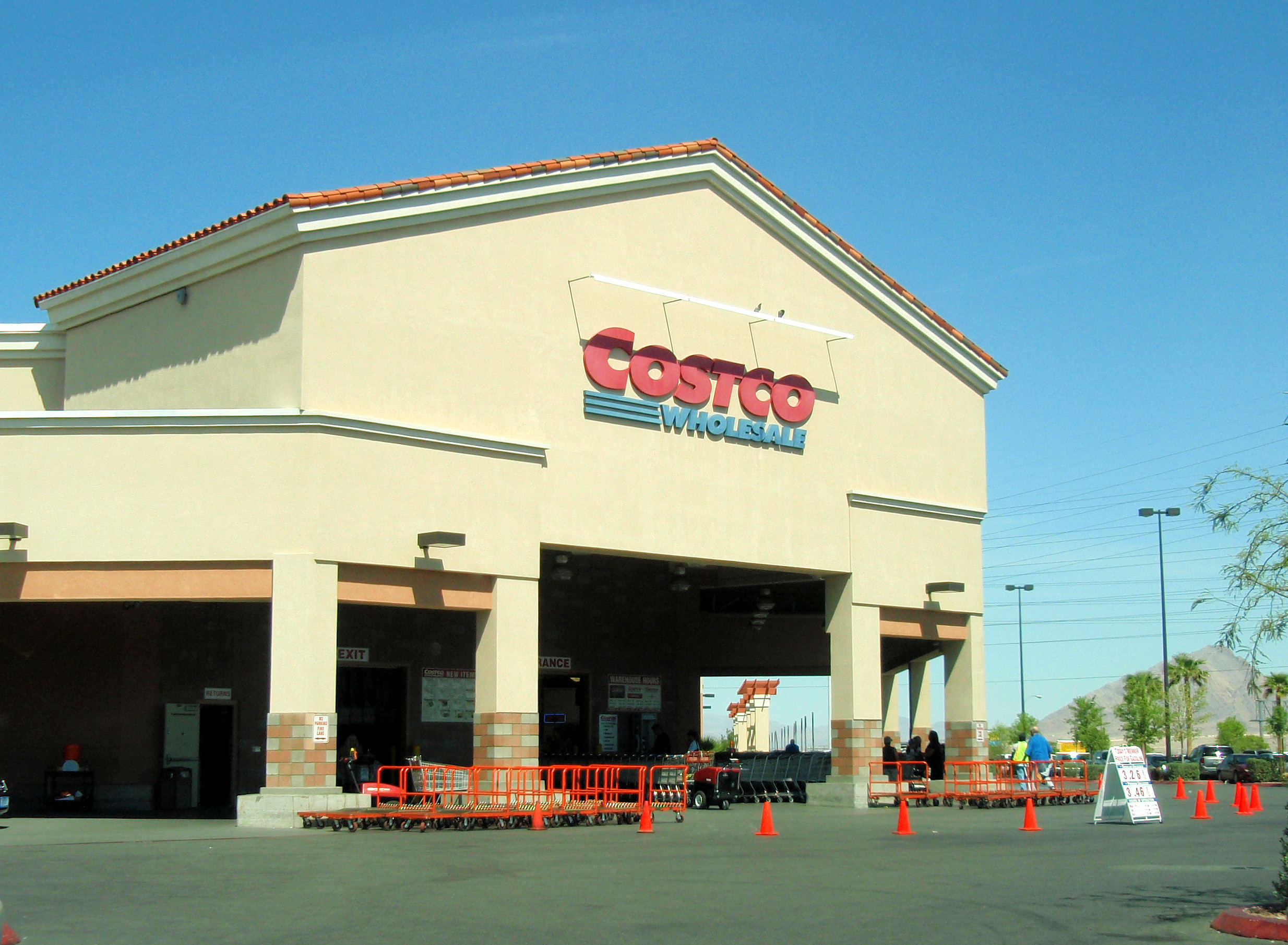
Come to me, come to meeee….

Well, the big challenge (IMHO) is Costco, lovingly known as Impulse Buy Hell. Even when I go in there with a list, I still come out with a bunch of junk (no, valuables!) I had no intention of buying. Consequently, a $300 tab is not unusual, and a cash-register bill in excess of $200 is pretty routine. To get a grip on this predicament, I had the idea of purchasing a cash card on the first of the month and using it to buy as much as it will bear, and then when it runs out…well…STOP buying at Costco for the rest of that month.

Two cash cards, actually: one for in-store shopping, and another, to the tune of about $60, for gasoline and propane.

But…how much to budget for Costco in-store spending?

Since I buy most of my groceries, all of my household goods, and much of my personal-care products at CC, $200 is probably not enough. On the other hand, presenting myself with a prepaid card for $300 may do nothing to resolve the diddle-it-all-away issue.

While studying this conundrum, I remembered the box into which I toss Costco receipts. Costco will take anything back and fork over a full refund. Often they’ll do so without a receipt (because, like Big Brother Himself, they have a detailed record of everything you’ve ever bought, and when), but it expedites things to have the receipt. Wouldn’t a fistful of these paper scraps contain a record of how much my various regular purchases cost? And with that in hand, wouldn’t I be able to calculate what any given shopping list of Costco items would cost?

Well… Yes. And yes! Rummage through a few months’ worth of yellowing receipts, and here’s what you come up with:Yea, verily…  😀

Now we have a clue to some of the things I buy all the time, some things I rarely buy, and a couple things I’ll never buy again (bear spray?). Some of these prices you can find at Costco’s website, but of course they don’t list produce prices (because they can’t, in any sane way, without updating pages about every day).

With this in my computer, now I can know about how much a given shopping list is going to cost! Woo-hoo!!

POWER!

So. On Monday, when I intend to make a run on the Costco in outer Richistan, where they carry the fancy products I crave (you can’t get pomegranate juice at the Inner City Costco down the street, for example), I will have a clue:

Tax is about 10% here. Not everything on the list is taxed at that rate; food is a little lower, but things are considered “food” in highly erratic ways. So it’s safest to assume all purchases will be taxed at 10% and then be pleasantly surprised.

I’m going to have to buy chlorine tablets for the pool, now that the water is getting tropically warm. Until recently the granulated stuff from Leslie’s was working fine (though it, too, is spectacularly expensive). But with summer definitively here, I need the tablets’ stabilizer to keep levels steady under the merry ultraviolet sunlight. At Costco, ninety bucks (plus 10% tax…) will buy you 40 pounds of the stuff. Leslie’s will sell you 35 pounds — some 12 percent less — for the same price, unless you want to fart around with finding a coupon and making an extra trip to an extra store to apply it.

My feeling about that: Hey, guys. If you think $72 (about what you can bring it down to) is a fair price for your product, then that’s the fair price, and I shouldn’t have to be jacked around with stupid coupon bullsh!t.

Truly. I do hate coupons. As I hate “membership” cards at grocery stores. Just charge everyone a fair price and quit the crap.

Where were we? Fifty pounds of chlorine tablets last exactly one year. (Hence, you could argue, if I’d had any sense I would have bought a bucket of the things when I ran out last winter, instead of stupidly waiting till the middle of the summer when the power bill is hovering in the stratosphere….) Thirty-five pounds will last less than a year, plus I’ll have to put up with marketing bullshit or let Leslie’s rip me off on the cost by about 12 percent. Conclusion: Buy the damn things at Costco.

That purchase will push this month’s bill to something around $290.

While the chlorine tablets are an “extraordinary” buy in the sense that the purchase will not appear on any other bill over the next 12 months, note that this month I’m not buying either beef (about $45 for a package) or fish (around $20 to $30, typically). Or shellfish (neither shrimp nor the beloved scallops). So in other months when I would not buy chlorine but would have to buy meat, that cost would keep the total right about where it is for this month.

That suggests that I should budget around $300 for in-store Costco purchases. At the end of a month, I reload the cash card to top it back up at $300 for the following month. So if, say, this month I really do spend only(!) $290 on food and household products, $10 should be left on the card come August 1. So next month I will only have to put $290 on the card.

Now, what about gasoline?

A glance at last month’s Visa bill shows that I spent only $30 on gasoline over the past month.

Freaking astonishing! Especially since if you’d asked me I’d’ve said I spend upwards of $60 a month on gas.

The car’s computer claims it can run another 51 miles, enough to get out to the coveted Paradise Valley Costco. As a practical matter, though, I think I will buy these cards and fill up with gas tomorrow at the Inner City Costco, which is closer to my house and whose gas prices are usually lower. Then I’ll drive to the store in PV or up in Whiteyville, where I can get the upscale products I crave and walk across the parking lot in reasonable safety.

Why did I spend so little on gas last month? Several reasons:

  • Choir season is over, so that eliminates two round trips to the church per week.
  • I stopped driving halfway to Blythe to attend monthly meetings of my favorite writer’s group.
  • And I quit attending the weekly Scottsdale Business Association meetings when they started convening at a Denny’s on the border of the Pima Reservation, halfway to freaking Tucson.
  • And I haven’t had to drive out to the Mayo this month — halfway to freaking Payson.

One or two doctor’s appointments will cause the car to soak up a fair amount more than thirty bucks worth of gas. Same would happen if I chose to drive to My Sister’s Closet or Nordstrom’s Rack in Scottsdale to shop for clothes — unlikely, but both those establishments display the best of their products in Inner Richistan. There’s hardly any point in going to either of those stores at their uptown Phoenix locations.

So I’m thinking it would be best to put $60 on the gas card. And the same will apply: if I don’t spend that much, it won’t take as many dollars the following month to top it back up.

Setting a rule that I have to quit buying when one of these cards runs out will at least stop me from spending more than $360 a month at Costco. I may just run over to Safeway to buy whatever the CC budget cannot sustain. But…maybe not. If a purchase isn’t urgent, I may just defer it to the following month.

And since the bulk of my buying occurs at Costco, that should help to keep 2018/19 spending under control.

Budget off the Rails

Yuck!

Okay, I admit it: I have neglected the budget. Yea verily, I have lost the art of penny-pinching.

Result: I’m running out of money, two months before the start of my next “personal fiscal year,” which starts in September. In 2017, that’s when I took the last Required Minimum Drawdown from the 401K, which was supposed to last a year.

Didn’t.

So next year I have to figure out how to live on 21 grand plus a pittance from Social Security. Since running this house and feeding me and the dogs consume about 2 grand a month, that’s a challenge.

Just now I’m as close to broke as I can get, budget-wise, considering that I have enough cash in the bank to cover about six weeks of expenses, and it’s eight weeks before the start of September.

The other day I mentioned the “envelope method” plan I’d cooked up: fill a Costco cash card with a budgeted amount to spend there during a month, and when it runs out, stop buying. This makes some sense, though nothing is to stop me from streaking out of the Costco over to the nearest Safeway and filling out the shopping list…probably at more expense than just buying everything at whatever CC would cost. Hmmm….

Whilst staring blankly at an unfriendly spreadsheet, a little INSIGHT dawned… Don’t budget by the month. Budget by the year. And instead of using cash cards as “envelopes,” use bank accounts. I already have a checking account, which juggles cash flow; an emergency savings account (containing $4.61); and an account to hold payments from Medigap and Medicare B, preparatory to forwarding that money to the Mayo.

[The Mayo does not “take Medicare assignment.” This is a bureaucratic way of saying they don’t accept direct deposit from Medicare or your Medigap insurer. So, every goddamn time you go to the doctor or an ER or whatEVER, you have to field a blitz of ditzy little annoying checks, deposit them in your bank account, and then pay the Mayo. Right now one has been sitting on my desk for awhile, waiting for me to get around to the hassle of scanning and uploading it: $24.17. The Mayo’s outstanding bill is several hundred dollars… It is, in a word or two, a fuckin’ nuisance.]

Where were we? Yes, staring blankly, dreaming up a fresh scheme…

A little calculation showed that if I were to get a freaking grip on spending, in theory this year’s drawdown should just about cover 2018/19 expenditures, if nothing happens. By “nothing,” we mean no major car repair bills, no appliances having to be replaced, no giant vet bills, no dental work…a very big “nothing,” indeed. But let’s pretend a person could get through 12 months without having to confront any of those.

Right.

What if I kept the drawdown that just hit my checking account in my checking account, but did not keep Social Security income in checking? What if I auto-transferred each Social Security deposit over to the Emergency Savings account…. Said E.S. account is empty just now, putting me at considerable risk of future misery. Twelve hundred a month would, in theory, load that account with some 14 grand over the next year, allowing me not to have to spend crazily to keep up with routine month-to-month costs.

And instead of keeping the entire drawdown in checking, what if I transferred the $8,408 a year demanded by taxes and insurance (!!!!!!) over to the present tax & insurance savings account, now empty because the 2018 T&I bills have all been paid. What if?

What would then remain in checking would be the amount I could spend on living expenses. This would be much truncated by setting all the net Social Security income aside for emergencies. But since I now have approximately $0.00 set aside in emergency savings, the truncation would be very much worth it. And, according to my English-major calculations, if I could cut the Costco bills down from $300 a month to $200 a month, this scheme would be eminently do-able.

Why do I think it would work?

Because the AMEX billing cycle closed yesterday. I charge everything on American Express, mostly including Costco but also racking up bills at various grocery stores and other retailers. This month the tab was only $775. Basically, an AMEX bill reflects all living expenses except utilities, taxes, and insurance.

It’s usually more like $1200. That means I spent some $425 less this month than I usually do.

Well, if I can spend $425 less than normal in June, I can do it all the time, no?

Yeah: probably “no.” But what’s to stop one from trying?

So the money from Fidelity hit the credit union this morning. Here’s what we now have:

$16,644 to live on for the next year (stashed in checking)
$8,408 for taxes & insurance (stashed in T&I savings)
$14,532 incoming from Social Security over the next 12 months (routed to Emergency savings)

So even though Social security will bring the year’s total cash available to something over 31 grand, the plan is to try to live on just $16,644.

That works out to $1,387 a month. So far in the current year, the one that is driving me to the metaphorical poorhouse, I’ve spent an average of $1,750 a month, a difference of $363.

So to live on this proposed new budget, I’ll have to cut spending by about $365 a month.

However, a backup fund will be growing at the rate of about $1200+ a month. If need be, I can draw down from Emergency Savings to make up the difference. So even if I regularly went over budget by some $363 every month, the red ink would only amount to about $4355. That would still leave something like 10 grand in Emergency Savings at the end of a year.

How to cut $363 a month out of normal spending?

Well, obviously:

• Don’t go to dentists.
• Don’t go to vets.
• Don’t drive the car any more than absolutely necessary (so as not to run up repair bills).
• Don’t buy clothes.
• Don’t buy shoes.
• Don’t go out to eat.
• Don’t go to shows or movies or musical events.
• Cling to every goddamn red penny.

It’s going to be a mighty dull year, I’m afraid. But I can’t be running out of cash two months before the end of every 12-month cycle. Something has to be done to get caught up with the spending

Asked…again

So today’s “If You’d Asked Me” post managed to get up before the crack of dawn: short, to the point, and guaranteed to enrage my two friends (that I know of) who are anti-vaxxers. This, after the mile-long doggy walk and before the pool guy showed up to provide an estimate for replastering the crumbling pool. Proposed price range: $7,000 to $10,000.

One could knock something off that by opting for plain old-fashioned plaster, which in the past had a life expectancy of around 10 years. But — wouldncha know it — my guy reports that manufacturers have cheapied down the product so it no longer lasts as long as it used to. The so-called “premium” plaster is said by its maker to last about 7 years; he said it would last around 10 if cared for properly. The regular plaster is now estimated to last 4 years(!!); his guess was it could last 7 years with proper care. Premium plaster is $4,970, which is a savings…but not if you have to replace it in 8 or 10 years. For comparison, what I have out there now is plaster that was expected to last 10 years but has survived 14 years. The PebbleTec and PebbleSheen products, he said, last 15 to 20 years, which is about as long as I expect to be in this house before I croak over or am dragged off to the nursing home.

So I’m opting for the PebbleSheen, a finer, slightly smoother version of PebbleTec. The price, we’re told, is the same.

There’s a fair amount of cash lurking in Fidelity, which I guess we’ll have to withdraw to cover this little exploit. Depending on how bad the damage behind the cracked tile is and whether I decide to try to reinstall the pipeline that would let me plug Harvey the Hayward Pool Cleaner into a dedicated port rather than sticking his tail into the skimmer basket, price could waver by as much as three grand. Oh, whee.

I’m having to take the next RMD before the usual September date, because I’m out of money as of…just about now. This is because I paid off the damn car loan…never did recover from that hit. For at least the next year, I’m going to have to maintain an ascetic lifestyle. No clothing purchases, no new shoes, no meals out, no travel, no driving from one end of the Valley to the other, no indulgences…  Blech.

Having the laptop off in Apple’s precincts is a real inconvenience. Thank the heavens for DropBox! All the projects I’m working on are easy to access. But sitting on an office chair in front of a desk still does make the back hurt. A lot. So that puts the eefus on getting much done. Hence, I’m putting off converting the “Asked” page to the same PDF offerings that now grace Ella and Writer.

That notwithstanding, this afternoon I managed to write about a third of Drugging’s chapter 3. Converting the stuff from Bloggish to more formal English replete with citation & documentation is quite the little job. The Drugging of America posts can only serve as rough outlines from which to spin upwards of 2,000 words per chapter.

Figure it’ll take about two more days to finish the draft of that chapter. At that point I’ll be ready to write the proposal. Meanwhile, my friend La Bethulia, who’s a psychiatric nurse practitioner, agreed to read chapter 1, the weightiest of the three chapters that will go out with the proposal. Actually, the NNT chapter is a little bracing, but I think it will be OK. I actually may contact the NNT website and ask if someone there would review that chapter, since I take their project’s name in vain repeatedly. If I can get them to vet it for facts — and do so promptly, not an easy trick for an academic during the summertime — I think I’ll have a lot better shot at selling the thing to a real publisher.

I hope.

Woo Hoo! Thank you, Apple…

…for selling me on an extended warranty!

Not only are they going to replace the keyboard for free (assuming they don’t find any liquid damage), but they’re going to replace the entire topside of the thing AND the ever-annoying battery and do a whole bunch of other spiff-ups and repairs. All this, indeed for free…unless they find evidence of a liquid spill. Which they will, because a year or so ago I did spill a few drops of water (coffee? don’t recall) on the keyboard. Thought it didn’t actually get between the keys, and it hasn’t caused any trouble in all these months. But when they see that, they will disavow the free service but still “only” charge $300…when their normal fee would be $1500. And this is because, contrary to my native instinct, when I bought that thing a year ago I bought an extended warranty!

Weirdly enough. Because normally I don’t approve of extended warranties. Most of them are rip-offs, because it’s a rare appliance or gadget that craps out within an extended warranty period.

So the MacBook is down at the MacShop for a week or so. Meanwhile, on the way home it crossed my feeble little mind to wonder if the Microsoft ergonomic wireless fancy-Dan keyboard I bought as a workaround for the “B” key and the “shift” key that don’t work and that has to be attached to the laptop through the exceptionally annoying goddamn dongle would…hmmm?…work on the antique iMac that serves as desk decoration and a substitute television in my office.

Trot in the house, attach the wireless doodad to a USB port on the iMac, and LO! It breathes! It lives!

Besides being far superior to the old flat postcard of an Apple keyboard, being wireless this thing will make it possible to play (maybe even work) on the giant iMac from the comfort of the office rocking chair.

So. For a change, I’m feeling Electronically Pleased.

It’s been a long time since I’ve felt happy with a computer… 😉

Mwa ha ha! A better way to publish *FREE BOOKS*

Over at Plain & Simple Press, I’ve been giving away free installments of Ella’s Story, If You’d Asked Me..., and The Complete Writer. You could either read them as blog posts at the P&S “News” site, or, free-for-the-asking, get your hands on a PDF of the entire Complete Writer or Asked. Or read the chapters online, collected at each bookoid’s dedicated page. Since Ella’s Story is a work in progress, it wasn’t available in PDF.

But…now it is. 🙂

We (that we would be Wonder-Guru Grayson Bell  and yrs truly, the P&S proprietor) realized that the reason Writer’s dedicated page had staggered to a dead stop was that there’s a limit to the amount of data WordPress will tolerate on a single page. Writer was right up against it. So I proposed to take down the individual chapters from that page, consolidate them in a PDF, and repost. Grayson thought not: a giant PDF would have the same effect of choking WordPress. BUT…several PDFs would not do that. Probably.

This theory proved correct. The Complete Writer‘s content to date is now published in two PDF segments: section I, “Write Tight,” and section II, “Make It Perfect.” The next seven chapters, which comprise the print book’s third part, “Writing Nonfiction,” will go up one at a time; then when they’re all posted, they’ll be moved into a new PDF, leaving the page free for the next section’s chapters.

Nonfiction books lend themselves to this strategy, since they often fall neatly into sections. That’s not always true of fiction.

And it’s especially not so true of Ella’s Story, which works more like a kind of telenovela than a traditional novel. I write wherever the characters lead me, which just now is toward a revolution on some other planet.

Or someplace. Maybe.

Nevertheless, the Ella’s Story dedicated page was, as of late last week, beginning to swim through a vat of taffy. Looked like the same problem that tripped up Writer was afflicting Ella.

Monday (just yesterday!??), I posted chapter 22.

So, it occurred to my fevered brain that the content could be posted, pretty much without regard to what was going on in the plotline, in 10-chapter doses. No logic there…but then there’s not a lot of logic to Ella’s Story, anyway, at least not in any external sense. So…wtf.

Last night I packaged the first 20 chapters in two PDFs, creatively named “Part 1” and “Part 2.” Each holds 10 chapters, complete with full-color illustrations.

The remaining two chapters are posted separately on the page, below the links to the PDFs, and also as blog posts at “News.”

This turns out to be pretty cool for the reader. What it means is that instead of having to scroll through up to half-a-dozen blog posts or a-a-a-l-l-l the way down to the bottom of an infinite dedicated web page, you can visit said dedicated web page and find the most recent installments right under your nose. And if you’ve wandered off for awhile but can remember where you were the last time you visited, you can easily find your jumping-off point in the PDFs.

🙂

As you might imagine, I’m feeling pretty smug about this scheme. Come on over and check it out! Ella’s Story, chapters 1 through 22…now in easy access.

A Fed Coyote…

…is a dead coyote.

Born hungry…

How the hell many times to people have to be told this before it registers?

This morning the corgis and I were making the dawn stroll across Orchid between 15th and 11th. A coyote lives in the alley over there — I’ve seen her several times before. But this morning I didn’t spot her until she came trotting up the sidewalk on the other side of the street and was just a few hundred feet away.

She saw us.

We saw her.

My dogs, not being the brightest rhinestones on the cowboy vest, figured she was just another dog — how interesting! She, on the other hand, clearly thought, “Ah! Breakfast!” 😀

She kept trotting along, not changing her pace and very clearly not afraid of me. I carry a few stones in my pocket for the purpose of beaning coyotes and aggressive dogs, should it be necessary, but at this point I was too busy wrangling corgis to dig them out.

Breakfast roll…

She now crossed the street, coming straight at us. “Yum! Can I get ketchup with that, please?”

I hollered GIT!

She was unfazed.

Another attempt at GIT! showed that she was unafraid of me and not impressed by a sharp, somewhat aggressive utterance.

At this point I manage to get the dogs behind me and then yell, in full counter-surfing voice, “NO! BAAAD DOG!!!!”

Incredibly, this stopped her! Now she crosses back over to her side of the street and continues trotting westbound. Dogs and human continue east. As distance increases between both parties, she crosses back over to our side and disappears into a yard that has a lot of shrubbery.

She appeared to know exactly where she was going. Probably someone leaves food out for their pets in that area. Or for stray animals — the yard she entered is overgrown with shrubbery (lots of cover), and the owners are, shall we say, eccentric.

Please don’t leave food out for stray cats (including your own cats that you allow to run loose). Or for stray coyotes. Leaving out cat food or dog food helps to acclimate coyotes to humans, and it calls them in to our neighborhoods. Once a coyote is no longer afraid of humans, it becomes a potential hazard to your small pets — cats and smaller dogs. 

In our parts, there’s plenty of natural food for coyotes. It’s called “roof rats.” In your parts, the chow line may include gophers, sewer rats, mice, raccoons, badgers, and the like.

Coyotes predate on vermin, and that is why they are not a bad critter to have in the neighborhood. Unless you enjoy the sound of a line of rats doing the can-can across your rafters, leave the coyotes alone.

That means a) not feeding them and b) keeping your (scrumptious!) cats and your dogs indoors or on a leash at all times. If we feed the wildlife on purpose, they lose their fear of us and then become a nuisance. And speaking of nuisances, letting your cat roam loose is feeding the coyotes.

Do not feed the coyotes. Dammit!